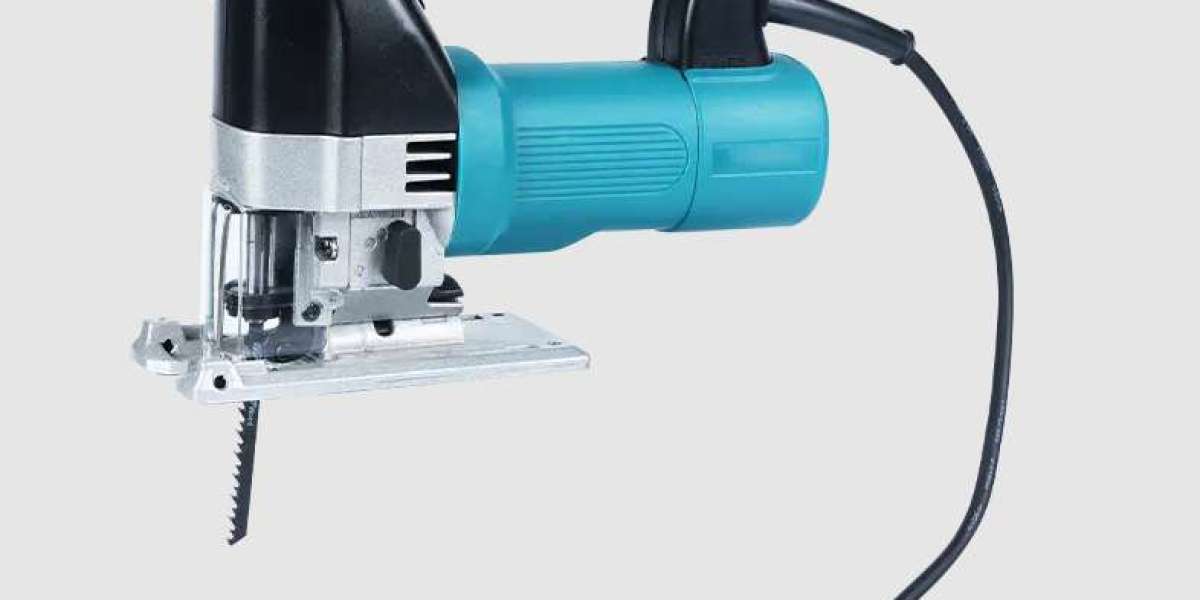

There is something genuinely freeing about picking up a tool and walking straight to the job without hunting for an extension cord. That is the quiet appeal of the battery jig saw — a cordless cutting tool that has earned a permanent spot in workshops, job sites, and home garages alike.
A battery jig saw works by driving a narrow, reciprocating blade up and down at high speed. This motion allows the tool to follow curved lines, cut tight radii, and make plunge cuts that a circular saw simply cannot attempt. The blade moves through a short stroke — typically between 19mm and 26mm — with adjustable stroke rates measured in strokes per minute (SPM).
The battery system powering a modern jig saw has changed the cordless tool landscape considerably. Lithium-ion battery packs in the 18V to 20V range have become the standard for most consumer and professional models. These packs deliver consistent voltage output throughout the discharge cycle, meaning the saw cuts at a steady pace from a full charge down to near-empty rather than gradually losing power. Battery capacity — measured in amp-hours (Ah) — determines runtime.
Blade selection shapes everything about what a battery jig saw can do. T-shank blades have become the dominant standard, snapping into the chuck without tools for fast changes. Blades designed for wood cutting have widely spaced teeth for rapid chip clearance. Metal-cutting blades carry finer teeth to manage the hardness of steel or aluminum sheet. Bi-metal blades bridge both categories and handle mixed materials reasonably well. Specialty blades tackle ceramic tile, PVC pipe, rubber, and even leather.
With the right blade, a charged battery, and a steady hand, a battery jig saw handles an impressive range of cutting tasks with real versatility.