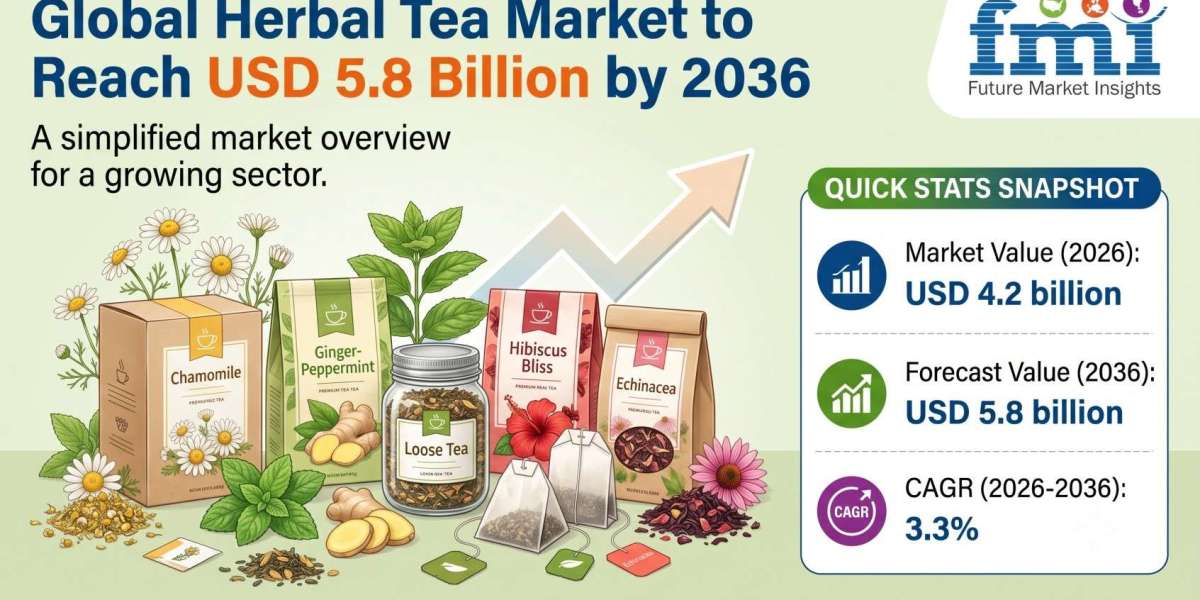

The global herbal tea market is undergoing a structural shift, transitioning from casual flavor-based hot beverages into outcome-oriented wellness infusions, according to latest insights by Future Market Insights. As consumers seek caffeine-free solutions for sleep support, stress relief, and digestive comfort, brands are reformulating blends with adaptogens, nootropics, and targeted botanicals to bridge the gap between traditional beverages and dietary supplements.
The global market, valued at USD 4.2 billion in 2026, is projected to expand at a Compound Annual Growth Rate (CAGR) of 3.3% over the ten-year forecast period, achieving a total valuation of USD 5.8 billion by 2036, delivering an absolute incremental opportunity of USD 1.6 billion.
Get detailed market forecasts, competitive benchmarking, and pricing trends:
https://www.futuremarketinsights.com/reports/sample/rep-gb-2513
Market Performance Overview (2026–2036)
To map out the key botanical ingredients, packaging formats, primary retail distribution channels, and regional growth vectors guiding this USD 1.6 billion market scale-up, key segment allocations highlight where global demand is concentrated:
· Chamomile Ingredient Segment (32.0% share): Commands the botanical category in 2026, serving as the default natural solution for sleep support, stress reduction, and digestive comfort across mass-market retail.
· Peppermint, Ginger, Hibiscus, & Functional Blends: Form secondary ingredient pillars, targeting gut health, immunity, detoxification, and natural acidification.
· Tea Bags Packaging Segment (58.0% share): Leads packaging format preferences over loose-leaf and ready-to-drink (RTD) options, favored for pre-measured convenience, portion consistency, and recent innovations in plastic-free, biodegradable pyramid sachets.
· Supermarkets and Hypermarkets Channel (40.0% share): Dominates retail distribution, serving as the primary volume driver for high-velocity household grocery purchases.
· India Regional Leadership (5.2% CAGR): Represents the fastest-growing national market through 2036, driven by a strategic transition from raw commodity tea exports to value-added branded wellness infusions.
Technical Drivers and Functional Formulation Shifts
The commercial expansion of herbal tea across mass-market CPG and specialized wellness channels is propelled by three primary industry catalysts:
"Clinical Herbalism" and Functional Outcomes
Consumer purchasing decisions are increasingly dictated by functional benefits rather than simple taste profiles. CPG brands are formulating functional teas featuring adaptogenic herbs (ashwagandha, holy basil/tulsi) and nootropics (L-theanine) to offer verifiable sleep, focus, and relaxation outcomes.
Biodegradable Packaging and Operational Compliance
Environmental sustainability has evolved into a mandatory operational gate for retail listing. Major tea manufacturers are phasing out plastic-lined heat-seal sachets in favor of compostable plant-based PLA (polylactic acid) filter media and unbleached cotton strings to satisfy stringent EU and US retailer mandates.
Loose-Leaf Premiumization and D2C E-Commerce Growth
While tea bags command mass volume, direct-to-consumer (DTC) channels and specialty tea shops are capturing high-margin growth by offering whole-flower, single-origin loose-leaf botanicals that deliver superior visual appeal and volatile oil retention.
Regional Growth Profile
Regional demand reflects value-added export strategies in Asian production hubs alongside functional premiumization in Western economies:
· India (5.2% CAGR): The global growth frontrunner, driven by government incentives supporting value-added packaged tea exports, modern processing infrastructure, and domestic wellness adoption.
· China (4.5% CAGR): Spurring rapid internal volume growth as younger urban demographics embrace premium loose-leaf herbal infusions and modernized traditional teas.
· Germany (3.5% CAGR): Leading European market demand, supported by an established culture of herbal health remedies (Arzneitee) and strict organic certification standards.
· United States (3.1% CAGR) & United Kingdom (2.9% CAGR): Represent mature, value-dense markets where growth is driven by caffeine-free lifestyle shifts, functional cold-brew innovations, and premium organic line extensions.
Competitive Landscape
The global herbal tea landscape features a combination of multinational food and beverage conglomerates, heritage tea houses, and agile, digital-native wellness brands.
Key market participants profiled in the report include Twinings (Associated British Foods), Celestial Seasonings (Hain Celestial), Tielka, Traditional Medicinals, Bigelow Tea, Tata Consumer Products, Unilever (Pukka Herbs), VAHDAM India, Rishi Tea & Botanicals, and Bird & Blend Tea Co. Leading companies compete by securing long-term organic ingredient supply contracts, obtaining B-Corp and Fair Trade certifications, and launching targeted functional wellness collections.
Full Report for Detailed Insights: https://www.futuremarketinsights.com/reports/herbal-tea-market
Frequently Asked Questions
What is the projected valuation of the global herbal tea market by 2036?
The global herbal tea market is projected to reach USD 5.8 billion by 2036, expanding from an estimated baseline valuation of USD 4.2 billion in 2026 at a CAGR of 3.3%.
Why does Chamomile hold a 32.0% market share?
Chamomile leads because it serves as the universally recognized, safe, and effective natural entry point for consumers seeking daily sleep aid and stress relief.
What packaging format dominates commercial herbal tea sales?
Tea bags command a 58.0% market share in 2026, as pre-portioned tea bags and modern compostable pyramid sachets offer the daily convenience and dosage consistency required by mass-market consumers.