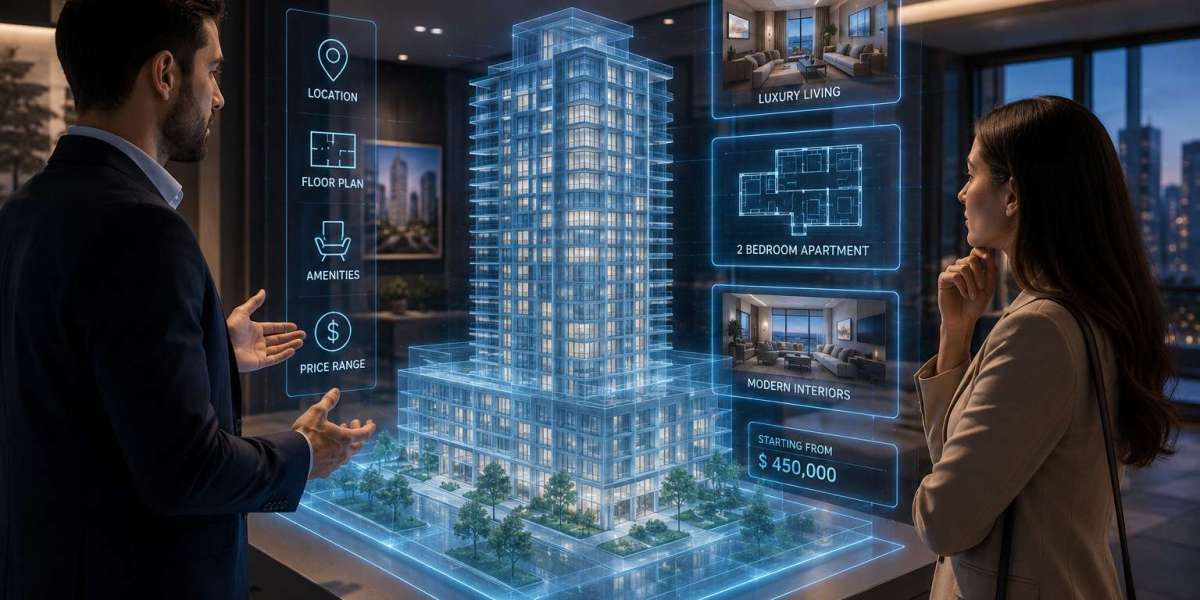

Real estate displays have evolved beyond brochures, banners, model flats, and traditional property presentations. As customers get increasingly accustomed to digital interactions, real estate organizations are seeking for new ways to capture attention and explain properties more efficiently. Holographic technology and AI in real estate are offering new prospects in this area.
AI-powered holograms combine intelligent digital technology with immersive 3D images, allowing developers and brokers to showcase homes in a way that is interactive, current, and memorable.
Creating More Engaging Property Presentations
At a crowded real estate fair, drawing guests is simply the beginning. Maintaining their interest is equally crucial. Traditional displays often struggle to stand out when competing companies offer identical properties.
Holographic displays may rapidly establish a visual focal point. A three-dimensional model of a building, apartment, master complex, or architectural concept can pique visitors' interest and inspire them to learn more.
Instead of simply looking at images or printed floor plans, guests can enjoy a more interactive presentation that explains the property's design and characteristics.
Bringing Properties to Life
One of the most significant advantages of holographic technology is its ability to deliver complex information visually.
A developer, for example, can demonstrate an entire residential complex using a holographic display. Visitors can view buildings, landscape, highways, recreation spaces, and other significant aspects in an immersive 3D environment.
Individual properties can also be shown using various views, layouts, and design elements. This allows potential purchasers to better understand the overall concept without relying solely on their imagination.
This form of visualization is very useful in off-plan developments because the finished property does not yet exist physically.
Making Real Estate Exhibitions Interactive
Modern shoppers frequently prefer more than a passive appearance. They desire to investigate, compare, and pose questions.
Artificial intelligence can improve the interactivity of holographic experiences. An AI-powered system may answer common queries, offer property information, explain features, and direct visitors through various stages of a development.
For example, a visitor may inquire about apartment sizes, available amenities, neighboring facilities, or other property configurations. The system can then deliver pertinent information via an interactive digital experience.
The integration of artificial intelligence and holographic projection can result in a more personalized exhibition experience.
Improving Customer Engagement
Real estate exhibits draw a variety of guests. Some may be investors, while others are families in need of a new home. Their interests and queries can differ greatly.
AI-powered platforms can contribute to more personalized interactions. Instead than displaying every visitor the identical presentation, technology can let them focus on information that is more relevant to their interests.
A potential investor may want to see information regarding development opportunities, but a family may be more concerned with layouts, amenities, schools, and lifestyle aspects.
This adaptability can make conversations more relevant and aid sales teams in understanding what each visitor is looking for.
Supporting Real Estate Sales Teams
Holographic technology does not have to replace human salespeople. Instead, it can help them.
A salesperson can utilize a holographic presentation as a visual help when discussing a property. Complex ideas such as building layouts, development phases, interior designs, and master plans can be made more understandable when visitors can see them in an attractive visual manner.
This reduces the need for long explanations and allows sales professionals to focus on answering particular inquiries and developing relationships with potential customers.
Helping Brands Stand Out During Exhibitions
Competition at real estate exhibitions can be fierce. Multiple developers and agencies may be promoting properties at the same location, making brand awareness critical.
A creative hologram installation can give a corporation a distinct identity. Visitors are naturally drawn to interactive and visually appealing activities, which can drive foot traffic to an exhibition booth.
More importantly, a memorable technology-driven presentation can help attendees remember the brand long after the event.
The Increasing Role of AI in Real Estate Marketing
AI in real estate is being used for more than just property searches and automated customer service. AI has the potential to significantly improve marketing, data analysis, personalization, and customer interaction.
When paired with holographic displays, AI can make real estate shows more dynamic and responsive. Rather of just showing planned content, future systems may tailor displays to visitor interactions and choices.
This could result in highly tailored property experiences while also allowing real estate companies to communicate their ideas more effectively.
Why Holographic Technology Has a Promising Future
The real estate industry relies significantly on visuals. Buyers want to know what a property will look like, how the rooms will be organized, and what kind of lifestyle a development can provide.
Holographic technology in real estate is another effective technique to convey these concepts. It may transform architectural concepts and property information into visually appealing experiences that are easier to explore and recall.
As technology advances, AI-powered holographic projections may become a more prevalent feature at property debuts, exhibitions, sales galleries, and real estate events.
Conclusion
Real estate shows are transitioning from typical promotional areas to interactive brand experiences. Developers and real estate organizations can use artificial intelligence and immersive visual technology to present properties in more interesting and memorable ways.
AI-powered holograms have fascinating applications in modern property marketing, from exhibiting off-plan developments to answering questions and establishing tailored interactions. As AI in real estate and Holographic technology in real estate advance, they may play a significant role in determining the future of property presentations and client involvement.