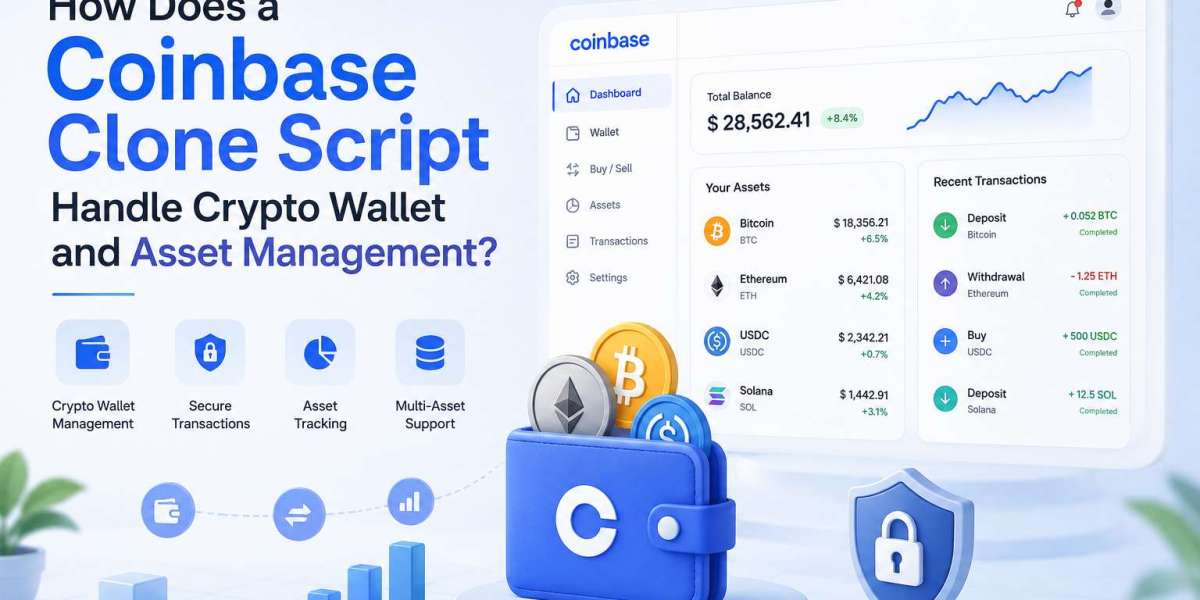

If you're planning to launch a cryptocurrency exchange, wallet management is one of the areas you can't afford to treat as an afterthought. Users expect their digital assets to be easy to view, deposit, withdraw, and transfer while the platform keeps transactions organized and secure.
A Coinbase Clone Script can provide the underlying framework for these functions. But how does it actually manage wallets and assets? Let's break down the main components and what you should look for when evaluating one.
How Does a Coinbase Clone Script Manage Crypto Assets?
A Coinbase Clone Script typically combines crypto wallet management, blockchain connectivity, transaction processing, and an administrative control layer. It can support individual wallets for different cryptocurrencies, generate deposit addresses, process withdrawals, track balances, and maintain transaction histories.
The exact implementation depends on the architecture and blockchain networks selected for the exchange.
How Crypto Wallet Management Works
1. Individual Asset Wallets
A cryptocurrency exchange may support multiple assets, such as Bitcoin, Ethereum, or stablecoins. The wallet system keeps track of each supported asset separately so users can see their available and transaction balances.
For example, a user depositing BTC should have that transaction reflected in their Bitcoin wallet rather than being mixed with their USDT balance.
2. Deposits and Withdrawals
The platform connects wallet operations with the relevant blockchain network. When a user deposits cryptocurrency, the system can monitor the associated blockchain transaction and update the account after the required processing conditions are met.
Withdrawals work in the opposite direction: the platform validates the request, applies its security and compliance rules, and then initiates the blockchain transaction.
3. Asset and Balance Tracking
A well-designed digital asset management system separates available, pending, and sometimes locked balances. This becomes particularly important when users have open trading orders or transactions awaiting confirmation.
Security Matters
Wallet management isn't simply about displaying balances. A production exchange needs controls around private-key protection, withdrawal authorization, access permissions, transaction monitoring, and operational security.
The specific security architecture should be reviewed carefully before purchasing or deploying a Coinbase Clone Script.
What to Check Before Choosing a Script
Look for support for:
Multi-currency wallet management
Blockchain network integration
Deposit and withdrawal processing
Transaction history
Hot and cold wallet architecture where appropriate
Role-based administration
Withdrawal security controls
KYC/AML integration
Scalable asset management
Conclusion
A Coinbase Clone Script can simplify the foundation of wallet and cryptocurrency asset management by bringing together blockchain connectivity, user balances, transactions, and administrative controls. However, the quality of the underlying wallet architecture matters more than simply counting features.
If you're evaluating a solution, review its supported networks, wallet architecture, security controls, and customization options before making a purchase.