
Worldwide Breathable Waterproof Fabrics Market — Strategic Preview for 2026 Decisions
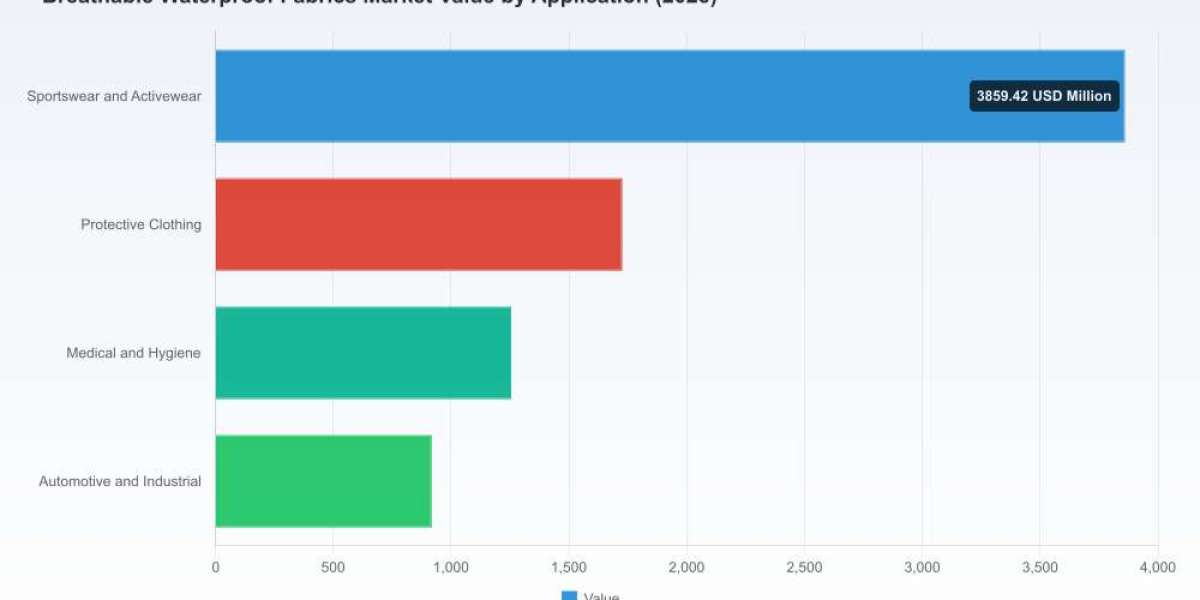
PW Consulting’s latest market intelligence on breathable waterproof fabrics positions 2026 as a decisive inflection point for manufacturers, brands, and materials suppliers. After growing from roughly USD 5.4 billion in 2020 to about USD 7.76 billion in 2025, the market is forecast to continue expanding at a steady compound annual growth rate (CAGR) of 7.5% through the 2026–2032 horizon, with a projected market exceeding USD 12.8 billion by 2032. This preview synthesizes the practical implications of those macro trends, the regulatory and technology inflection points affecting strategy in 2026, and the concrete actions executive teams should prioritize. To preserve the report’s tactical value, we intentionally withhold granular regional and application splits in this press release; the full report contains the comprehensive segmentation and proprietary models.
Semi-automatic Waste Tire Recycling Line Market
Why 2026 Is a Pivotal Year
Regulatory acceleration: From January 2025 forward, major jurisdictions tightened PFAS policy. California and New York have banned the sale of new apparel containing intentionally added PFAS, and bluesign certification likewise removed intentional PFAS from accepted inputs. France’s Law No. 2025-188 moves further, banning PFAS in clothing and footwear from January 2026 (with transitional exemptions). The U.S. EPA’s TSCA 2024 Rule adds another compliance layer by restricting certain chemistries used in equipment and materials beginning October 31, 2026.
Worldwide Aviation and Airport Asset Tracking MarketTechnology convergence: Innovations are multiplying across membrane chemistries and nonwoven architectures. From established suppliers updating PFAS-minimized ePTFE and ePE membranes to breakthrough production-scale nanofiber nonwovens, these developments are shifting feasibility, cost curves, and product positioning for breathable waterproof systems.
Worldwide Stone Removal Basket MarketMarket momentum: After the pandemic-era recovery and steady premiumization in outdoor, workwear, and certain medical segments, the aggregate market size and mid-single-digit-to-high-single-digit growth profile create a window for strategic investments that can scale rapidly between 2026 and 2030.
Key Market Dynamics Shaping 2026 Strategy
Material transition and product repositioning: Demand is moving from legacy fluorinated chemistries to PFAS-minimized or PFAS-free solutions, including bio-based membranes, ePE/ePTFE variants with reduced intentional PFAS, polyurethane systems, and advanced polyester or nanofiber membranes. This is a supply- and R&D-driven shift, not only a compliance response: new materials also enable differentiated performance trade-offs (stretch, breathability under load, durability).
Raw material cost volatility: Late-2025 and early-2026 pricing signals are mixed — European polyurethane prices eased modestly, while fluoropolymer prices declined in some western markets even as upstream Chinese fluorspar licensing tightened, increasing conversion costs for western processors. These dynamics create short-term arbitrage and longer-term incentive to diversify feedstock and supplier geographies.
Competitive concentration and value capture: Market concentration is moderate — the top 3 firms account for roughly 38.5% of value and the top 5 about 52.2% — leaving room for differentiation through route-to-market, proprietary membranes, treatments, and integrated system offerings (membrane + laminate + functional finishing).
Channel and application shifts: Sports and outdoor premiumization coexist with accelerating regulatory-driven adoption of PFAS-free options in mass-market apparel. Technical and protective clothing, medical/hygiene and industrial applications each present distinct margins, speed-to-market constraints, and certification requirements.
Scale of manufacturing innovation: Recent announcements — mass-market PFAS-free bio-based membrane launches and a ten‑million‑meter scale nanofiber factory — demonstrate that new material platforms are moving from lab to industrial scale within procurement cycles relevant to 2026 product planning.
What the Competitive Landscape Means for 2026
Incumbents are defending technical leadership: Companies with deep membrane IP and scaling expertise (for example, longstanding ePTFE and advanced polyurethane providers) are rolling out PFAS-minimized or PFAS-free variants while protecting brand and performance credibility.
New entrants and vertically integrated players are sharpening value propositions: Device and textile finish specialists, nanofiber producers, and large apparel manufacturers with in-house material programs are either partnering or accelerating internal deployment of alternative membranes to secure cost & supply resilience.
Consortia and partnerships are the near-term accelerant: We are seeing fast-follow collaborations across membrane makers, treatment specialists, and apparel brands to co-develop systems that meet both performance and regulatory criteria — an approach that reduces time-to-market and shares certification burdens.
Representative moves to watch (non-exhaustive): a mass-market PFAS-free bio-based membrane rollout integrated into high-volume jackets; a major ePTFE supplier launching an ePE membrane that eliminates intentional PFAS; demonstration partnerships combining advanced laminates with moisture-managing down systems; and large-scale nanofiber production coming online. These events are already influencing procurement, sourcing contracts, and R&D roadmaps.
Strategic Playbook for 2026 — Actions that Move the Needle
Immediate (0–6 months):
Perform a rapid compliance & exposure audit against PFAS bans and TSCA rules; prioritize product SKUs and geographies where immediate reformulation or labeling changes are required.
Lock short-term supply continuity for critical feedstocks while establishing secondary suppliers for alternative membranes to hedge potential flaring or licensing-driven disruptions.
Initiate supplier qualification pilots for PFAS-free and nanofiber membranes with a focus on manufacturability and lamination compatibility at target volumes.
Near-term (6–18 months):
Rebalance product tiers: introduce PFAS-free SKUs at price points that preserve margin, using blended go-to-market rollouts (pilot collections, limited editions, then scale) to capture consumer and institutional demand without full SKU disruption.
Negotiate multi-year contracts with membrane producers that include performance-based pricing and joint certification commitments; aim for joint R&D clauses for product roadmaps.
Invest in test-lab capacity or third-party partnerships for accelerated certification (eco-labels, bluesign equivalents, performance tests relevant to PPE standards) to shorten lead time to market.
Medium-term (18–36 months):
Decide on manufacturing footprint adjustments: keep flexibility to shift higher value lamination/finishing close to key markets for speed and compliance while optimizing raw-material intensive processes in cost-advantage jurisdictions.
Pursue selective M&A or JV opportunities with specialty membrane or finishers to secure IP and scale, especially where incumbents are constrained by legacy feedstock supply.
Embed circularity and reclamation pilots tied to membrane chemistry choices; early movers that can demonstrate closed-loop claims will command an increasingly discernible pricing premium in certain channels.
Practical Tools PW Consulting Delivers in the Full Report
Proprietary market model (2020–2032) with scenario toggles for regulatory stringency, raw material cost shocks, and adoption curves by application and region; users can run bespoke forecasts suited to procurement or product roadmaps.
Supplier heatmap and risk matrix combining capacity, vertical integration, PFAS posture, and certification readiness — built for buyer sourcing teams to prioritize RFP partners.
Go-to-market playbooks for brands and converters that include product launch sequencing, lab-to-line timelines, costing templates, and marketing/labeling checklists aligned with current certification regimes.
Supply-chain stress-test scenarios quantifying the impact of fluorspar licensing shifts, polyurethane price moves, and nanofiber scale-up on unit cost and margin at multiple volume thresholds.
Competitive dossier and strategic options map covering leading membrane and fabric players, recent technology announcements, and likely next moves — designed for corporate strategy and BD teams evaluating partnerships or acquisitions.
How to Use This Intelligence in 2026 Planning
Make compliance and product continuity the gating factors for any material transition. Rapidly triage SKUs by revenue, margin, and regulatory exposure and allocate R&D and sourcing resources accordingly.
Favor multi-technology supplier strategies. The market growth profile and ongoing material innovation mean single-technology bets increase risk while mixed-technology portfolios unlock channel-specific advantages.
Use the market model to stress-test pricing strategies. Even with mid-high single-digit CAGR at the market level, product-line economics will diverge based on material choice, certification costs, and geography.
Concluding Perspective and Next Steps
For executives planning capital allocation, procurement cycles, or product roadmaps in 2026, the combination of regulatory pressure, material innovation, and continued market expansion yields both risk and optionality. The window to secure advantageous supply relationships, to co-develop PFAS-free system solutions, and to position brands as compliant and performance-led is narrow but clear. PW Consulting’s full Worldwide Breathable Waterproof Fabrics Market report provides the granular segmentation, proprietary models, supplier-ranked dossiers, and execution playbooks necessary to convert market growth into defensible advantage.
To access the detailed segmentation, revenue-by-region and application tables, and our interactive forecast model, please visit the PW Consulting report page (full access required). The executive summary within this release is intentionally high-level to protect the tactical integrity of the models and recommendations enclosed in the paid report.
For detailed analysis of this topic, please visit the official page:Worldwide Breathable Waterproof Fabrics Market
Lacy Lee
Senior Marketing Manager
sales@pmarketresearch.com
00852-95632430
PW Consulting: www.pmarketresearch.com