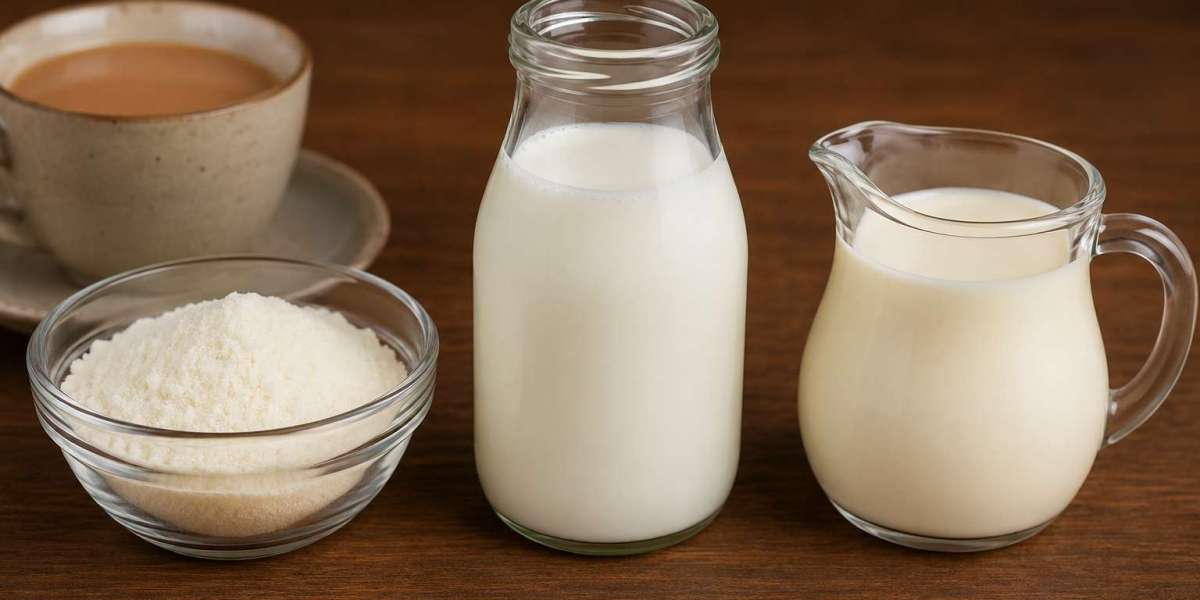

Why the Dairy You Choose Defines Your Chai Experience
Ask any Pakistani what makes a truly great cup of chai and you will get passionate, detailed, and often conflicting answers. Some will insist it is the tea leaves — a specific blend, a particular brand, steeped for exactly the right amount of time. Others will point to the spices — cardamom, ginger, cinnamon, the precise combination that makes their family's version unique. But beneath all of these variables, there is one ingredient that arguably has more influence over the final character of the cup than any other: the dairy component.
Whether you use a tea whitener, regular milk, or a non-dairy creamer, that choice fundamentally shapes the color, texture, aroma, flavor balance, and overall drinking experience of your chai. And yet, despite how much Pakistanis care about their chai, very few people have ever sat down and genuinely compared these three options side by side — examining what each one actually is, how it behaves in the pot, what it contributes to the cup, and which situations it is best suited for.
This article does exactly that. It is a comprehensive, honest comparison of tea whitener, regular milk, and creamer — written specifically for the Pakistani chai context, with all the cultural nuance and practical detail that a true chai lover deserves. By the end, you will understand not just which option produces the best cup in different scenarios, but also why Olpers' dairy range gives Pakistani consumers the best versions of each choice available in the market today.
Defining the Three Contenders: What Each One Actually Is
Before comparing performance, it is essential to establish clear definitions — because many consumers use the terms tea whitener, milk, and creamer interchangeably when they are actually quite different products with different compositions, processing methods, and intended uses.
Regular milk, in the Pakistani context, typically refers to packaged UHT milk — either full cream or low fat — that has been pasteurized and aseptically packaged for general consumption. It is a natural dairy product containing fat, protein, lactose, water, and a broad range of micronutrients. It is designed for general use across drinking, cooking, baking, and chai making without being specifically optimized for any single application.
A tea whitener is a specialized liquid dairy product — like Tarang by Olpers — that has been specifically formulated to perform in tea. Its composition has been engineered to interact harmoniously with the tannins and heat of brewed tea, producing a smooth, stable emulsion that maintains its creaminess even under prolonged simmering. It is a dairy-based product, but one that has been processed and balanced specifically for the chai-making context rather than for general dairy consumption.
A creamer, in the strictest sense, refers to a non-dairy product — typically made from hydrogenated vegetable oils, corn syrup solids, and various emulsifiers — that mimics the whitening and textural effect of milk or cream in beverages. Non-dairy creamers are commonly used in coffee culture globally and have found some use in the Pakistani market as well. However, they are fundamentally different from both milk and tea whitener in their composition, their nutritional profile, and their flavor contribution to chai.
Round One: Flavor Profile and Taste in the Cup
When it comes to the flavor that each option contributes to a cup of Pakistani chai, the differences are meaningful and worth examining carefully. Regular full cream milk brings a clean, natural dairy sweetness that complements tea well when the milk is fresh and of consistent quality. The fat in full cream milk rounds out the bitterness of the tea and creates a pleasant, balanced mouthfeel. However, the flavor contribution of regular milk can be inconsistent — depending on the brand, the freshness, the fat content, and how the milk has been stored, the taste of the chai can vary noticeably from day to day.
Tea whitener like Tarang by Olpers is specifically formulated to deliver a more consistent and in many ways more intense dairy flavor in the context of chai. Because it has been engineered for this application, it integrates more smoothly with the tea's flavor compounds, producing a cup that is richer, creamier, and more harmonious in taste. The natural sweetness of the tea whitener means that many people find they need less added sugar to achieve the same level of sweetness, which is an additional benefit. The flavor is distinctively satisfying in a way that regular milk does not always replicate.
Non-dairy creamer performs the visual function of whitening the chai but falls significantly short on flavor. Because it is made from vegetable oil and artificial emulsifiers rather than real dairy, it lacks the natural sweetness, the clean dairy flavor, and the depth that milk-based options provide. Many chai drinkers find that creamer produces a cup that looks similar to milk chai but tastes noticeably flat, slightly artificial, and less satisfying. For the serious Pakistani chai lover, non-dairy creamer is a functional last resort rather than a genuine first choice.
Round Two: Performance Under Heat and Brewing Conditions
Pakistani chai is not brewed gently. Authentic doodh pati involves simmering tea and dairy together at relatively high temperatures for several minutes — sometimes longer for particularly strong brews. This cooking process is where the technical performance differences between the three options become most pronounced and most practically significant.
Regular milk under sustained high heat can behave unpredictably. The proteins in milk are sensitive to temperature, and extended boiling can cause the milk to scorch at the bottom of the pot, develop a cooked or slightly burnt flavor, or form an unappealing skin on the surface. Cold milk added to very hot tea can sometimes cause a slight curdling effect due to the reaction between milk proteins and tea tannins — particularly with lower-quality or inconsistent milk. These are issues that experienced chai makers manage through technique, but they require attention and cannot always be avoided.
Tea whitener is heat-stable in a way that regular milk is not. Its formulation is specifically designed to maintain a smooth, even consistency under the prolonged high-heat conditions of doodh pati brewing. It does not scorch as easily, does not form a surface skin as readily, and integrates smoothly with the tea liquor even after extended simmering. This heat stability is one of the primary reasons why professional chai makers — from busy dhabas to high-volume restaurant kitchens — have widely adopted tea whitener as their preferred dairy component. The consistency it delivers is simply more reliable.
Non-dairy creamer performs adequately under heat in a purely technical sense — it does not curdle or scorch in the way that milk can. However, it can develop a slightly greasy or artificial mouthfeel when subjected to extended cooking, which becomes more noticeable in a strongly brewed doodh pati. Its emulsion stability is adequate but the sensory result is not comparable to dairy-based options.
Round Three: Nutritional Value and Health Considerations
For Pakistani consumers who are increasingly aware of and interested in the nutritional content of what they consume, understanding the nutritional differences between tea whitener, regular milk, and non-dairy creamer is important. These differences are significant and should factor into purchasing decisions — particularly for households with children, health-conscious adults, or family members with specific dietary needs.
Regular milk — whether full cream from Olpers or low fat from the Omung range — is nutritionally the most complete of the three options. It delivers calcium, high-quality complete protein, potassium, phosphorus, vitamin B12, riboflavin, and vitamin D in naturally occurring, highly bioavailable forms. For consumers who rely on their daily chai as a meaningful contributor to their dairy nutrition, regular milk is the most nutritionally valuable choice. A household that consumes several cups of chai daily with full cream or low fat milk is getting a meaningful nutritional contribution from that daily habit.
Tea whitener like Tarang is a specialized product designed for taste and performance in tea rather than as a primary nutritional source. It contributes dairy-derived nutrients but in a different profile than straight milk — it is formulated for the chai application first, with nutrition as a secondary consideration. For families who consume adequate dairy through other means — glasses of milk, yogurt, cheese, cooking with milk — and simply want the best possible chai experience, tea whitener is an excellent choice. For families who rely heavily on chai as their primary dairy intake, pairing tea whitener chai with separate consumption of Olpers milk for drinking ensures both the best chai and adequate daily nutrition.
Non-dairy creamer offers the least nutritional value of the three options. Containing no real dairy, it provides no meaningful calcium or dairy protein. For consumers who are lactose intolerant or have dairy allergies, this is its primary advantage — but for the general Pakistani population, it represents a nutritional downgrade compared to dairy-based options.
Round Four: Convenience, Shelf Life, and Practical Usability
Practical considerations matter enormously in everyday Pakistani households, and each of the three options has distinct advantages and limitations from a convenience and usability standpoint. Regular packaged milk from Olpers has a shelf life of several months unopened at room temperature — thanks to UHT processing and aseptic packaging — but requires refrigeration once opened and should be consumed within a few days. It is versatile across all cooking and drinking applications, making it the most multi-purpose of the three options. Its primary limitation is that it requires consistent refrigeration management once opened.
Tea whitener in liquid format, like Tarang, shares similar shelf-life characteristics to packaged milk — a long unopened shelf life and the need for refrigeration once opened. Its advantage over regular milk is that it is already portioned and calibrated for the specific volumes used in chai making, which reduces measurement guesswork in commercial or high-volume settings. The powder format of Olpers Creamer Milk Tea Powder adds another layer of convenience — as a powder, it requires no refrigeration, has an even longer shelf life, and can be stored and transported easily for travel, office use, or outdoor settings where liquid storage is impractical.
Non-dairy creamer powder has the longest shelf life and the least demanding storage requirements of all three options — it is shelf-stable, compact, and available in portion sachets that make it extremely portable. For specific use cases like travel, camping, or office pantry stocking, this convenience has genuine value. However, for home chai making where quality and nutrition are priorities, the convenience advantage of non-dairy creamer does not outweigh its significant shortcomings in taste and nutritional value.
The Olper’s Advantage Across All Categories
What makes this comparison particularly relevant for Pakistani consumers is that Olpers — through the OlpersMart platform at olpersmart.pk — offers the best available option in each of the dairy-based categories discussed in this article. For regular milk chai, Olpers full cream milk delivers consistent quality, verified nutrition, and a clean natural dairy flavor produced under international processing standards. For weight-conscious consumers who still want quality chai, Omung low fat milk by Olpers provides the same safety and quality guarantees at a reduced fat content and accessible price point.
For consumers who want the dedicated tea whitener experience — the most consistent, heat-stable, and chai-optimized dairy product available — Tarang by Olpers is Pakistan's leading choice in this category, backed by the dairy science expertise of FrieslandCampina, one of the world's foremost dairy companies. The Olpers Creamer Milk Tea Powder extends this same performance into a convenient powder format for home bakers, office users, and travelers who want dhaba-quality chai wherever they are.
The ability to access all of these options through a single trusted brand, ordered conveniently through OlpersMart with delivery to Karachi, Lahore, Islamabad, and Rawalpindi, means that Pakistani chai lovers no longer have to compromise between quality, convenience, and nutrition. The right dairy for every cup, every occasion, and every household need — that is what Olpers delivers.
The Verdict: Which One Should You Choose?
After this thorough comparison, the honest verdict is that the best choice depends on your specific priorities and chai-making context, especially when considering how milk performs in desserts like Creamy Latte Cake Recipe, where texture, richness, and consistency all depend on the dairy base. If nutritional completeness and versatility are your top priorities, Olpers full cream or low fat milk is the most well-rounded choice — excellent for chai, equally useful for cooking, baking, and drinking, and nutritionally superior to the alternatives.
If you prioritize consistent taste performance, heat stability, and the richest possible chai experience specifically — and your dairy nutritional needs are covered elsewhere in your diet — Tarang tea whitener by Olpers is the product engineered for exactly that purpose, and it delivers on that promise reliably. If convenience and portability in non-home settings are the driving factor, Olpers Creamer Milk Tea Powder provides the best quality in a shelf-stable format.
What all three of these choices have in common is the Olpers quality guarantee — the assurance that whatever you pick from the Olpers family, you are choosing a product made with genuine care, verified nutritional content, and the kind of consistent performance that Pakistani chai lovers have come to rely on. Visit olpersmart.pk to explore the full range and find the perfect dairy companion for your next cup.