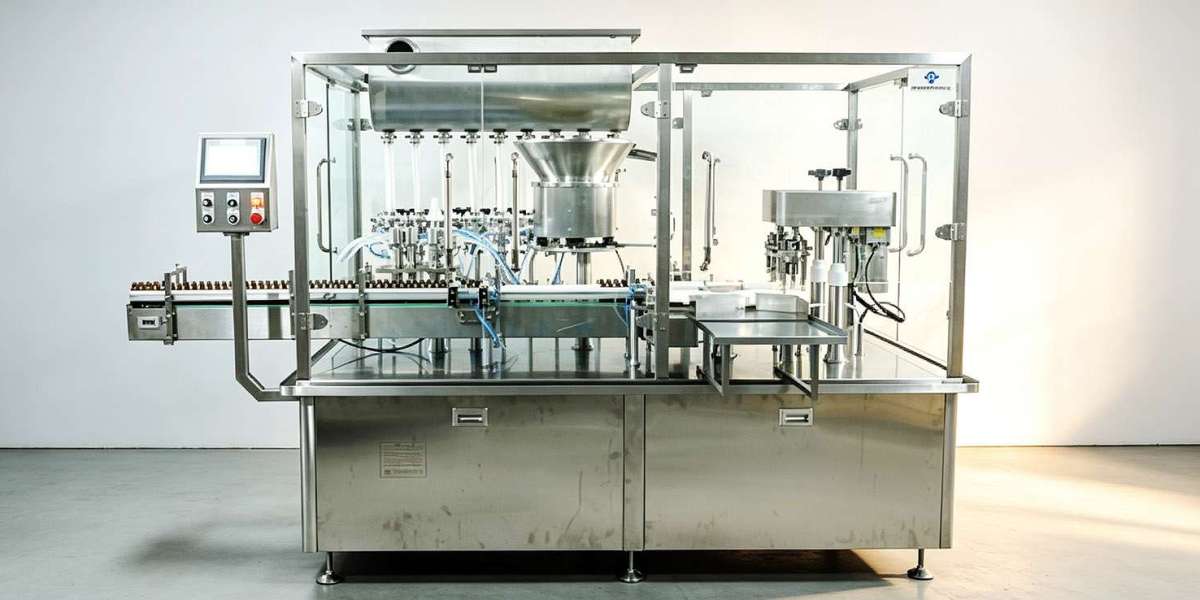

If you work in the pharmaceutical or biotech sector, you know that buying a vial filling machine is not like buying a coffee maker. Price quotes vary wildly—from as low as 200,000 to over 500,000 for top models—and this leaves many procurement specialists confused. So what really causes these huge gaps? Can a mid-range unit handle your production, or do you have to pay for the expensive one? This article gives you real market price ranges, explains every cost piece, and shows you why MIC Medical Machine’s vial filling equipment stands out. There is no sales fluff here, only straight industry facts.
Core Reasons Behind Extreme Price Disparities for Vial Filling Machines
When you first look into vial filling machines, the wide price spread can feel overwhelming. One supplier quotes 200,000, and you wonder if they are even talking about the same type of equipment. The truth is, they are not. The final price depends on several key factors, and there is a big gap between a simple benchtop unit and a fully automated line. Knowing these factors helps you buy smart and save money over time.
1.Filling Speed & Production Capacity: A small machine that runs 20 vials per minute costs much less than a high-speed one that does over 400 vials per minute. Since output directly affects your revenue, manufacturers set prices based on how many vials you can produce each minute.
2.Automation Grade: Semi-automatic units (around 80,000) need a worker to run them all the time. Fully automatic lines (starting at 300,000) need very little human help, so they cost more but save labor.
3.Filling Accuracy: Machines with a tight ±0.5% error margin are priced higher because they waste less raw material and easily pass drug authority inspections.
4.Production Line Integration Complexity: A single standalone machine is cheaper. But if you link it with upstream washers and downstream cappers and labelers, the total price goes up a lot.
Detailed Breakdown of Four Real-World Market Price Tiers
The industry has four clear price levels, based on actual quotes we collected from suppliers—not guesses. You will see these tiers when you ask for prices. Each level fits a different production need and budget.
1.Entry-Level Semi-Automatic Machines (80,000): Best for small labs or new pharma firms. They fill only 10–30 vials per minute and need an operator at all times.
2.Mid-Range Automatic Machines (250,000): This is the sweet spot for growing manufacturers. They do 60–150 vials per minute, come with a PLC control system, and offer basic automation that works well.
3.High-End High-Speed Automatic Machines (500,000): Built for big factories with high output. They run 200–400 vials per minute, use servo-driven filling, and have nice touchscreen interfaces for easy control.
4.Custom Integrated Turnkey Production Lines (500,000+): These are complete lines that wash, fill, stopper, cap, and label all in one. They are fully designed to fit your factory floor and your specific product needs.
Core Value Justifying Higher Machine Price Tags
Many buyers think that if two machines look similar on paper but have different prices, the expensive one is just overpriced. That is usually wrong. The extra cost comes from small but important things: better engineering, higher-grade metals, smarter software, and stronger after-sales support. These details really matter for long-term use.
1.Core Selling Points: Our vial filling machine uses a servo piston system that gives excellent filling accuracy and repeatability. Its modular design lets you add more nozzles later without buying a new machine, which saves a lot on future upgrades.
2.Technical Parameters: It fills from 0.5ml to 500ml per vial, speed is adjustable from 20 to 400 vials per minute, and accuracy stays within ±0.5%. It works on 220V or 380V power, and its footprint is only 2.5m by 1.2m, so it fits tight spaces.
3.Materials & Workmanship: Every part that touches the product is 316L stainless steel with a very smooth surface (Ra ≤ 0.4μm). The main frame is 304 stainless steel with coated panels, so it meets GMP rules and resists rust even after years of use.
4.Intelligent Functions: It has a 10-inch Siemens touchscreen that stores over 50 recipes for different products. It records production data in real time, and you can add remote diagnostic features over Ethernet if you need them.
5.Certifications & Qualifications: The machine has CE and ISO 9001 certifications, and it follows FDA 21 CFR Part 11 for electronic records. All paperwork is ready, so you can export it anywhere without trouble.
Hidden Procurement Costs That Easily Blow Your Budget
The sticker price of a vial filling machine is only the start. Many buyers end up spending more because they forget about extra fees. To get a true total cost, you must plan for these items from the beginning.
1.Installation & Commissioning Fees: These range from 8,000 to 15,000, depending on machine size and where your plant is. If you ship internationally, add another 15,000 for freight and customs.
2.Validation Documentation Fees: You will need full IQ/OQ/PQ packages, which cost around 8,000. This is not optional for pharma production, so budget for it.
3.Spare Parts Inventory Reserves: Smart buyers set aside 5%–10% of the machine price for wear parts. A production stoppage costs far more than keeping spare parts on hand.
4.Training & Maintenance Services: On-site training for your operators runs about 5,000 per session. Annual service contracts usually take 8%–12% of the purchase price each year.
Practical Guide for Cost-Effective Procurement
Now that you know the price tiers and hidden costs, how do you avoid overpaying or buying a cheap machine that cannot keep up? This step-by-step guide helps you choose the right vial filling machine without regrets.
1.Accurately Calculate Actual Throughput Requirements: If you only make 5,000 vials a month, you do not need a 400-vpm monster. Base your choice on a 3-year forecast, not on the highest possible number.
2.Request a Factory Acceptance Test (FAT): Ask to see the machine run your own liquid product before it ships. This catches any problems early and saves you from expensive failures after delivery.
3.Calculate Total Cost of Ownership Over Time: A low-priced machine often has pricey spare parts and weak support. Over five years, its total operating cost will be higher than a slightly more expensive unit with good service.
4.Confirm Future Upgrade Compatibility: Can you add a capper later? Can the software be updated? Machines that let you expand later are worth paying a bit more for today.
The True Core Value of MIC Medical Machine
A vial filling machine is a long-term investment, so you need not just a supplier but a reliable partner. Pharma companies around the world choose MIC Medical Machine because our prices match real value, not inflated margins. Here are our main strengths.
1.Transparent Quotation System: Every quote breaks down the base machine, optional parts, shipping, installation, and training—no surprise charges after you sign.
2.Custom Engineering Without Exorbitant Custom Premiums: Do you need special nozzles for odd-sized vials or thick liquids? Our own engineers handle custom work at fair rates, without huge design fees.
3.Global Spare Parts & After-Sales Network: We have service centers in Asia, Europe, and North America, so we respond within 24 hours. Most spare parts reach your factory in 72 hours on average.
4.Proven Global Installation Track Record: We have installed over 500 lines in more than 40 countries, and many of them have run reliably for over ten years in strict pharma environments.
5.Free Consultation & Plant Layout Design: Before you buy, our engineers visit your site (or do a virtual assessment) to analyze your needs and recommend the exact configuration, so you do not waste money on unnecessary features.
There is no single “correct” price for a vial filling machine, because the cost always depends on what you actually need. But after reading this guide, you now understand the pricing logic completely. Entry-level semi-automatic models start around 50,000–250,000, and full lines go higher. The key takeaways are: match the machine to your real capacity, count all hidden costs, and choose a vial filling machine manufacturer with solid after-sales support. That is how you make a safe, cost-effective purchase.