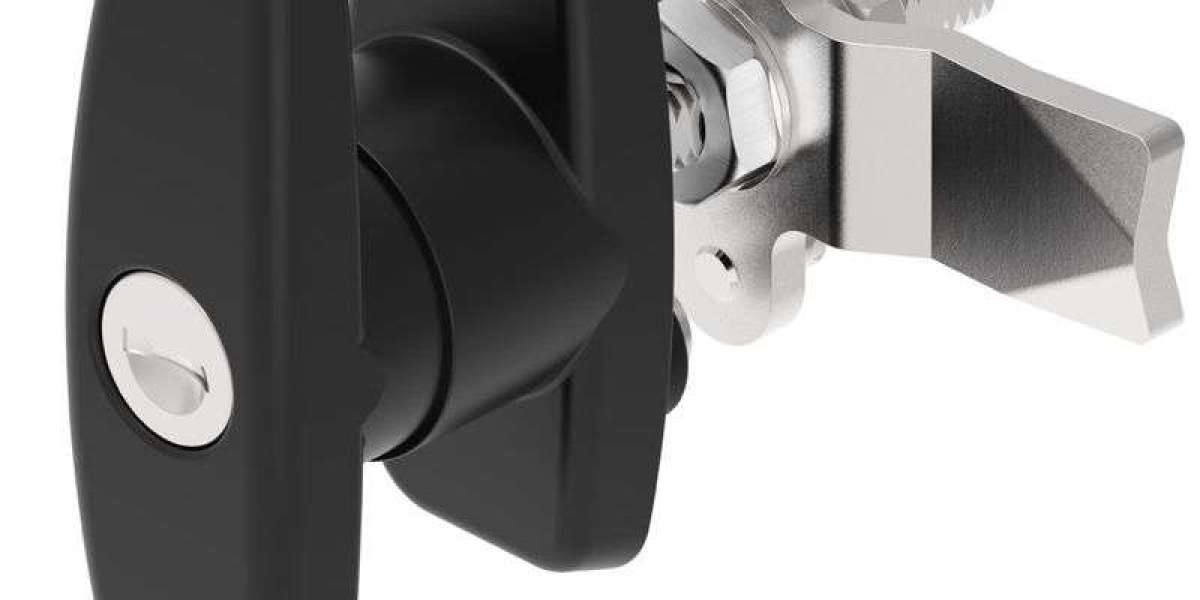

A slam latch is one of those mechanical components that rarely attracts attention until it stops working. Found on toolboxes, vehicle compartments, machinery panels, storage cabinets, access doors, and industrial enclosures, this compact device allows a door or panel to lock automatically when it is pushed closed. Unlike a traditional latch that requires a separate turning or locking action, a slam latch engages immediately after the door meets the striker.To get more news about Slam Latches, you can visit forndlock.com official website.
This simple operating principle explains much of its popularity. In working environments where operators frequently open and close compartments, saving even a few seconds can improve efficiency. A technician carrying tools, for example, can close a compartment with one hand instead of placing everything down to operate a complicated fastener. In my view, this convenience is the main reason slam latches continue to be widely used despite the availability of more advanced electronic locking systems.
The operating mechanism is usually based on a spring-loaded bolt, claw, or rotating catch. When the door closes, the striker pushes the latch mechanism aside. Once the striker passes the engagement point, the spring forces the mechanism back into place, holding the door securely. The latch can then be released with a lever, push button, paddle handle, cable, or key-operated mechanism.
One important characteristic is automatic engagement. This reduces the risk of a door being left partially secured because the user forgot to turn a handle. However, automatic engagement should not be confused with high security. Some slam latches are designed mainly to keep a panel closed during movement, while others include locks for restricting access. Buyers should therefore distinguish between simple retention and actual theft protection.
Material selection has a major influence on performance. Zinc-plated steel latches are common in general industrial applications because they are strong and reasonably affordable. Stainless steel models are better suited to marine equipment, outdoor cabinets, food-processing machinery, and other environments exposed to moisture or chemicals. Plastic and reinforced polymer latches are lighter and resistant to corrosion, although they may not provide the same load capacity as metal versions.
During practical evaluation, several details reveal the quality of a slam latch. The first is closing action. A good latch should engage smoothly without requiring excessive force. If the door must be slammed aggressively, the latch may be poorly aligned, incorrectly sized, or fitted with a spring that is too stiff. Repeated heavy impacts can damage the enclosure, loosen mounting hardware, and create unnecessary noise.
The second factor is holding strength. After engagement, the door should not rattle or move excessively. Some movement may be acceptable on a basic storage cabinet, but vibration-sensitive applications require tighter control. On service vehicles and mobile machinery, constant shaking can cause a weak latch to wear quickly. For these applications, a rotary-style slam latch or a model with two-stage engagement often provides better retention.
The third consideration is release performance. The handle or button should operate consistently, even after repeated use. Low-quality latches may develop stiffness, spring fatigue, or uneven movement. In cold, dusty, or dirty environments, exposed components can become difficult to operate. A sealed or protected mechanism is therefore worth considering for construction equipment, agricultural machinery, and outdoor installations.
From a user-experience perspective, slam latches perform best when the entire installation is properly designed. Even an expensive latch will feel unreliable if the striker is misaligned or the door flexes under pressure. Accurate positioning is essential. The mounting surface should also be rigid enough to support repeated impacts. Where adjustment may be required, an adjustable striker can make installation and maintenance much easier.
Noise is another issue that buyers sometimes overlook. A standard metal latch closing against a metal striker can produce a sharp sound. Rubber bumpers, insulated strikers, or soft-close features can reduce noise and prevent surface damage. These additions are especially useful in passenger vehicles, medical equipment, office furniture, and other places where quiet operation matters.
When purchasing a slam latch, begin by evaluating the door size, weight, orientation, and expected load. A small cabinet door does not need the same latch as a large equipment compartment. Check the rated working load rather than judging strength only by appearance. The latch must also tolerate vibration, impact, and accidental pulling forces.
Environmental conditions should guide the choice of material and finish. Stainless steel is usually the safest option for wet or corrosive locations, while coated steel may be more economical indoors. Buyers should also consider whether the latch needs a key lock, remote cable release, internal emergency release, or compatibility with a central locking system.
Installation dimensions deserve careful attention. Review the mounting hole pattern, latch depth, striker position, panel thickness, and handle clearance before ordering. Many purchasing mistakes occur because the buyer focuses on the front appearance while ignoring the space required behind the panel.
Overall, slam latches offer an effective balance of speed, simplicity, and dependable mechanical operation. Their greatest strength is not technical complexity but practical convenience. A well-made and correctly installed model can withstand thousands of operating cycles while making everyday access faster and easier. My recommendation is to avoid choosing purely by price. A slightly more expensive latch with stronger materials, smoother engagement, and better corrosion resistance will usually deliver greater value over its service life.