
The global biotin supplement market is transitioning from generalized multivitamin support into a targeted beauty and wellness category. As consumers increasingly connect biotin (vitamin B7) with hair strength, skin health, and nail integrity, product offerings are moving away from broad-spectrum claims toward clinically substantiated formulations.
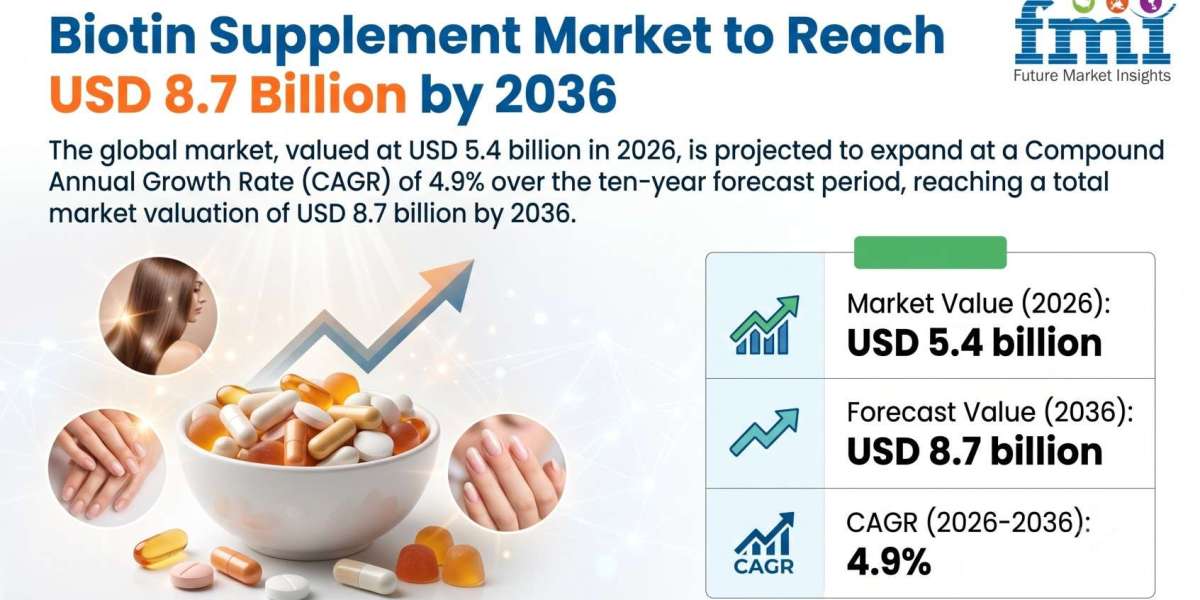
The global market, valued at USD 5.4 billion in 2026, is projected to expand at a Compound Annual Growth Rate (CAGR) of 4.9% over the ten-year forecast period, reaching a total market valuation of USD 8.7 billion by 2036.
Get detailed market forecasts, competitive benchmarking, and pricing trends:
https://www.futuremarketinsights.com/reports/sample/rep-gb-10452
Market Performance Overview (2026–2036)
To map out the core delivery forms, primary application areas, and regional growth vectors guiding this USD 3.3 billion market scale-up, key segment allocations highlight where global demand is concentrated:
· Capsule Supplements Form Segment (52.1% share): Commands the form type category in 2026, favored for precise dosing, long shelf stability, and easy daily compliance compared to tablets (28.4%) or gummies (12.8%).
· Hair Health Application Segment (38.7% share): Represents the primary application driver, as consumers prioritize biotin for hair follicle support, keratin infrastructure, and growth enhancement.
· Skin & Nail Health (49.7% combined share): Forms secondary beauty application pillars, targeting cellular repair, complexion enhancement, and brittle nail strength.
· India Regional Leadership (6.2% CAGR): Serves as the fastest-growing national market through 2036, supported by rapid urbanization, high pollution-induced hair fall concerns, and clean-label botanical-biotin launches.
Technical Drivers and Formulation Shifts
The commercial expansion of biotin supplements across retail and digital channels is propelled by three primary industry catalysts:
Shift from Broad Aesthetics to Clinically Validated Benefits
Regulatory scrutiny and health authority guidelines have elevated evidence-based formulations. Brands are shifting from high-dose "vanity" marketing to clinically substantiated claims, incorporating third-party testing and transparent ingredient sourcing to build consumer trust.
Precision Dosing and Lab-Interference Management
Increased awareness around high-dose biotin interfering with critical clinical lab tests (such as troponin for cardiac events or TSH for thyroid function) has prompted a shift toward precision dosing. Manufacturers are launching lower-dose (1,000–2,500 mcg) steady-release tablets to provide daily efficacy without diagnostic risk.
Integration with Personalised Digital Health Platforms
Consumer engagement is increasingly tied to digital wellness e-commerce. Biotin supplements are being paired with AI-driven diagnostic tools, direct-to-consumer subscriptions, and genotype-informed recommendation engines to deliver custom daily regimens.
Strategic Trade & Regulatory Constraints
Supplement brand owners and supply chain managers navigate specific operational hurdles:
· Supply Concentration: China remains the global supply anchor for synthetic D-Biotin. To hedge against tariff fluctuations and geopolitical supply risks, Western importers are pursuing "China + 1" diversification strategies through Indian and Southeast Asian processing hubs.
· Quality & Traceability Discipline: The market faces scrutiny over unverified dosage claims. Brands that invest in third-party quality certifications (non-GMO, USP/NSF validated) and supply chain transparency hold a distinct advantage over unbranded commodity offerings.
Regional Growth Profile
Regional demand reflects rapid adoption in Asian beauty markets alongside validation-driven purchasing in Western economies:
· India (6.2% CAGR): The global growth frontrunner, driven by a large, beauty-conscious youth demographic, urban hair-fall awareness, and the popularity of Ayurvedic-infused clean-label gummies.
· United States (5.1% CAGR): Represents a mature market navigating FDA lab-interference labeling guidelines, driving demand for precision-dosed and steady-release formulations.
· Germany (4.8% CAGR) & United Kingdom (4.2% CAGR): Leading European expansion through clean-label vegan certifications, EFSA metabolic health claims, and the expansion of pharmacy e-commerce subscriptions.
· Japan (4.5% CAGR): Driven by an aging population, where biotin is repositioned for healthy aging, skin barrier integrity, and brittle nail repair under FOSHU (Foods for Specified Health Uses) frameworks.
Competitive Landscape
The global biotin supplement landscape features a combination of multinational health conglomerates, specialized beauty-nutrition brands, and direct-to-consumer wellness startups.
Key market participants profiled in the report include Natrol Inc., Nature's Bounty Co., Now Health Group Inc., Solgar Inc., Country Life LLC, Jarrow Formulas Inc., Life Extension, Nordic Naturals Inc., Swanson Health Products, and Vitacost.com Inc. Leading players compete by offering clean-label product portfolios, expanding gummy/chewable options for younger demographics, and leveraging digital health platforms to drive subscriber retention.
Full Report for Detailed Insights: https://www.futuremarketinsights.com/reports/biotin-supplements-market
Frequently Asked Questions
What is the projected valuation of the global biotin supplement market by 2036?
The global biotin supplement market is projected to reach USD 8.7 billion by 2036, expanding from an estimated baseline valuation of USD 5.4 billion in 2026 at a CAGR of 4.9%.
Why do Capsules lead the delivery form segment?
Capsules hold a 52.1% market share in 2026 because they offer optimal stability, easy daily swallowability, and precise dosing without requiring added sugars or binders used in chewable formats.
What main application category dominates biotin supplement sales?
Hair health leads the application segment with a 38.7% share in 2026, as consumers strongly associate biotin supplementation with hair strength, follicle nourishment, and thinning prevention.