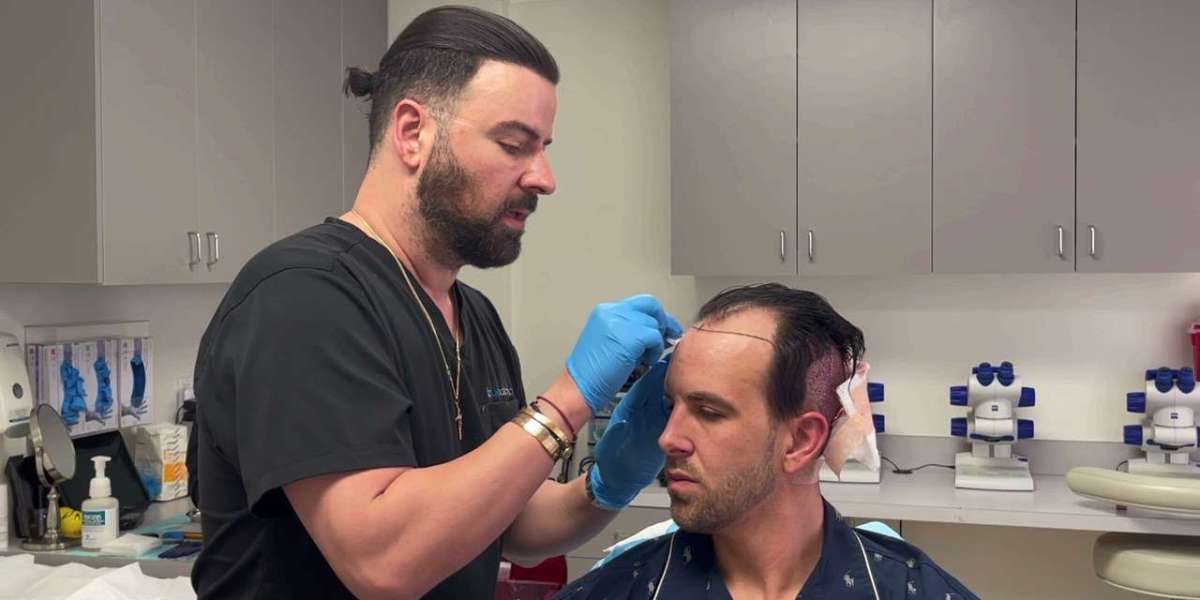

A FUE hair transplant in Dubai can be an option for people looking to address noticeable thinning, receding hairlines, or areas of reduced scalp coverage. The technique focuses on moving individual follicular units from a donor region to areas where additional hair is needed. Because the process involves detailed planning and gradual biological growth, understanding the important facts beforehand can help you make informed decisions about hair restoration.
FUE is not simply about adding as many grafts as possible. The quality of the donor supply, placement pattern, existing hair, scalp characteristics, and future hair loss can all influence the overall approach.
What Makes FUE Different?
Follicular Unit Extraction, commonly called FUE, involves harvesting individual follicular units rather than removing a strip of scalp.
A follicular unit can contain one or several naturally grouped hairs. These units are extracted separately and prepared for placement in selected areas.
This method gives the restoration process considerable flexibility because grafts can be distributed according to the needs of different parts of the scalp.
FUE Uses Your Own Hair
One important fact about hair transplantation is that the procedure relies on your available donor follicles. Hair is not manufactured or permanently created during the treatment.
The donor region needs to contain an adequate supply of suitable follicles. The characteristics of these hairs can affect how much coverage can realistically be achieved.
Why Donor Density Matters
A person with strong donor density may have more flexibility when planning coverage. Someone with limited donor hair may require a more conservative distribution strategy.
Using the donor supply carefully is particularly important when hair loss is extensive or likely to progress.
Hairline Restoration Requires Careful Planning
The front of the scalp is one of the most visually noticeable areas. A poorly proportioned hairline can make a restoration appear artificial even when plenty of grafts have been transplanted.
Natural hairlines usually contain subtle variations rather than appearing as a perfectly straight boundary.
Creating a Gradual Transition
Single-hair follicular units can be useful toward the front because they can create a softer transition between the forehead and denser hair behind it.
Further back, grafts containing multiple hairs may contribute more to overall fullness. The distribution should reflect natural growth patterns rather than applying the same density everywhere.
FUE Is Not an Instant Solution
Another important point is that transplanted hair does not normally produce its final appearance immediately.
The scalp needs time to heal, and the follicles need to progress through their natural growth cycle. Some visible hairs can shed after transplantation before new growth becomes noticeable.
This means the early appearance should not be considered the finished result.
Temporary Shedding Can Occur
Shedding during the early stages can be surprising, particularly for someone unfamiliar with the normal progression of hair restoration.
A transplanted hair shaft may fall while the follicle remains within the scalp. The follicle can subsequently enter a new growth phase.
Therefore, temporary loss of visible hair during recovery does not automatically mean that the transplanted follicle has been lost.
Hair Growth Happens Gradually
New hair generally develops progressively rather than appearing at full thickness overnight.
Early strands can be fine and may take time to mature. As growth continues, the texture and visual density can change.
Individual growth rates differ, so comparing your progress directly with another person's timeline may not provide an accurate indication of your own outcome.
FUE Can Address Different Areas of Hair Loss
The treatment can be planned for several common patterns of thinning. These may include:
Receding Temples
Reduced density around the temples can change the shape of the hairline. Strategic follicle placement can help restore coverage in selected areas.
Frontal Thinning
When the front of the scalp becomes less dense, carefully distributed grafts can help increase coverage while maintaining a natural transition.
Crown Concerns
The crown has a distinctive growth pattern because hairs often radiate around a central point. Restoration in this region therefore requires attention to direction and distribution.
Broader Scalp Thinning
Some people experience reduced density across a larger portion of the scalp. In these situations, donor availability becomes especially important when deciding how follicles should be allocated.
Not Every Person Has the Same Requirements
Hair loss is highly individual. Two people with apparently similar thinning may have very different donor densities, hair textures, scalp conditions, or future progression.
For this reason, a personalized assessment is more useful than relying on a standard graft number or predetermined treatment pattern.
The amount of coverage required also depends on the size of the affected area and the appearance a person hopes to achieve.
Hair Texture Can Affect Visual Density
The thickness, curl, color, and natural characteristics of hair can influence how full the scalp appears.
For example, naturally thicker or textured hair may provide greater visual coverage than very fine hair, even when the number of follicles is similar.
These characteristics should be considered when developing a restoration strategy.
Existing Hair Still Matters
FUE focuses on adding follicles to areas requiring coverage, but existing non-transplanted hair remains an important part of the overall appearance.
If existing hair continues to thin, the visual balance of the scalp may change over time.
Long-term planning therefore needs to consider both transplanted follicles and the condition of the surrounding hair.
Recovery Requires Patience
The recovery period is an important part of the treatment experience. Temporary redness, mild swelling, crusting, and sensitivity can occur around the treated areas.
The scalp should be treated gently during healing. Washing, sleeping, exercise, and scalp-contact instructions should be followed according to the specific aftercare guidance provided.
Avoiding unnecessary irritation can help protect the newly treated areas during the early phase.
Aftercare Can Affect the Experience
Following post-treatment instructions carefully is an important responsibility. The scalp may require a temporary adjustment to normal grooming habits.
Hair products, vigorous scalp rubbing, intense physical activity, and direct environmental exposure may need to be managed during the early recovery period.
The exact recommendations can vary depending on the individual's treatment and healing progress.
FUE Does Not Stop Every Type of Hair Loss
Transplanted follicles may provide coverage in selected areas, but the treatment does not necessarily prevent future thinning of other naturally growing hair.
Pattern hair loss can continue independently of the transplanted region.
Understanding this distinction is useful when considering the long-term appearance of the scalp and deciding whether additional hair-management strategies may be appropriate.
Results Depend on Several Variables
There is no single factor that determines the final appearance. Results can be influenced by:
Donor hair quality: Healthy and adequate donor follicles provide the foundation for transplantation.
Graft placement: The angle, direction, spacing, and distribution of follicles affect how naturally the hair integrates.
Existing hair: Surrounding density can influence the visual transition between transplanted and natural hair.
Individual growth: Follicles do not grow at identical speeds in every person.
Aftercare: Appropriate scalp care during recovery can help protect the treated region.
Natural-Looking Results Require More Than Density
A successful restoration is not necessarily the one with the highest possible number of grafts.
Hair should be placed according to the anatomy of the scalp and the direction in which natural hair grows. Excessive density in one region may leave insufficient donor follicles for areas that become more important later.
Strategic distribution can therefore be more valuable than simply focusing on quantity.
What Should You Consider Before Treatment?
Before moving forward, consider your current pattern of hair loss, donor hair availability, desired areas of improvement, recovery expectations, and long-term goals.
It is also useful to understand that hair restoration is a process requiring patience. Immediate visual changes do not represent the complete outcome.
Having realistic expectations can make the overall experience more manageable.
Final Thoughts
Understanding the key facts behind a FUE hair transplant in Dubai can help you approach hair restoration with greater clarity. Individual follicle extraction, donor availability, hairline design, graft placement, gradual regrowth, and long-term hair management all contribute to the overall process. Rather than focusing on a single factor, it is important to consider how each part of the treatment fits your individual hair restoration needs. For those considering their next step, TAJMEELS CLINIC can be part of the process when exploring personalized hair restoration options.