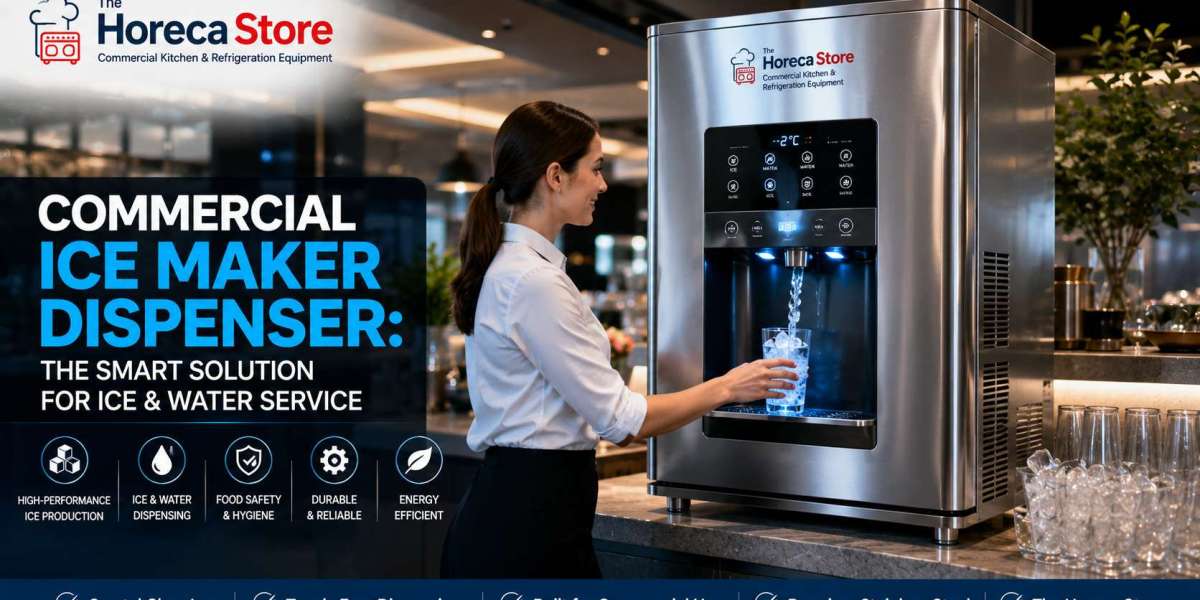

A reliable supply of ice is essential for many commercial businesses. Restaurants, hotels, cafés, bars, convenience stores, healthcare facilities, cafeterias, offices, and entertainment venues may use large quantities of ice every day. A commercial ice maker dispenser provides a convenient solution by combining ice production with easy dispensing in one professional system.
Instead of producing ice in one location and manually transporting it to another, businesses can use an ice maker dispenser to make ice available directly where it is needed. Some models also provide drinking water, making them useful for self-service stations, guest areas, break rooms, dining facilities, and other commercial environments.
Choosing the right commercial ice maker dispenser requires more than looking at the machine's size. Businesses should evaluate production capacity, ice storage, ice type, dispensing method, water requirements, installation space, sanitation, maintenance, energy efficiency, and expected customer demand.
This guide explains the benefits of commercial ice maker dispensers, their common applications, important features, maintenance requirements, and how to select the right solution for a professional operation.
What Is a Commercial Ice Maker Dispenser?
A commercial ice maker dispenser is a professional ice-making system designed to produce and dispense ice for commercial applications. Unlike a basic ice maker that only produces ice, a dispensing system allows users to obtain ice directly from the equipment.
Depending on the model, the machine may also include a water dispensing function. This makes it possible to provide ice and drinking water from the same unit.
Commercial ice maker dispensers are designed for environments where ice is regularly needed and quick access is important. They can be installed in restaurants, hotels, cafeterias, offices, healthcare facilities, convenience stores, and other commercial locations.
The exact production capacity, storage capacity, ice type, and dispensing features vary by model, so businesses should compare specifications carefully before purchasing.
How Does a Commercial Ice Maker Dispenser Work?
A commercial ice maker dispenser begins with a connected water supply. The machine uses the water to produce ice through its internal ice-making system.
After the ice is produced, it is transferred into a storage area or dispensing mechanism. When a customer or employee activates the dispenser, the machine releases ice through its dispensing outlet.
Depending on the design, activation may involve a push button, lever, sensor, or electronic control.
The Horeca Store some units can also dispense drinking water through a separate outlet. This can be particularly useful in self-service areas where customers or employees need convenient access to both ice and water.
Because production and dispensing are integrated, businesses can reduce the need for manually transferring ice between separate pieces of equipment.
Why Do Businesses Need a Commercial Ice Maker Dispenser?
Ice plays an important role in beverage service and foodservice operations. Restaurants may use it for soft drinks, iced tea, water, cocktails, and other beverages. Hotels may provide ice to guests, while offices and cafeterias may offer ice and water in employee areas.
Businesses with high ice demand need equipment capable of maintaining a consistent supply.
A commercial ice maker dispenser can help simplify this process by providing ice directly from the machine. This can save employees time and make service more convenient.
For customer-facing businesses, self-service dispensing can also allow customers to obtain ice or water without waiting for staff assistance.
Benefits of a Commercial Ice Maker Dispenser
Convenient Ice Dispensing
The primary advantage is convenience. Employees, customers, guests, or patients can obtain ice directly from the machine without manually scooping it from a separate storage bin.
Combines Production and Dispensing
A commercial ice maker dispenser can combine ice production, storage, and dispensing into a single piece of equipment. This can simplify equipment planning and reduce the need for additional transfer steps.
Saves Employee Time
In busy foodservice environments, employees can spend less time transporting and manually dispensing ice.
Supports Self-Service
In hotels, cafeterias, offices, and other facilities, an ice and water dispenser can provide convenient self-service access.
Efficient Use of Space
Combining several functions into one unit can be helpful for businesses with limited installation space.
Supports High-Demand Environments
Commercial models are designed for professional applications and can provide the ice production and dispensing capabilities needed for regular business use.
Common Applications
A commercial ice maker dispenser can be useful in many different industries.
Restaurants
Restaurants use ice throughout the day for beverages and foodservice. A conveniently located dispenser can help employees access ice quickly during busy service periods.
Hotels
Hotels can use ice and water dispensing equipment in guest areas, dining facilities, cafeterias, and other hospitality spaces.
A self-service system can improve convenience for guests while reducing the need for staff to deliver ice manually.
Bars
Bars often require substantial quantities of ice for cocktails, mixed drinks, soft drinks, and beverage presentation. Reliable ice production is essential for maintaining service during busy periods.
Cafeterias
Schools, universities, hospitals, corporate cafeterias, and institutional dining facilities can use commercial ice and water dispensers for self-service beverage stations.
Healthcare Facilities
Hospitals, clinics, and other healthcare facilities may use ice and water dispensing equipment in staff areas and designated patient environments. Hygiene and sanitation are particularly important in these applications.
Offices
Large offices can install ice and water dispensers in employee break rooms, kitchens, and cafeterias.
Convenience Stores
Convenience stores may use ice dispensing equipment to provide additional customer services and convenient access to ice and water.
How Much Ice Capacity Do You Need?
Selecting the correct capacity is one of the most important decisions when purchasing a commercial ice maker dispenser.
Begin by estimating your average daily ice consumption. Consider how much ice is used for beverages, food preparation, customer service, and other applications.
Then consider peak demand.
Restaurants may experience higher demand during lunch and dinner. Hotels may see increased demand during weekends, holidays, and events. Bars may require large quantities of ice during evening service.
Seasonal demand should also be considered, especially in warmer climates or businesses serving outdoor customers.
Review the manufacturer's production and storage specifications to determine whether a particular machine can meet your expected demand.
Consider the Type of Ice
Not every business needs the same type of ice.
Common commercial ice varieties include cube, nugget, and flake ice.
Cube ice is commonly used in beverages and is suitable for many restaurants and hospitality applications.
Nugget-style ice is popular in beverage service because of its softer and more chewable texture.
Flake ice can be useful for food displays, seafood presentation, and certain foodservice applications.
Before selecting an ice maker dispenser, determine which ice type best matches your business's products and customer expectations.
Important Features to Consider
Ice Production Capacity
Check how much ice the machine can produce over a specified period. Make sure the production rate is sufficient for normal and peak demand.
Ice Storage Capacity
Production capacity and storage capacity are different. A machine may produce a certain amount of ice per day but store a smaller amount at one time.
Consider when your business experiences peak demand and how much ice needs to be immediately available.
Water Dispensing
If you want both ice and drinking water, select a model designed for combined dispensing.
Review its water connection, filtration requirements, and dispensing specifications.
User Interface
A simple control system makes dispensing easier. Customer-facing equipment should have clear instructions and an easy-to-use interface.
Construction
Commercial equipment should be designed to withstand frequent use. Durable construction is particularly important in busy restaurants, hotels, and institutional environments.
Easy Cleaning
Ice and water equipment requires regular cleaning and sanitation. Choose equipment that allows appropriate access to areas that need routine maintenance.
Water Quality and Filtration
Water quality can affect ice production and equipment performance.
Hard water may contribute to mineral deposits and scale inside the machine. Depending on the local water supply, a suitable filtration system may help manage certain impurities.
Businesses should follow the manufacturer's recommendations for water filtration and filter replacement.
If the machine dispenses drinking water, maintaining appropriate water quality becomes especially important.
Regular filter replacement and cleaning can help maintain the equipment and support consistent operation.
Installation Requirements
Before purchasing a commercial ice maker dispenser, confirm the required installation conditions.
Depending on the equipment, you may need:
A suitable water connection
An appropriate drain connection
Electrical power
Adequate ventilation
Sufficient floor or counter space
Service clearance
Appropriate ambient conditions
Installation requirements vary between models. Always review the manufacturer's specifications before installation.
The location should also be convenient for the people who will use the machine.
Cleaning and Sanitation
Cleaning is one of the most important parts of maintaining a commercial ice maker dispenser.
Ice is consumed by customers, employees, and guests, so sanitation should be treated as a priority.
Follow the manufacturer's cleaning and sanitizing instructions.
Clean dispensing areas regularly and inspect ice-contact components for buildup or debris.
Water filters should be replaced according to the recommended schedule.
The surrounding area should also be kept clean and dry.
Businesses should establish a routine cleaning schedule and follow applicable health and food-safety requirements.
Maintenance Tips
Regular maintenance can help support reliable performance and extend the useful life of commercial ice equipment.
Inspect the machine regularly for leaks, unusual sounds, reduced production, or other changes in operation.
Clean and sanitize the system according to manufacturer recommendations.
Replace filters when required.
Keep ventilation areas clear and clean relevant refrigeration components as recommended.
Inspect dispensing mechanisms and controls.
For complex refrigeration, electrical, or mechanical issues, professional service should be used.
Prompt attention to unusual performance can help prevent small problems from becoming larger operational disruptions.
Energy Efficiency Considerations
Because an ice maker may operate throughout the day, energy efficiency can have an effect on operating costs.
When comparing machines, review the manufacturer's electricity and water consumption specifications.
Install the machine in an appropriate location with adequate ventilation.
Avoid placing equipment in unnecessarily hot environments unless it is specifically designed for those conditions.
Keep condenser and ventilation areas clean according to the manufacturer's instructions.
Routine maintenance can also help the machine operate as intended.
Commercial Ice Maker Dispenser vs. Traditional Ice Machine
A traditional commercial ice machine primarily focuses on producing ice. It may require a separate storage bin and manual scooping.
A commercial ice maker dispenser integrates production and dispensing, allowing users to access ice directly.
This can simplify workflow and reduce manual handling.
For businesses with limited space or customer-facing self-service requirements, an integrated dispenser may be particularly convenient.
However, very high-volume operations may still prefer a separate ice maker and large storage bin. The best choice depends on ice demand, available space, service requirements, and operational workflow.
How to Choose the Right Commercial Ice Maker Dispenser
Start by identifying your daily ice requirements.
Next, estimate peak demand during your busiest operating periods.
Determine the preferred ice type and whether you need water dispensing.
Measure the available installation space and confirm electrical, water, drainage, and ventilation requirements.
Consider who will use the machine. Employee-operated equipment may have different requirements from a customer-facing self-service dispenser.
Finally, evaluate cleaning, filtration, maintenance, and long-term operating requirements.
Choosing equipment based on actual business needs can help prevent insufficient ice production while avoiding unnecessary equipment capacity.
Why Choose The Horeca Store?
Selecting commercial refrigeration and ice equipment from a supplier serving professional foodservice and hospitality businesses can make it easier to find solutions designed for commercial applications.
The Horeca Store offers commercial refrigeration, ice-making, and ice-and-water dispensing equipment for restaurants, hotels, cafés, bars, offices, healthcare facilities, and other businesses.
Businesses searching for a commercial ice maker dispenser can explore the commercial ice and water dispenser collection from The Horeca Store to review available equipment.
Before purchasing, compare production capacity, storage capacity, ice type, dispensing method, water requirements, dimensions, installation specifications, maintenance requirements, and operating considerations.
Final Thoughts
A commercial ice maker dispenser can be a practical solution for businesses that need a consistent supply of ice and convenient dispensing. By combining ice production and dispensing, these machines can simplify operations and reduce the need for manual ice handling.
Restaurants, hotels, bars, cafeterias, offices, healthcare facilities, and retail businesses can all benefit from commercial ice dispensing equipment when the machine is properly matched to their requirements.
When choosing a unit, consider ice production, storage capacity, ice type, water quality, filtration, installation requirements, sanitation, energy efficiency, and maintenance.
The right machine should meet your normal demand while providing enough capacity for busy periods. Regular cleaning, proper filtration, routine maintenance, and appropriate installation can help support dependable operation.
For businesses looking for professional ice and water dispensing equipment, The Horeca Store provides commercial solutions for a variety of foodservice, hospitality, and business applications. Explore the available commercial ice maker dispenser options and select equipment according to your business's capacity, space, and operational requirements.