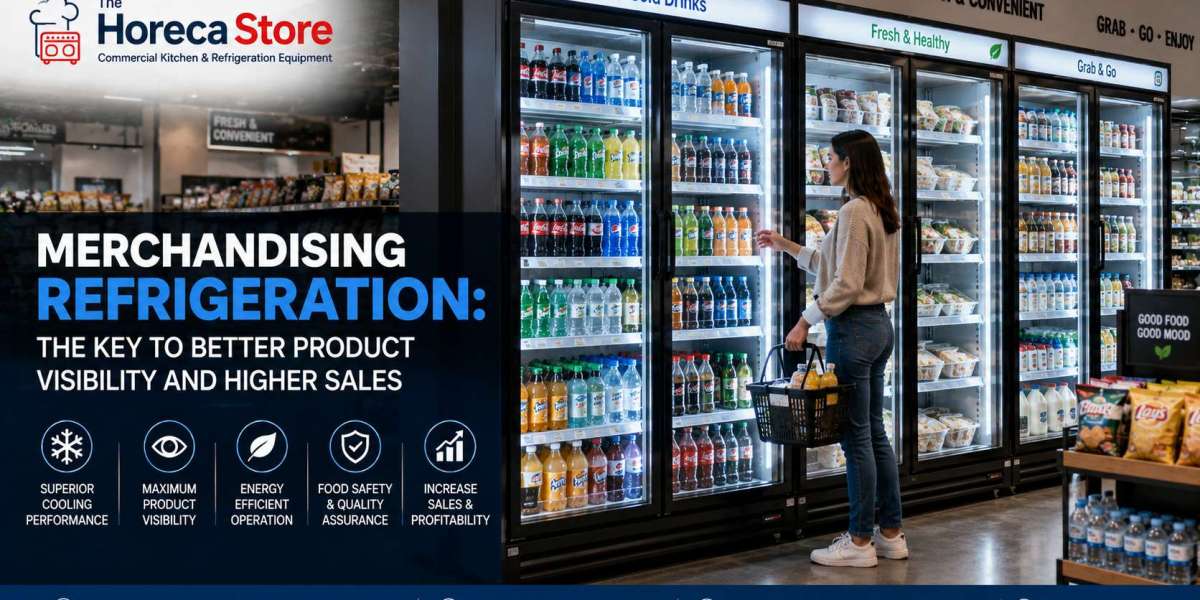

For businesses that sell chilled food, beverages, dairy products, fresh produce, prepared meals, desserts, and other temperature-sensitive products, refrigeration does more than preserve inventory. The right equipment can also help businesses present products attractively and encourage customers to make purchasing decisions. This is where merchandising refrigeration becomes an important part of commercial retail and foodservice operations.
Unlike traditional back-of-house refrigerators designed mainly for storage, merchandising refrigeration combines temperature-controlled storage with product visibility. Glass doors, open displays, interior lighting, adjustable shelving, and attractive product presentation can make refrigerated products easier for customers to see and access.
The Horeca Store restaurants, convenience stores, supermarkets, grocery stores, cafés, delis, bakeries, hotels, and other businesses can use merchandising refrigeration to create organized refrigerated displays while maintaining suitable storage conditions.
This guide explains what merchandising refrigeration is, its benefits, common applications, important features, energy considerations, maintenance requirements, and how to choose the right commercial refrigerated display for your business.
What Is Merchandising Refrigeration?
merchandising refrigeration refers to commercial refrigeration equipment designed to both store temperature-sensitive products and display them to customers.
These systems are commonly used in retail environments where product visibility is important. Instead of keeping products behind a solid refrigerator door or in a back-room storage area, merchandising refrigerators allow customers to see available products through glass doors or open-front displays.
Typical products displayed in merchandising refrigerators include:
Bottled beverages
Canned drinks
Dairy products
Fresh juices
Prepared foods
Sandwiches
Salads
Desserts
Packaged snacks
Fresh produce
The equipment is designed to maintain a refrigerated environment while making products easy to browse and access.
Why Is Merchandising Refrigeration Important?
In a commercial retail environment, customers need to see products before deciding what to purchase.
A well-designed refrigerated display can make products more visible and organized while keeping them at appropriate storage conditions.
For example, a convenience store can use a glass-door merchandising refrigerator to display cold beverages. A deli can display prepared foods and salads, while a supermarket can use refrigerated cases for dairy products, beverages, and fresh foods.
This makes refrigeration part of both inventory management and product presentation.
Benefits of Commercial Merchandising Refrigeration
1. Attractive Product Presentation
One of the biggest advantages is visibility. Customers can see products without opening multiple refrigerator doors or searching through storage areas.
Interior lighting can further improve product presentation.
2. Easy Customer Access
Merchandising refrigerators are designed for customer-facing environments. Products can be arranged at accessible heights, making it easy for shoppers to select what they want.
3. Supports Impulse Purchases
When chilled products are displayed prominently, customers may be more likely to notice them and make an additional purchase.
Cold beverages, desserts, snacks, and ready-to-eat foods can benefit from attractive placement.
4. Organized Product Storage
Adjustable shelving allows businesses to organize products by type, size, brand, or price.
An organized display can make restocking and inventory management easier.
5. Maintains Refrigerated Conditions
Merchandising refrigeration combines product visibility with temperature-controlled storage, helping businesses display perishable products while maintaining suitable refrigerated conditions.
Common Applications
Merchandising refrigeration can be used in many commercial environments.
Convenience Stores
Convenience stores often use glass-door refrigerators to display bottled beverages, energy drinks, juices, dairy products, and other chilled products.
High product visibility is particularly useful in locations where customers want to make quick purchases.
Supermarkets
Supermarkets can use merchandising refrigeration for dairy, beverages, fresh foods, desserts, prepared meals, and other refrigerated products.
Different display configurations can be used throughout the store.
Grocery Stores
Independent grocery stores can use commercial refrigerated displays to organize chilled products while maximizing available sales-floor space.
Cafés
Cafés can display bottled drinks, sandwiches, salads, desserts, and other ready-to-eat products using merchandising refrigerators.
Restaurants
Restaurants can use refrigerated display equipment for grab-and-go products, beverages, desserts, and prepared foods.
Bakeries and Delis
Bakeries and delis can use refrigerated displays to showcase cakes, desserts, sandwiches, salads, and other temperature-sensitive products.
Hotels
Hotels may use merchandising refrigeration in lobby areas, cafés, breakfast areas, restaurants, and convenience sections.
Types of Merchandising Refrigeration
Different businesses require different display configurations.
Glass-Door Merchandising Refrigerators
Glass-door models provide excellent visibility while keeping products enclosed.
They are commonly used for beverages, dairy products, prepared foods, and other refrigerated merchandise.
Glass doors can also help businesses organize products vertically using adjustable shelves.
Open Merchandising Refrigerators
Open-front refrigerated displays allow customers to reach products directly.
They can provide excellent accessibility but require careful consideration of temperature control and operating conditions.
These displays are commonly found in supermarkets and grab-and-go retail environments.
Multi-Section Merchandisers
Larger stores may use multi-section refrigeration units to display significant quantities of products.
These systems can provide extensive display capacity while creating a professional retail appearance.
Countertop Refrigerated Displays
Smaller refrigerated displays can be placed on countertops or service counters.
They are useful for desserts, beverages, prepared foods, and other products that need to remain visible near checkout or service areas.
Important Features to Consider
When choosing merchandising refrigeration, businesses should evaluate several features.
Glass Door Design
For enclosed displays, the quality and design of the glass doors can affect visibility and usability.
Clear glass allows customers to view products easily.
Depending on the equipment, insulated glass may also help support temperature control.
Interior Lighting
Lighting can significantly affect product presentation.
LED lighting is commonly used in modern commercial refrigerated displays because it provides bright illumination while generally producing relatively little heat.
Proper lighting can make colorful products more noticeable.
Adjustable Shelving
Adjustable shelves allow businesses to change the display based on product sizes and inventory.
For example, tall beverage bottles may require different shelf spacing than small packaged foods.
Temperature Controls
Accurate temperature control is essential when displaying perishable products.
Look for equipment with controls appropriate for the products being stored and displayed.
Businesses should follow product-specific storage requirements and applicable food-safety regulations.
Self-Closing Doors
In busy retail environments, customers may leave refrigerator doors open.
Self-closing doors can help reduce unnecessary temperature loss and support more consistent operation.
Durable Construction
Commercial refrigeration equipment should be built to withstand frequent customer interaction, restocking, cleaning, and daily use.
Choosing the Right Size
Selecting the correct size is important for both product presentation and operational efficiency.
Start by determining how much product you need to display.
Then consider the available floor space.
A large refrigerated display may provide greater capacity, but it also requires more floor area and may consume more energy.
A smaller business may benefit from a compact unit that provides sufficient display capacity without occupying excessive space.
Larger supermarkets and convenience stores may require multiple sections or several refrigerated displays.
Consider future business growth when selecting capacity.
Merchandising Refrigeration and Product Organization
Good organization can make a refrigerated display more effective.
Group similar products together so customers can easily compare options.
Place high-demand products at convenient eye-level locations.
Use the available shelf space efficiently without overcrowding products.
Keep labels and product information facing forward.
Follow appropriate stock rotation procedures so older inventory is used appropriately.
A clean and organized display can improve both customer experience and employee efficiency.
Energy Efficiency Considerations
Commercial merchandising refrigeration can operate for long periods, so energy efficiency is an important consideration.
When comparing equipment, review energy specifications and operating requirements.
Glass doors should close properly, and damaged door gaskets should be replaced promptly.
Avoid leaving doors open unnecessarily.
Open-front displays should be installed and operated according to manufacturer recommendations because they can have different refrigeration and airflow requirements than enclosed models.
Keep refrigeration components clean and provide required clearance for ventilation.
Regular maintenance can help equipment operate as intended.
Food Safety and Temperature Management
merchandising refrigeration must be operated according to appropriate food-safety procedures.
Businesses should monitor temperatures regularly and store products according to their specific requirements.
Do not overload shelves in a way that blocks designed airflow.
Products should be arranged so that cold air can circulate properly.
Clean spills immediately and maintain clean display surfaces.
Follow applicable local food-safety requirements and manufacturer recommendations.
Temperature monitoring is especially important for perishable foods such as dairy products, prepared meals, salads, meats, and other refrigerated items.
Maintenance Tips
Regular maintenance helps support reliable refrigeration performance.
Clean glass doors and interior surfaces regularly.
Inspect door gaskets for damage.
Clean shelving and remove expired or damaged products.
Keep refrigeration components clean according to manufacturer instructions.
Check temperature controls and investigate unusual temperature changes.
Ensure air vents are not blocked by products.
Schedule professional service when technical refrigeration repairs are required.
A regular maintenance schedule can help businesses identify potential problems before they affect inventory.
Common Mistakes to Avoid
One common mistake is selecting equipment based only on appearance. A refrigerated display should look attractive, but it must also provide the appropriate capacity and temperature performance.
Another mistake is choosing a unit that is too large for the available space.
Overloading shelves can restrict airflow and make products difficult to see.
Poor product organization can also reduce the effectiveness of a merchandising display.
Businesses should avoid leaving glass doors open unnecessarily.
Neglecting cleaning and maintenance can affect both equipment performance and product presentation.
How Merchandising Refrigeration Can Improve Retail Displays
A refrigerated display can become an important part of a store's overall layout.
Place high-demand products in areas where customers naturally walk.
Use organized shelving to create clear product categories.
Keep popular beverages and ready-to-eat products easy to reach.
Maintain clean glass doors so customers can see products clearly.
Use interior lighting to improve visibility.
A well-designed refrigerated display can help create a professional shopping environment while providing the temperature-controlled storage required for perishable merchandise.
Why Choose The Horeca Store?
Choosing commercial refrigeration equipment from a supplier focused on hospitality, foodservice, and commercial applications can help businesses find equipment suited to professional requirements.
The Horeca Store provides commercial refrigeration solutions for restaurants, supermarkets, convenience stores, cafés, hotels, delis, bakeries, and other businesses.
Businesses searching for merchandising refrigeration can explore the commercial merchandiser refrigerator selection from The Horeca Store to review available refrigerated display solutions.
Before purchasing, compare dimensions, display capacity, temperature specifications, door configuration, shelving, lighting, construction, installation requirements, and operating considerations.
How to Choose the Right Merchandising Refrigerator
Begin by identifying the products you want to display.
Beverages, dairy products, prepared foods, desserts, and fresh foods may require different storage configurations.
Next, determine how much product you need to display during normal and peak periods.
Measure the available floor space and consider customer traffic.
Decide whether glass-door or open-front refrigeration is more appropriate for your business.
Evaluate temperature control, lighting, shelving, energy consumption, and maintenance requirements.
Finally, consider how the refrigerator will fit into your store's overall merchandising strategy.
The best unit should provide sufficient storage and display capacity without unnecessarily consuming valuable floor space.
Final Thoughts
merchandising refrigeration combines commercial refrigeration with product presentation, making it an important solution for businesses that sell chilled and temperature-sensitive products.
Restaurants, supermarkets, grocery stores, convenience stores, cafés, bakeries, delis, hotels, and other businesses can use refrigerated displays to organize products, improve visibility, provide convenient customer access, and maintain appropriate storage conditions.
When selecting merchandising refrigeration, consider the type of products being displayed, capacity, available space, glass-door design, interior lighting, shelving, temperature control, energy efficiency, and maintenance requirements.
A well-organized refrigerated display can support both inventory management and customer experience. Regular cleaning, temperature monitoring, proper stocking, and routine maintenance can help keep the equipment operating effectively.
For businesses looking for professional merchandising refrigeration equipment, The Horeca Store offers commercial refrigeration solutions for a variety of retail, hospitality, and foodservice applications. Explore the available commercial merchandiser refrigerators and choose a solution that matches your products,available space, customer traffic, and operational requirements.