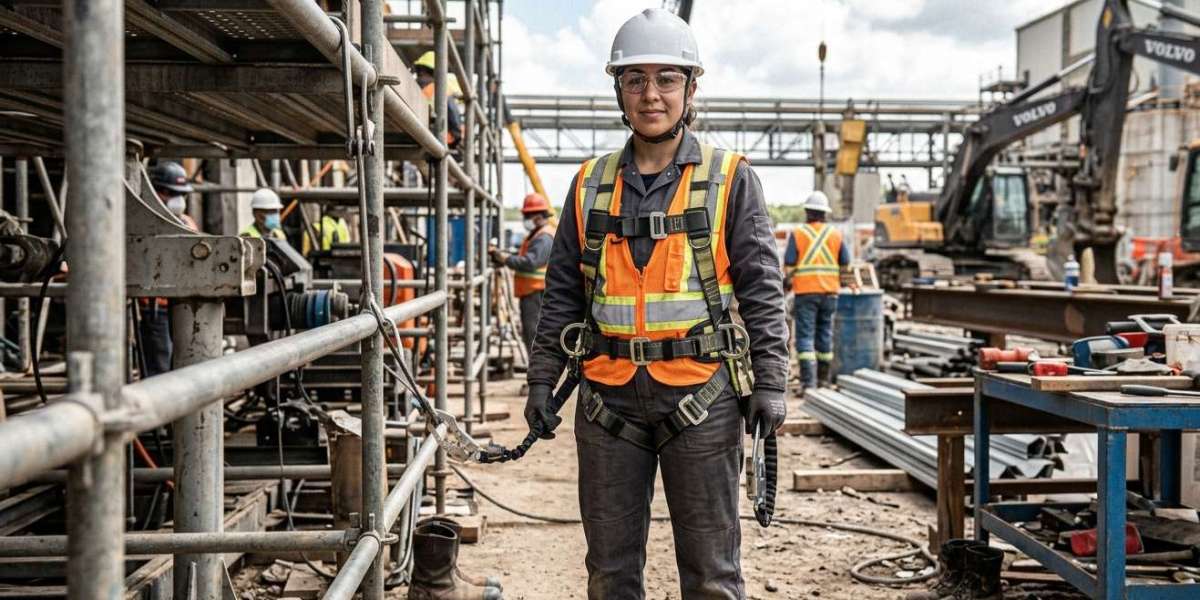

Working at height is widespread in a variety of industries, including construction, maintenance, warehousing, telecommunications, and industrial facilities. Ladders, scaffolds, platforms, and high work locations enable various jobs, but they can also pose major fall risks.
A fall from a height can cause severe injuries or even death. This is why proper fall protection is a critical component of workplace safety. A full body safety harness is an important component of personal fall protection systems because it helps distribute fall forces over the body when utilized with compatible equipment and following proper procedures.
What is a full-body safety harness?
A full body safety harness is a type of personal protective equipment that is used to support workers while working at heights or in fall protection applications. Unlike a basic belt, a complete body harness usually has straps over the shoulders, torso, and legs.
The harness functions as part of a broader fall protection system. Depending on the application, these could contain appropriate lanyards, connectors, lifelines, anchor points, or other permitted components.
It is not intended to prevent every fall. Instead, when combined with a proper fall arrest system, it can help constrain or arrest a worker's fall while also distributing forces through appropriate parts of the body.
Why Fall Protection is so important
Falls from height can occur suddenly. A worker may lose balance, slip on a damp surface, fall from an elevated platform, or experience an equipment failure.
Even experienced workers may be exposed to these hazards. Workplace safety is therefore dependent on detecting threats before work begins and implementing suitable management measures.
When personal fall protection is necessary, a well chosen harness can play an important role in the overall safety approach.
How A Full Body Safety Harness Offers Protection
A complete body harness is intended to connect the worker to an appropriate fall protection system. During a fall arrest, the harness serves to distribute the forces generated by the fall throughout the body's strongest parts.
A proper connection is important. The harness must be used with compatible components and a suitable anchorage system. The entire system should be selected and utilized in accordance with the manufacturer's instructions and any applicable workplace safety laws.
Simply wearing a harness and not connecting it appropriately does not provide adequate fall protection.
Proper Fit makes a difference
A harness must be properly fitted to each individual worker. A harness that is too loose, too tight, or wrongly set may not behave as expected during a fall.
Workers should adjust the straps such that the harness fits securely while also allowing for proper movement. The leg straps, shoulder straps, and other adjustment points should be positioned per the manufacturer's specifications.
Before beginning work, employees should ensure that all buckles and connectors are properly fastened.
Regular Inspection is Essential
A harness should be inspected before use. Workers should look for cuts, tears, fraying, torn stitching, corrosion, worn components, and other indicators of wear and tear.
Hardware such as buckles, D-rings, and connectors should also be examined for evident damage or distortion.
If a harness has been involved in a fall or exhibits symptoms of damage, it should be removed from service and treated in accordance with the manufacturer's guidelines and workplace standards. Never presume that a damaged harness is safe just because the damage is small.
Training helps workers use harnesses correctly
Even high-quality fall prevention equipment cannot give the intended benefits unless workers understand how to utilize it appropriately.
Training should cover how to put on and adjust the harness, properly connect it, inspect it before use, identify threats, and comprehend the fall protection system's limitations.
Workers should also recognize that fall prevention entails more than just wearing PPE. Safe work techniques, proper anchor points, planning, supervision, and emergency protocols are all important.
Comfort Can Lead to Better Compliance
Work-at-height duties might often last many hours. Workers who wear an unpleasant or badly fitting harness are more inclined to loosen it, wear it incorrectly, or skip using it.
Choosing a harness with appropriate fitting and adjustable features can help workers wear their equipment correctly.
However, comfort should always be weighed against the task's protection requirements. The harness must be appropriate for the specific work activity and compatible with the entire fall protection system.
The Importance of a Comprehensive Fall Protection System
A full body safety harness is just one component of a fall protection system. Lanyards, lifelines, connectors, and anchorages must all be suitable and compatible.
Before beginning work, employers and employees should examine the situation and identify any potential fall hazards. They should also consider things like fall clearance, anchorage position, rescue preparation, and the type of job being done.
A correctly designed system can provide more effective protection than a harness alone.
Conclusion
Working at height necessitates careful preparation and the appropriate safety equipment. When utilized correctly, a full body safety harness can contribute significantly to a personal fall protection system by keeping workers connected and spreading forces during a fall arrest.
It is critical to choose the right equipment, ensure a proper fit, inspect it on a regular basis, receive adequate training, and adhere to manufacturer and workplace safety rules.
Ultimately, effective fall protection requires more than just wearing a harness. It entails recognizing the threats, utilizing compatible equipment, and cultivating a working culture in which safety is handled as a top priority every day.