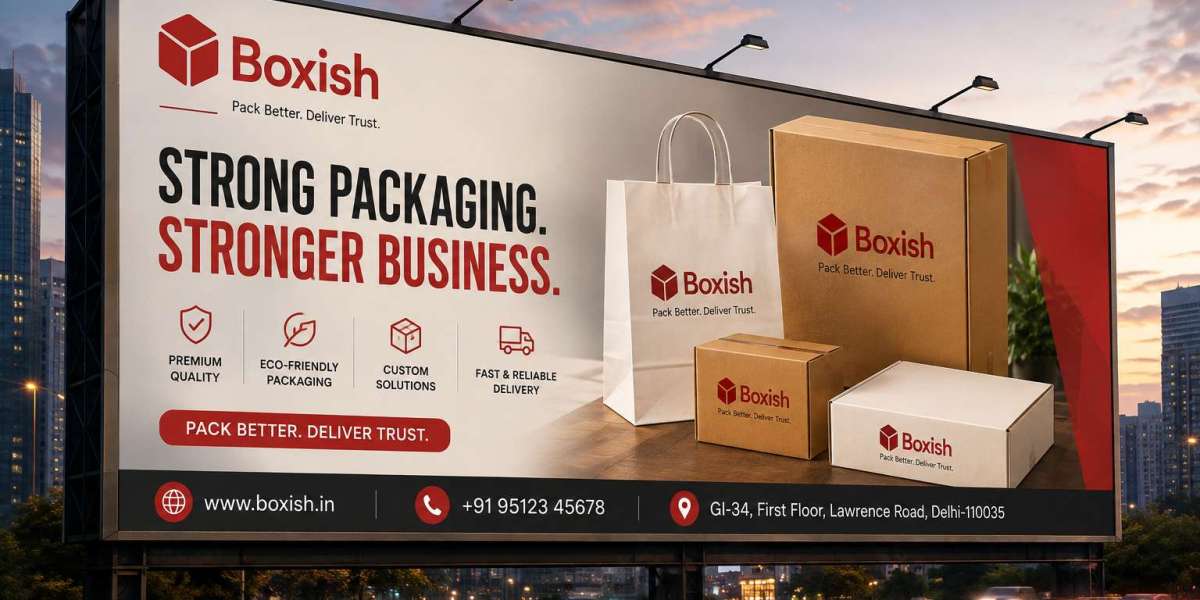

Packaging costs can become a significant operational expense as businesses increase their order volumes. Ecommerce sellers, retailers, manufacturers, and distributors need packaging that protects products while avoiding unnecessary material usage, storage costs, and transportation expenses.
Optimizing is corrugated box packagingnot simply about choosing cheaper boxes. It involves selecting suitable dimensions, matching box strength with product requirements, improving warehouse processes, and monitoring packaging performance.
Why Packaging Optimization Matters
Poor packaging decisions can create costs at several stages of the supply chain. Oversized boxes may require more material and filler, while weak packaging can lead to damaged products and replacement shipments.
Businesses should consider the complete packaging cycle:
Material procurement
Warehouse storage
Packing operations
Transportation
Product delivery
Returns and replacements
Improving one stage without considering the others may not deliver the best overall result.
Choose the Right Box Size
One of the easiest ways to reduce packaging waste is to select boxes that closely match product dimensions.
Oversized boxes can create unnecessary empty space and increase the need for protective fillers. They may also occupy more warehouse and transportation space.
Businesses should measure:
Product length
Product width
Product height
Required protective material
Available packing space
For businesses with multiple products, creating a packaging-size matrix can help employees quickly select the appropriate box for each order.
Match Box Strength With Product Weight
Using stronger packaging than necessary can increase material costs. At the same time, insufficient box strength can result in product damage.
Businesses should evaluate box requirements based on:
Product weight
Fragility
Stacking pressure
Shipping distance
Handling conditions
For example, lightweight clothing and heavier home accessories should not necessarily use the same packaging specification.
The goal is to find the right balance between protection and material efficiency.
Reduce Empty Space Inside Packages
Excessive empty space allows products to move during transportation and can increase packaging consumption.
Businesses can reduce empty space by:
Standardizing frequently used box sizes
Selecting boxes based on product dimensions
Using suitable internal protection
Avoiding unnecessarily large packages
However, reducing empty space should not mean forcing products into unsuitable packaging. Fragile items may still require sufficient cushioning.
Use Packaging According to the Application
Businesses often need different packaging formats for different sales channels. Ecommerce shipments require strong protection, while retail purchases may require convenient carrying options.
For suitable retail, bakery, and takeaway applications, paper bag packaging can provide a practical alternative to shipping boxes.
Similarly, businesses selling food products may need specialized packaging designed around product size, handling, and delivery requirements.
Using application-specific packaging can prevent over-packaging and help businesses manage material consumption more efficiently.
Optimize Internal Protection
Internal protection should be based on product requirements rather than used automatically in large quantities.
Suitable options may include:
Paper cushioning
Corrugated partitions
Protective inserts
Sleeves
Appropriate fillers
For example, a fragile glass product may require structured separation, while a durable product may need minimal cushioning.
Using the right protection can reduce both damage and unnecessary material consumption.
Improve Warehouse Storage
Packaging optimization also involves how boxes are stored before use.
Poor warehouse organization can increase handling time and lead to damaged packaging materials.
Businesses should:
Keep packaging in dry areas
Label different sizes clearly
Store frequently used boxes near packing stations
Avoid excessive stacking
Separate slow-moving packaging
A well-organized packaging area allows employees to locate the right box faster and reduces unnecessary movement within the warehouse.
Standardize Common Box Sizes
Businesses often use too many packaging sizes without analyzing actual usage.
Reviewing order data can help identify the most frequently used dimensions.
A standardized packaging range can provide:
Easier procurement
Lower inventory complexity
Faster packing
Better storage utilization
Simplified employee training
Specialized packaging can still be maintained for products that require unique dimensions or additional protection.
Reduce Logistics Costs Through Better Dimensions
Package dimensions influence transportation efficiency.
Large packages may occupy more vehicle or warehouse space even when the product itself is relatively small. Better-sized packaging can improve space utilization.
Businesses should consider the relationship between product size, package size, storage volume, and transportation volume.
For food businesses, the same principle applies when purchasing pizza boxes wholesale. Standardizing frequently used sizes can simplify storage and procurement while ensuring that the packaging fits the products correctly.
Consider Packaging Weight
Packaging weight can also affect transportation costs, particularly for businesses shipping large quantities.
Using unnecessarily heavy packaging may increase total shipment weight.
However, reducing material thickness without testing can create product protection problems.
Businesses should test alternative packaging specifications and compare:
Weight
Strength
Damage rate
Cost
Shipping performance
The best option is one that provides adequate protection at an efficient overall cost.
Improve Packaging Procurement
Procurement planning can help businesses avoid both shortages and excess inventory.
Businesses should track:
Monthly consumption
Seasonal demand
Current stock
Supplier lead time
Minimum order quantities
Storage capacity
Ordering based on actual consumption data is generally more efficient than making purchases based only on assumptions.
Work With Reliable Suppliers
Supplier consistency is important when packaging specifications are standardized.
Changes in board quality, dimensions, or construction can affect packing and shipping performance.
Before selecting a supplier, businesses should evaluate:
Sample quality
Manufacturing consistency
Delivery reliability
Available sizes
Customization options
Order flexibility
A dependable corrugated box supplier should be able to maintain consistent specifications across repeat orders.
Test Packaging Before Making Changes
A packaging change should be tested before being implemented across the entire operation.
Businesses can compare different options based on:
Product protection
Packaging weight
Material usage
Packing time
Shipping performance
Damage rates
Ecommerce businesses can send sample packages through their normal delivery network to evaluate real-world performance.
A packaging solution that looks cheaper during procurement may become more expensive if it increases damage and returns.
Use Data to Measure Packaging Efficiency
Packaging optimization becomes more effective when businesses track measurable results.
Useful metrics include:
Packaging cost per order
Material consumption
Product damage rate
Return rate
Packing time
Filler usage
Storage space
Shipping cost
For example, if changing to a smaller box reduces material usage but increases product damage, the business should reconsider the design rather than continuing based solely on material savings.
Build a More Sustainable Packaging System
Waste reduction and logistics efficiency often work together.
Right-sized packaging can reduce unnecessary material while also improving transportation and storage efficiency.
Businesses can improve sustainability by:
Reducing excess packaging
Preventing product damage
Using suitable recyclable materials
Optimizing package dimensions
Managing inventory carefully
Avoiding unnecessary fillers
The most sustainable package is one that uses resources efficiently while successfully protecting the product.
Practical Tips for Reducing Packaging Costs
Businesses can start with a simple packaging audit:
List all currently used box sizes.
Identify monthly consumption for each size.
Find frequently used and rarely used formats.
Measure products accurately.
Review damage and return rates.
Test right-sized alternatives.
Track packaging cost per shipment.
Review results regularly.
This approach can reveal packaging inefficiencies that are difficult to notice during everyday operations.
Frequently Asked Questions
How can businesses reduce packaging waste?
Businesses can reduce waste by using right-sized boxes, minimizing unnecessary fillers, standardizing frequently used sizes, and matching box strength with product requirements.
Does smaller packaging always reduce logistics costs?
Not necessarily. Smaller packaging can reduce volume, but it must still provide enough space for the product and required protection. Testing is important before changing package dimensions.
Why is supplier consistency important?
Consistent packaging specifications help businesses maintain predictable packing processes and product protection across repeated orders.
Can different packaging formats be used together?
Yes. Businesses can use shipping boxes for ecommerce orders, paper bag packaging for suitable retail applications, and specialized food packaging where required. The important point is to select each format according to its intended use.
Conclusion
Optimizing corrugated box packaging requires a complete view of the supply chain. Businesses need to consider box dimensions, strength, internal protection, warehouse storage, transportation, procurement, and product performance together.
Right-sized packaging can reduce material waste and improve logistics efficiency, while suitable box strength helps prevent costly product damage. Standardizing common sizes and using actual consumption data can also simplify procurement and inventory management.
The most effective packaging strategy is not about using the least material or choosing the cheapest box. It is about using the right packaging for the right product while continuously measuring cost, protection, and operational performance.