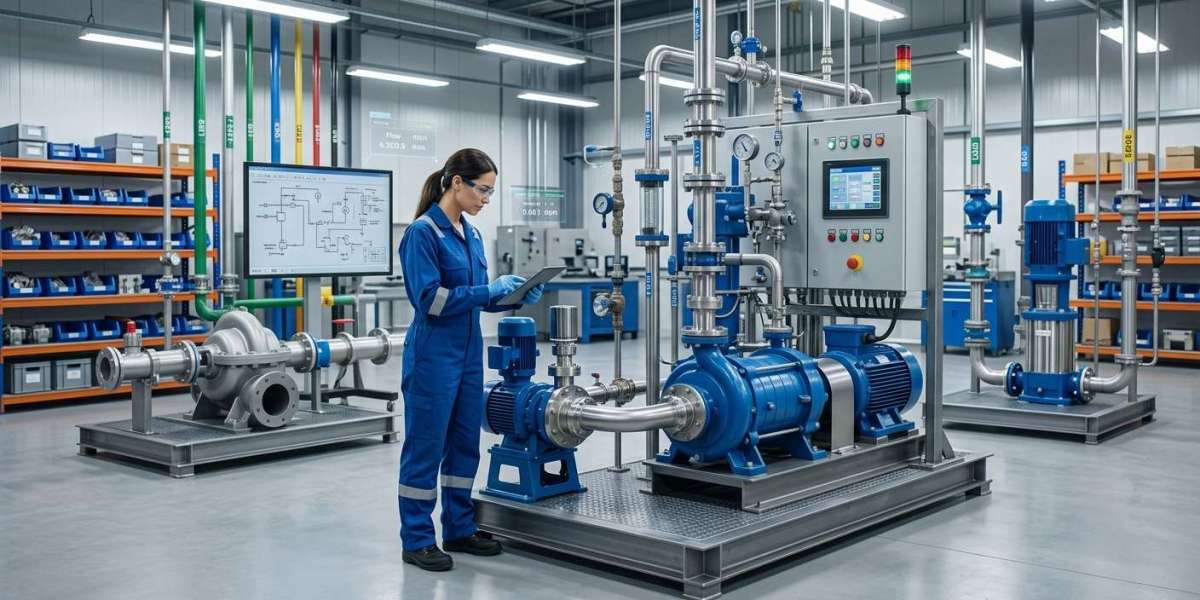

Fluid mobility is a crucial aspect of many industrial processes. From transferring water and chemicals to transporting oils, fuels, and other liquids, industries rely on dependable pumping equipment to keep operations running efficiently.
Choosing the proper pump may boost efficiency, minimize maintenance requirements, and make operations safer. Understanding fluid handling pumps, fluid handling systems, pump types, and applications can assist firms in making more informed equipment decisions.
What are Fluid Handling Pumps?
Fluid handling pumps are mechanical devices that transfer liquids from one point to another. Depending on the use, a pump can transport fluid between storage tanks, feed industrial equipment, circulate liquids through a system, or maintain pressure.
Distinct liquids exhibit distinct features. Water, chemicals, oils, slurries, and high-viscosity fluids may necessitate quite distinct pumping systems. This is why choosing a pump only on capacity or pricing may not yield the intended results.
A suitable pump should be compatible with the fluid's qualities, operating conditions, flow needs, and system design.
Understanding Fluid Handling Systems
Fluid handling systems contain more than just a pump. They may consist of pipes, valves, tanks, filters, hoses, meters, control devices, and other components that work together to transfer and manage fluids.
A well-designed system promotes continuous flow while minimizing pressure losses and excessive energy usage. The pump is one of the most critical components, but its performance is determined by how well it integrates with the rest of the system.
Even if a pump is of great quality, it may run inefficiently if it is not properly sized. Proper system design and pump selection are consequently required.
Common Types of Fluid Handling Pumps
There are various varieties of fluid handling pumps, each of which is intended for a specific operating environment.
Centrifugal pumps
Centrifugal pumps are commonly utilized to move liquids with low viscosity. They employ a rotating impeller to accelerate the fluid and convert it to pressure.
They are widely utilized in water delivery, cooling systems, irrigation, industrial circulation, and general liquid transfer applications. Their straightforward appearance and capacity to handle continuous flow make them a popular choice in a variety of sectors.
Positive Displacement Pumps
Positive displacement pumps move a particular amount of fluid with each operational cycle. They're especially beneficial when precise flow control or high-pressure operation is necessary.
These pumps can handle a variety of liquids, including thicker ones. Gear pumps, piston pumps, screw pumps, and lobe pumps are all instances of positive displacement technology.
Diaphragm Pumps
Diaphragm pumps employ a flexible diaphragm to transport fluids. They are frequently chosen for applications involving chemicals, polluted liquids, or fluids with suspended particles.
Their design allows for dependable fluid transmission while minimizing the possibility of fluid contamination, making them valuable in chemical processing and industrial applications.
Peristaltic Pumps
Peristaltic pumps use a spinning mechanism to circulate fluid through a flexible tube or hose. Because the fluid usually only comes into touch with the tube, they can be beneficial for sensitive, abrasive, or chemically demanding fluids.
They are widely used in dosage, laboratory, water treatment, and chemical applications.
Applications for Fluid Handling Pumps
Fluid handling equipment is used in many sectors. Pumps are commonly used in manufacturing plants to convey raw materials and process liquids, whereas chemical industries demand specific solutions for aggressive or corrosive fluids.
Other applications include:
Water and wastewater treatment.
Oil and gas operations.
Food and beverage processing.
Pharmaceutical production.
Chemical Processing.
Agriculture and irrigation.
Construction and Industrial Services.
Cooling and heating systems.
The appropriate pump is significantly dependent on the individual application and fluid being handled.
How to Select the Right Pump
Choosing the correct fluid handling pump begins with understanding the application's requirements.
1. Identify the fluid
Consider the fluid's viscosity, temperature, chemical characteristics, and whether it contains solids or abrasives. These features can have a major impact on pump selection and material needs.
2. Determine the Required Flow Rate
The pump should provide the appropriate volume of fluid in the specified period. Choosing an improper flow capacity pump might have a negative impact on the overall system performance.
3. Check the pressure and head requirements
Determine the pressure required to flow the fluid via pipes, valves, filters, and other components. The pump must be able to meet the system's pressure and head requirements.
4. Consider operating conditions
Temperature, installation location, operating hours, and accessible electricity should all be considered. A pump built for constant industrial operation may differ from one designed for occasional use.
5. Think about maintenance
Easy maintenance can cut downtime and long-term operational expenses. Look for pumps with easy access to wear components and readily available replacement parts.
Why Proper Pump Selection Matters
The correct pump can boost system efficiency, save energy, and help prevent unexpected breakdowns. An ineffective pump, on the other hand, may suffer from excessive wear, cavitation, leaks, or irregular flow.
Businesses should therefore assess the entire system rather than choosing equipment purely based on the initial purchase price.
Conclusion
Understanding fluid handling pumps, fluid handling systems, pump types, and applications facilitates the selection of equipment that meets specific industrial requirements. Centrifugal and positive displacement pumps, as well as diaphragm and peristaltic versions, each have distinct advantages.
Businesses can choose a dependable pumping solution that supports efficient and consistent operations by taking into account the fluid properties, flow rate, pressure, operating circumstances, maintenance requirements, and overall system design.