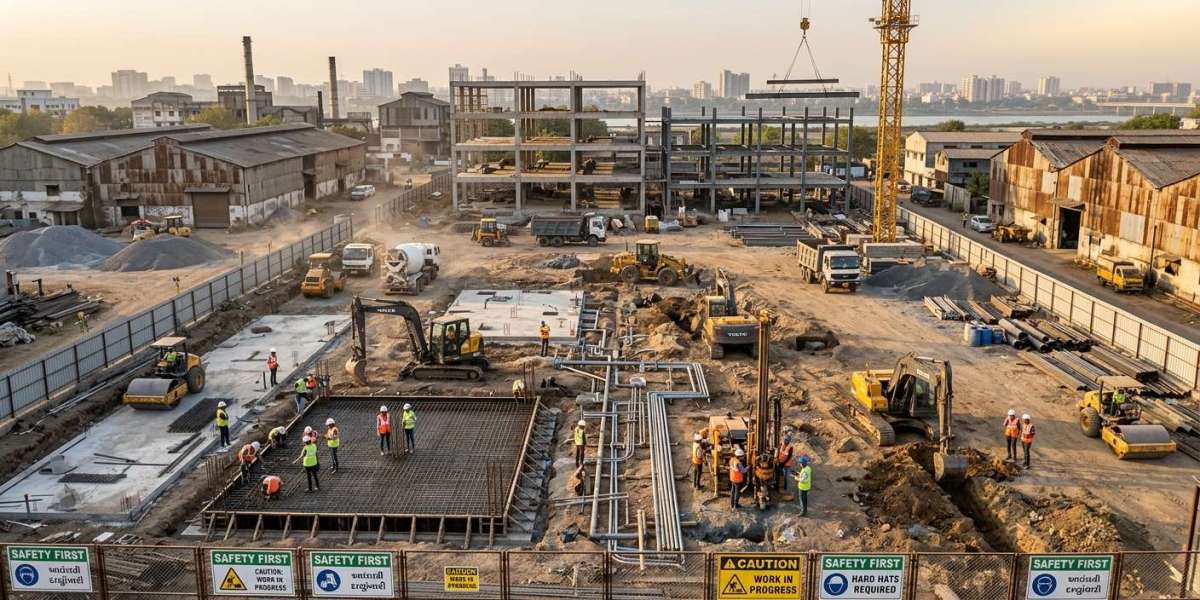

Brownfield construction projects can be more difficult than beginning on an entirely undeveloped land. Existing buildings, subterranean utilities, aging infrastructure, restricted access, and ongoing activities can all have an impact on construction planning and execution.
This is why conducting a thorough site study is one of the most critical stages before beginning brownfield work. A comprehensive survey provides engineers and contractors with a better grasp of the current site conditions, allowing them to identify risks, improve planning, and reduce unanticipated problems.
For any brownfield civil work contractor, reliable site information serves as a solid foundation for making sensible building decisions.
What is a Brownfield Site Survey?
A site survey is the process of obtaining thorough information on an existing property and its surroundings. Depending on the project, this may include land levels, existing structures, subterranean services, drainage systems, access roads, utilities, and other physical characteristics.
Unlike greenfield initiatives, brownfield lands already have infrastructure or established areas. As a result, builders cannot rely solely on original drawings or historical documents. Actual site conditions could have altered over time.
A thorough survey can help close this knowledge gap.
Identifying Existing Structures
One of the first advantages of conducting a site study is determining what is already present.
Existing structures might include buildings, foundations, retaining walls, roadways, concrete slabs, pipelines, utility systems, and other infrastructure. Their specific position and condition can have an impact on the proposed construction project.
Survey data enables engineers to design new structures around existing pieces and assess whether certain components need to be repaired, strengthened, deleted, or preserved.
This can help to avoid unneeded destruction and lower the risk of damaging critical infrastructure.
Locating Underground Utilities
Underground services are a major concern during brownfield building. Water lines, electricity cables, drainage pipes, gas services, communication networks, and other utilities may exist beneath the property.
Incorrect information about their location might lead to construction delays, service disruptions, costly repairs, or major safety issues.
Site studies and suitable surveying procedures can assist in identifying and mapping existing utilities prior to excavation. This enables construction teams to plan excavation and foundation work more accurately.
Improving Building Design
Accurate site information can help engineers and construction professionals create more viable designs.
For example, if a survey shows unexpected ground levels, existing foundations, restricted spaces, or utility corridors, engineers can modify the proposed design before it begins.
This is significantly easier and more cost-effective than detecting the problem after the physical job has begun. Better site information also allows architects, engineers, and contractors to better coordinate development efforts.
Supporting Accurate Measurements
Precise measurements are required when new building must link to existing structures.
A minor measuring inaccuracy might cause major issues when erecting new walls, floors, foundations, drainage systems, or structural components alongside old infrastructure.
Detailed surveying offers precise dimensions and levels, which can be used in engineering drawings and digital models. This enhances construction precision while lowering the likelihood of costly rework.
Reducing Construction Risk
Every building project carries risks, but brownfield sites may have additional uncertainty due to their current status.
A thorough site survey might help detect potential hazards before work begins. These could be unstable structures, restricted access, drainage issues, uneven land, broken infrastructure, or unidentified services.
Once potential hazards have been recognized, project teams can design appropriate controls and building procedures. This proactive strategy enhances site safety while facilitating smoother project execution.
Better Planning for Site Access
Another key factor to consider in brownfield construction is site access. Existing structures, equipment, roads, storage places, and operational facilities may impede the movement of personnel, machinery, and supplies.
A site assessment might reveal important information about available access routes and physical limitations. Contractors can then organize equipment movements, material deliveries, temporary facilities, and work zones more effectively.
Good access planning can help to avoid unnecessary building delays.
Supporting BIM and Digital Construction
Modern surveying technologies can also improve digital construction workflows. Survey data can be integrated into Building Information Modeling (BIM), resulting in a more accurate digital depiction of current site conditions.
Engineers and contractors can use this data to compare prospective designs to existing structures and discover potential issues before development begins.
This is especially valuable for complex brownfield projects with several structures, systems, and contractors.
Save Time and Avoid Unexpected Costs
One of the most significant benefits of careful site assessment is better cost and schedule control.
Unexpected site conditions can necessitate redesigns, additional materials, equipment modifications, delays, and labor expenses. While surveys cannot eliminate all potential problems, they can greatly reduce uncertainty by providing more information before work begins.
For a brownfield civil work contractor, this involves having the necessary knowledge to create realistic construction plans and make informed judgments.
Why Do Professional Site Surveys Matter?
A brownfield project should never be developed based simply on outdated designs or assumptions about current conditions. Physical verification is necessary since places can change dramatically over time.
Professional surveying enables construction teams to understand the relationship between existing infrastructure and projected development. It provides a strong foundation for engineering design, construction planning, safety management, and project coordination.
Conclusion
Site surveys are crucial for successful brownfield construction planning. They aid in identifying existing structures, locating utilities, improving measures, promoting safer excavation, optimizing site access, and reducing unanticipated difficulties.
Working with an expert brownfield civil work contractor who prioritizes extensive site analysis can help property owners and developers make their projects more predictable and efficient overall.
In brownfield construction, greater knowledge leads to improved planning, which can have a substantial impact on project safety, cost, quality, and completion time.