
Wafer Level Burn In System Market: Strategic Imperatives for 2026 — PW Consulting Insight
Executive summary
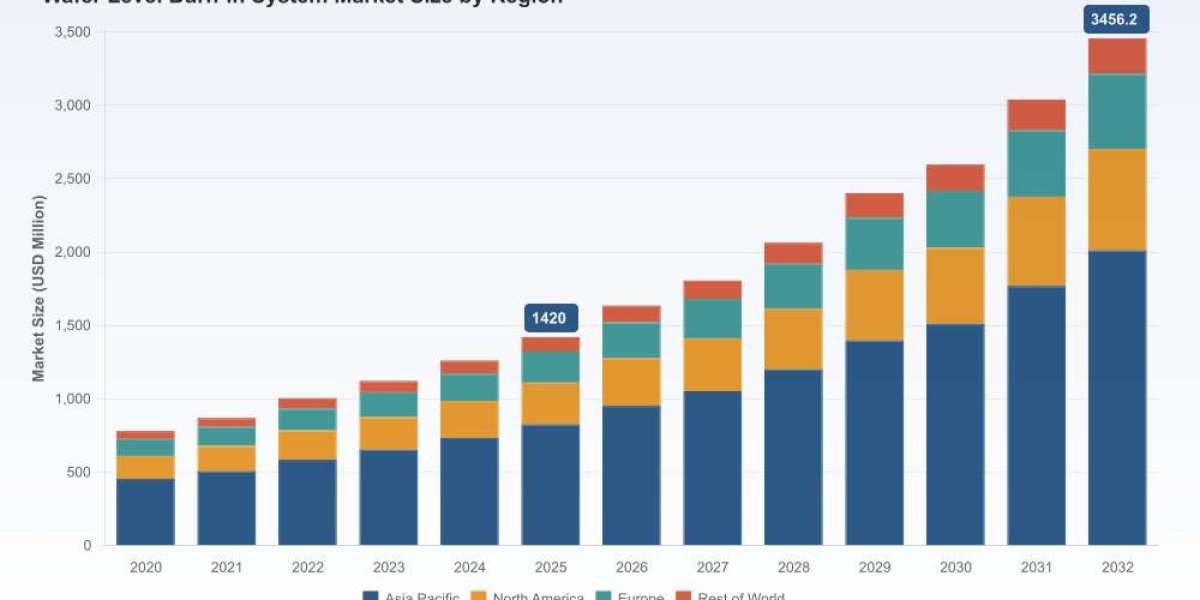
The wafer level burn‑in (WLBI or WLTBI) systems market is entering a decisive growth phase that will materially influence capital allocation and supply‑chain decisions across semiconductor manufacturers, test houses, and equipment OEMs in 2026. Our latest PW Consulting market study — anchored on a 2025 base year and projecting through 2032 — models a sustained expansion driven by power devices, wide‑bandgap semiconductors, silicon photonics, and AI‑centric compute platforms. The market is forecast to expand at a compound annual growth rate of approximately 13.55%, moving from an estimated market size of roughly 1.42 billion USD in 2025 to a multi‑billion USD market by the end of the forecast horizon.
Reefer Container Leasing Market
Why this matters for 2026 decision‑makers
- Timing of capital investment: WLBI represents a high‑leverage point in the semiconductor reliability and yield stack. With modeled year‑on‑year acceleration in 2026, procurement and deployment timelines will determine whether firms capture early adopter advantages or face longer lead times and higher integration costs.
- Technology alignment: The device mix shifting toward SiC, GaN, high‑power AI processors and silicon photonics requires WLBI solutions with different thermal, contactor and parallel‑testing characteristics than legacy package‑level burn‑in. Decisions in 2026 should prioritize equipment capable of scaling to multi‑wafer, high‑power, and 300mm formats with advanced automation standards.
- Supplier strategy and risk: The combination of export controls, tariff uncertainty, and component shortages observed across 2023–2025 means supplier selection and strategic inventory policies will materially affect uptime, cost of ownership, and time‑to‑volume for new products launched in 2026.
Market drivers and technology inflection points
Our analysis identifies several convergent trends that are propelling WLBI demand. First, the proliferation of wide‑bandgap power devices and high‑voltage power modules necessitates high‑temperature, high‑power burn‑in capability at the wafer level to weed out infant mortality modes before expensive packaging. Second, silicon photonics and optical I/O for hyperscale data centers and AI accelerators are driving multi‑wafer, high‑precision contactor solutions capable of handling optical alignment and significant thermal cycling. Third, emerging display and sensing technologies — including VCSELs, micro‑LEDs and advanced CIS — are extending WLBI use cases beyond traditional power and memory devices.
PFC Inductor Market
These technology shifts are reflected in growing demand for WLBI platforms that support full‑wafer parallelism, modular high‑power test bays, and SECS/GEM‑compatible factory automation for 300mm queues. Equipment that can accelerate early‑life reliability validation while minimizing per‑unit test cost will be positioned to capture disproportionate share as the WLBI market expands.
Microwave UV Curing System Market
Supply chain, regulation and cost dynamics to monitor
- Export control and geopolitics: Ongoing export restrictions on advanced semiconductor test equipment and related components continue to re‑shape supplier selection and regional sourcing strategies. Firms must reconcile compliance with their desire for diversified supply chains.
- Contactor lifecycle economics: High recurring costs for full‑wafer contactors and probe assemblies are an operational reality. Contactors represent a significant recurring line item with a replacement cadence that affects per‑wafer economics and long‑term TCO models.
- Component shortages and lead times: In 2025 a notable portion of WLTBI operations experienced delays due to component shortages. Extended lead times for critical subsystems — thermal management, high‑current carriers, and automation interfaces — will continue to influence deployment schedules and inventory strategies in 2026.
- Tariffs and import duties: Tariff regimes in key markets are contributing to longer procurement cycles and localized sourcing choices, which in turn affect total delivered cost and project cadence for equipment rollouts.
Competitive landscape — positioning and strategic moves
The WLBI supplier ecosystem combines a small set of technology leaders with a number of specialist and regional players. Leading vendors are differentiating on multi‑wafer parallel test capability, high‑power thermal management, proprietary contactor solutions, and factory automation integration. Recent customer wins and order momentum underscore where demand is concentrated.
- Aehr Test Systems — With its FOX‑XP and FOX‑NP WLBI platforms and proprietary WaferPak contactors, the company is positioned as a front‑line supplier for silicon photonics, SiC/GaN and AI processor customers. Recent orders and follow‑on purchases for high‑power, multi‑wafer systems and 300mm automation reflect strengthening demand from hyperscale and AI optical I/O customers.
- Semight Instruments — A regional supplier capable of multi‑wafer automated WLBI, particularly for SiC and GaN applications; its solutions target high‑temperature, high‑throughput batch processing.
- 4JMSolutions and Pentamaster — Both provide multi‑wafer, high‑temperature Trooper‑BI series equipment aimed at power devices, VCSEL/LED, and SiC applications, with an emphasis on automation and parallel testing.
- Delta V Instruments, Advantest, and Teradyne — Established test equipment vendors with offerings or capabilities applicable to wafer‑level burn‑in; their scale and global service footprints make them credible partners for large test floors and contract manufacturers.
- Abrel, Robson Technologies, and Electron Test Equipment — Niche suppliers that bolster the ecosystem with configurable boards, fixtures and high‑precision single and multi‑wafer solutions; important for specialized or retrofit applications.
For buyers and investors, the competitive dynamic implies a two‑track approach: engage tier‑one vendors for scalable, factory‑grade deployments while maintaining relationships with niche suppliers for specialized process needs and aftermarket consumables.
Strategic playbook for 2026
Executives evaluating WLBI exposure should translate market momentum into concrete actions. Our research highlights a pragmatic 6‑point playbook to operationalize WLBI strategy in 2026:
- Prioritize procurement windows: Lock in equipment orders early for critical 2026 product ramps to avoid protracted lead times and premium expedite costs. Align equipment buy cycles with projected device release and qualification timelines rather than calendar year targets alone.
- Design for contactor economics: Integrate contactor lifecycle, spare strategy and refurb pathways into capital budgeting. Consider vendor programs for contactor leasing, pooled inventory or managed spares to smooth operating cash flow.
- Mandate automation and connectivity: Require SECS/GEM and 300mm automation compatibility in procurement specs to ensure seamless integration with MES and fabs’ automation roadmaps.
- Diversify supplier exposure: Balance reliance on leading WLBI OEMs with regional or specialized suppliers to mitigate export control and tariff risks while preserving performance and service levels.
- Embed reliability early: Shift burn‑in and HTGB/HTRB validation upstream in the fab/test co‑design cycle to reduce costly late‑stage respins and improve first‑pass yield for high‑value products.
- Monitor M&A and partnership opportunities: Expect continued consolidation and strategic tie‑ups between test OEMs, contactor suppliers and automation integrators. Active scouting for partnerships can accelerate capability access with lower development lead times.
What the PW Consulting report delivers (teaser)
Our full market study provides operationally focused deliverables for executives and practitioners preparing procurement and product plans in 2026, including:
- Comprehensive market sizing (historical 2020–2025 and forecast 2026–2032) and scenario modeling built from device‑level bottom‑up demand assumptions.
- Technology segmentation that maps WLBI configurations to device families and reliability protocols, plus a buyer’s checklist for technical and automation requirements.
- Supplier benchmarking covering product capability, throughput, automation readiness, and aftermarket economics — together with strategic vendor profiles and recent commercial developments.
- Supply‑chain risk mapping and mitigation playbooks addressing export controls, tariffs, component lead times and consumable management.
- Practical TCO and capex planning templates that embed contactor replacement cycles, automation integration costs and service models to support multi‑year budgeting.
- Actionable recommendations for procurement, fab/test co‑optimization and M&A/partnership scouting to translate market growth into competitive advantage.
To preserve commercial sensitivity and encourage direct engagement, the public summary intentionally withholds certain granular regional and application split figures; the full report contains the detailed segmentation, primary‑source interviews and downloadable model workbooks.
Conclusion — the strategic mandate for 2026
The wafer level burn‑in systems market is no longer a peripheral test segment — it is a strategic lever that affects yield, reliability, and time‑to‑market for the semiconductor value chain. With the market poised for double‑digit growth and structural demand drivers aligned across power, wide‑bandgap, and optical/AI applications, 2026 will be a pivotal year for firms that choose to act. Whether through judicious capex timing, supplier portfolio design, or integrated reliability engineering, companies that operationalize the insights in our study will be better positioned to convert WLBI growth into durable business advantage.
Next steps
PW Consulting welcomes discussions with device OEMs, test labs, equipment OEMs and investors seeking tailored briefings or custom scenario work. Our in‑depth report, models and advisory services are designed to make 2026 procurement and strategic planning decisions both defensible and actionable.
For detailed analysis of this topic, please visit the official page:Wafer Level Burn In System Market
Lacy Lee
Senior Marketing Manager
sales@pmarketresearch.com
00852-95632430
PW Consulting: www.pmarketresearch.com