
Worldwide Brain Tissue Oxygen (PbtO2) Monitoring Systems Market — Strategic Preview for 2026 Decision-Makers
Executive summary
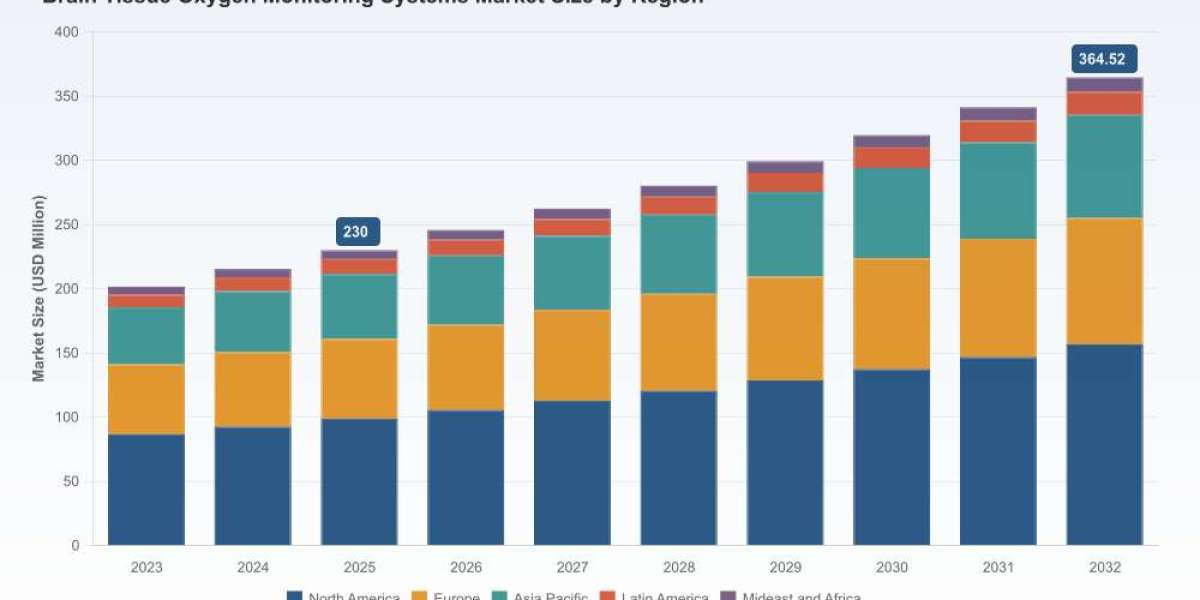
PW Consulting today publishes a strategic market preview drawn from our forthcoming Worldwide Brain Tissue Oxygen Monitoring Systems Market report (base year 2025, historical period 2020–2025, forecast 2026–2032). The invasive brain tissue oxygen monitoring market has transitioned from a niche neurocritical capability into a defined technology segment with sustained commercial traction. Our analysis shows the market expanding at a compound annual growth rate (CAGR) of 6.8% over the forecast window, with the market size rising from approximately USD 230.0 Million in 2025 to roughly USD 364.5 Million by 2032. This release is designed as a decision-ready executive briefing: it highlights the structural forces, regulatory inflection points, clinical evidence flows, and competitive dynamics that will shape capital deployment and product strategy in 2026 — while preserving the proprietary, drill-down data in the full report to drive qualified traffic to the source.
Natural Beverage Clouding Agents Market
Why this matters for 2026 strategic planning
- Acceleration in adoption windows: The 6.8% CAGR and multi-year market runway indicate a predictable upgrade cycle for major neurocritical-care centers. Hospitals and device OEMs should be planning capital investments and channel strategies around a multi-year replacement and expansion cadence rather than episodic pilot activity.
- Regulatory clarity is creating commercial openings: Recent clearances and the Class II device regulatory framework establish a more navigable pathway for entrants and adjacent technology owners (e.g., regional oximetry vendors) to position complementary offerings. This lowers regulatory uncertainty for 2026 product launches and partnership models.
- Concentration, but not immobility: The market exhibits high concentration at the top (three- and five-firm concentration metrics point to a dominant incumbent tier), yet our qualitative interviews and contract pipeline analysis point to meaningful white-space for differentiated consumables, sensor-analytics, and bundled service propositions.
Market dynamics shaping near-term moves
- Clinical evidence and guideline movement: Brain tissue oxygen monitoring appears increasingly in guideline discussions and randomized controlled trial protocols. Ongoing trials such as BOOST3 and BONANZA-GT create both headwinds and tailwinds — their outcomes will materially influence payer stances, hospital adoption thresholds, and clinician workflows over the next 18–36 months.
- Regulatory milestones: Recent 510(k) activity (including notable clearances in 2025) clarifies indication language and adjunctive use claims; however, label constraints that frame these systems as adjunct trend monitors (not sole diagnostic or therapeutic decision drivers) mean vendors must invest in clinical decision support and workflow integration to capture value.
- Technology divergence — invasive vs. non-invasive: Non-invasive regional oximetry (NIRS) and other cerebral oximetry technologies continue to mature and expand indications, but they remain functionally and regulatorily distinct from direct parenchymal PbtO2 probes. This creates differentiated value propositions rather than a single winner-takes-all technology battle.
- Consumables & service economics: Consumables (probes, catheters) and recurring disposables are central to margin structures and long-term account penetration. Service, training, and bundled maintenance contracts are increasingly decisive in procurement negotiations at large neurotrauma centers.
Competitive landscape: what the principal players are doing
Our industry mapping synthesizes primary interviews, regulatory filings, and product documentation to profile the leaders and adjacent challengers. Two companies exemplify the category’s evolution:
Worldwide Behavioral Health Care Software and Services Market
- Integra LifeSciences Corporation (Princeton, NJ) — A long-standing commercial presence, Integra markets the Licox® PbtO2 monitoring platform and associated invasive catheters. The product family is a reference design for invasive brain oxygen monitoring in severe TBI and neurosurgical settings. Integra’s strengths include clinician familiarity, entrenched hospital relationships, and a mature training/field-service footprint that supports adoption in high-acuity centers.
- RAUMEDIC AG (Helmbrechts, Germany) — RAUMEDIC’s NEUROVENT®-PTO multimodal catheters extend measurement to ICP and temperature alongside parenchymal oxygen, leveraging oxygen-quenching sensing. Recent regulatory activity has broadened the company’s addressable market in the U.S. and underlines the strategic importance of multimodal monitoring to buyers seeking consolidated neuromonitoring solutions.
Complementing these core players, monitoring-adjacent vendors (including those focused on non-invasive regional oximetry and analytics platforms) are pursuing integrations and bundled workflows. Our market concentration analysis confirms a top-heavy structure (notable three- and five-firm concentration ratios), but also highlights that differentiated clinical workflows, consumable economics, and service agreements provide tangible footholds for challengers.
Thermal Cured Hardcoat Market
Recent regulatory and clinical events to watch in 2026
- August 2025 510(k) clearances expanded the medical device landscape, reaffirming the Class II status and adjunct monitoring language that buyers must factor into clinical and reimbursement planning.
- Regulatory labeling that emphasizes adjunctive trend monitoring reinforces the need for vendors to offer evidence-backed clinical decision support and interoperability with ICP and hemodynamic monitoring systems.
- Ongoing randomized controlled trials — with protocols including invasive PbtO2 strategies — will be pivotal in 2026. Trial outcomes are likely to influence hospital adoption thresholds, guideline updates, and payer conversations over a multi-year window.
What the PW Consulting report offers (practical content for dealmakers)
The full PW Consulting report is intentionally practice-oriented. It is designed for corporate strategists, BD leads, hospital procurement officers, and clinical innovation teams who must convert market signals into executable plans. Key deliverables include:
- Five-level commercial scenarios that translate trial outcomes, reimbursement shifts, and regulatory pathways into quantifiable revenue and margin impacts under different adoption assumptions.
- Actionable go-to-market playbooks for OEMs and new entrants: channel segmentation, tender and GPO strategies, value-based contracting templates, and playbooks for consumables-led revenue expansion.
- Clinical adoption roadmaps that show timeline-sensitive interventions for clinician education, evidence development partnerships, and multi-disciplinary integration into neurocritical care pathways.
- Regulatory and reimbursement trackers that summarize global 510(k)/CE activities, guideline mentions, and payer intelligence relevant to PbtO2 monitoring.
- Company dossiers and product comparison matrices that identify technology differentiators, IP themes, and partner/ acquisition targets (note: proprietary segment-level data and exact regional or application shares are reserved for the report subscribers).
- Procurement and pricing models projecting lifecycle economics of monitors, catheter consumables, and service agreements at hospital-system scale.
Strategic imperatives for stakeholders in 2026
- For OEMs and entrants: Prioritize proof-of-value programs tied to workflow integration and total cost of ownership. Device functionality alone is insufficient; buyer decisions hinge on consumable economics, training, and demonstrable impacts on actionable care pathways.
- For hospital systems: Treat PbtO2 monitoring as a program-level investment. Negotiate total-care contracts that bundle consumables, data connectivity, and clinician training to reduce adoption friction and secure predictable operating costs.
- For investors and acquirers: Look beyond hardware — analytics, consumables, and service-heavy business models offer recurring revenue and stronger defensibility in a concentrated market. Regulatory clarity makes near-term M&A less risky, but clinical outcome linkage remains the key de-risking variable.
- For clinical leaders: Engage proactively with ongoing trials and local evidence development. Even with guideline-level ambiguity, centers that define standardized response algorithms to PbtO2 trends will be positioned to translate monitoring into improved workflows and measurable outcomes.
Methodology note
PW Consulting’s estimates combine primary interviews with hospital procurement and neurocritical clinicians, device shipment modeling, consumables-usage triangulation, and examination of regulatory filings and trial protocols. Base year is 2025 with historical analysis from 2020–2025 and a detailed forecast extending to 2032. Market sizing figures presented here reflect aggregate market value in USD (Million) and are modelled to capture hardware, consumables, and service revenue streams across global markets.
How to use this briefing — and where to find the full analysis
This briefing is a tactical entry point designed to orient 2026 strategies. The full report contains the granular dashboards, regional and application scenario matrices, and contract-level economic models required to build capital plans, product roadmaps, and M&A pipelines. To access the detailed segmentation, vendor scorecards, and executable templates (including editable procurement negotiation scripts and OPEX models), please consult the PW Consulting report download page.
Closing perspective
The brain tissue oxygen monitoring market sits at a practical inflection: stronger regulatory clarity, an expanding clinical evidence base, and recurring-consumables economics combine to create a market that is predictable but not static. Strategic winners in 2026 will be those who align product design with hospital workflow, monetize consumables and services effectively, and proactively engage with clinical trials and guideline bodies to translate monitoring signals into actionable care pathways. PW Consulting’s full report provides the detailed playbook required to execute on this opportunity with precision.
For detailed analysis of this topic, please visit the official page:Worldwide Brain Tissue Oxygen Monitoring Systems Market
Lacy Lee
Senior Marketing Manager
sales@pmarketresearch.com
00852-95632430
PW Consulting: www.pmarketresearch.com