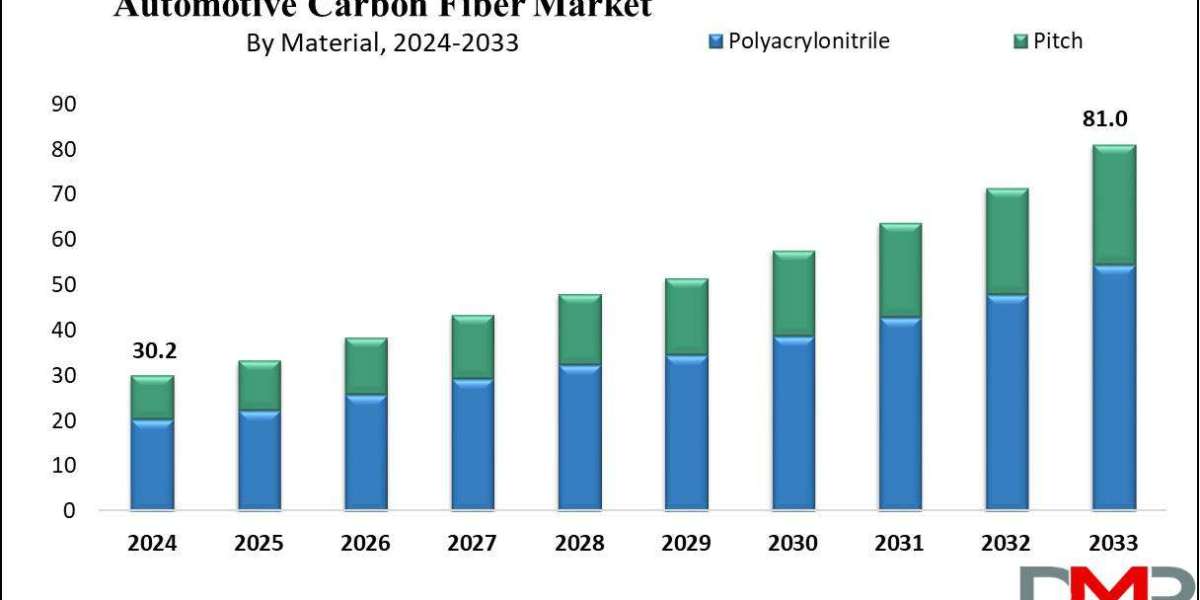

The automotive industry is continuously searching for advanced materials that can improve vehicle performance while reducing unnecessary weight. This requirement has increased interest in carbon fiber composites, particularly in applications where strength, stiffness, durability, and lightweight construction are important. From high-performance sports cars to electric vehicles and premium automobiles, carbon fiber in the automotive industry is becoming an increasingly relevant material technology.
According to Dimension Market Research, the growing focus on lightweight vehicle architecture is creating opportunities for carbon fiber manufacturers and automotive component suppliers. Reducing vehicle weight can support improvements in efficiency, handling, acceleration, braking, and overall vehicle performance. These benefits are particularly relevant as automakers develop new vehicle platforms and respond to the changing requirements of electric mobility.
Carbon fiber was once primarily associated with racing and exotic vehicles because of its high cost and specialized manufacturing requirements. However, advances in composite technology are helping manufacturers explore additional applications. Improvements in processing, automation, material design, and production efficiency could gradually expand the use of carbon fiber across different automotive segments.
What Makes Carbon Fiber Suitable for Automotive Applications?
Carbon fiber is a lightweight material consisting primarily of carbon atoms arranged in a structure that provides high tensile strength and stiffness. When combined with polymer resins, carbon fiber forms composite materials that can be engineered for different automotive requirements.
One of the most important advantages of carbon fiber is its strength-to-weight ratio. Automotive engineers can use carbon fiber composites to achieve structural performance while reducing component mass.
The material also provides several other characteristics that can be valuable in automotive applications, including corrosion resistance, dimensional stability, and design flexibility.
These properties make carbon fiber particularly suitable for components where weight reduction can provide meaningful performance or efficiency benefits.
Major Applications of Carbon Fiber in Vehicles
Carbon fiber can be incorporated into many areas of vehicle design. The exact application depends on vehicle type, production volume, component requirements, and cost considerations.
1. Carbon Fiber Body Panels
Exterior body panels are among the most visible applications of carbon fiber.
Manufacturers can use carbon fiber composites for:
- Hoods
- Roof panels
- Doors
- Fenders
- Trunk lids
- Spoilers
- Aerodynamic components
Reducing the mass of these components can contribute to overall vehicle lightweighting.
Carbon fiber also allows designers to create complex shapes while maintaining the required structural characteristics.
2. Carbon Fiber Chassis Components
Chassis systems must provide strength and stiffness while managing vehicle weight.
Carbon fiber composites can be considered for selected chassis structures and supporting components where weight reduction provides significant value.
This is particularly relevant to sports and performance vehicles, where reducing mass can improve handling and driving dynamics.
3. Structural Applications
Structural components represent another important opportunity.
Carbon fiber composites can be engineered to provide high stiffness and strength while remaining relatively lightweight. This can help automotive manufacturers optimize structural designs.
Potential applications can include reinforcement structures, crash-related components, structural assemblies, and specialized vehicle architectures.
The use of carbon fiber in structural applications requires careful engineering because safety, durability, manufacturing consistency, and cost are critical considerations.
Carbon Fiber and Electric Vehicles
Electric vehicles are changing the way manufacturers approach vehicle design.
Battery packs can add significant weight to an electric vehicle. While battery technology continues to improve, automakers are also exploring ways to reduce weight in other areas.
This has created a stronger connection between carbon fiber technology and EV development.
Improving Vehicle Efficiency
A lighter vehicle generally requires less energy to move under comparable operating conditions. For electric vehicles, reducing unnecessary mass can therefore support energy-efficiency objectives.
Carbon fiber components can potentially contribute to this goal when used in suitable applications.
Manufacturers may evaluate carbon fiber for body structures, battery-related components, chassis systems, and other areas where lightweight construction can provide measurable advantages.
Supporting EV Performance
Electric vehicles are increasingly being developed with high-performance characteristics, including rapid acceleration and advanced handling.
Reducing vehicle weight can support these performance objectives.
Carbon fiber therefore has potential applications in performance-oriented EVs, premium electric vehicles, and specialized electric mobility platforms.
Carbon Fiber for High-Performance Vehicles
Performance vehicles have historically been an important market for carbon fiber.
In motorsports and high-performance automotive engineering, reducing vehicle weight can improve acceleration, cornering, braking, and overall vehicle dynamics.
Carbon fiber can also support aerodynamic design because composite manufacturing allows engineers to develop complex component shapes.
Luxury and sports car manufacturers can justify the higher cost of carbon fiber when the material contributes to performance, exclusivity, and vehicle differentiation.
This makes performance vehicles an important application segment for the automotive carbon fiber industry.
Carbon Fiber Interior Applications
Carbon fiber is not limited to vehicle exteriors and structural components.
Premium vehicle manufacturers can use carbon fiber composites for interior applications such as:
- Dashboard trim
- Center-console panels
- Door trim
- Seat structures
- Steering-wheel elements
- Interior decorative panels
- Instrument-panel components
Visible carbon fiber can provide a distinctive technical appearance that is particularly popular in performance and luxury vehicles.
Beyond aesthetics, lightweight interior components can contribute to broader vehicle weight-reduction strategies.
Carbon Fiber Battery Applications
The growth of electric vehicles is increasing research into lightweight battery-related structures.
Battery systems need to provide protection, durability, thermal management, and structural integrity. At the same time, manufacturers want to minimize unnecessary weight.
Carbon fiber composites can potentially be considered for selected battery enclosures, covers, support structures, and integrated vehicle systems.
Future development will depend on material cost, safety requirements, thermal characteristics, manufacturing processes, and recyclability.
Benefits of Carbon Fiber for Automotive Manufacturers
The adoption of carbon fiber is supported by several technical advantages.
High Strength-to-Weight Ratio
Carbon fiber can provide high mechanical performance without adding the mass associated with some traditional materials.
This is one of the primary reasons it is attractive for lightweight vehicle engineering.
Weight Reduction
Lower component weight can contribute to overall vehicle lightweighting. Depending on where carbon fiber is used, this can support performance and efficiency objectives.
High Stiffness
Carbon fiber composites can provide high stiffness, making them suitable for structural and performance applications.
Corrosion Resistance
Carbon fiber composites do not experience conventional steel rust, which can provide advantages in certain environments and applications.
Design Flexibility
Composite manufacturing can allow engineers to develop complex shapes and integrate multiple functions into components.
This can provide opportunities for innovative vehicle architecture and component design.
Challenges of Using Carbon Fiber
Despite its advantages, carbon fiber is not a universal replacement for conventional automotive materials.
High Cost
The cost of carbon fiber materials and composite manufacturing remains one of the largest barriers to widespread adoption.
For mass-market vehicles, manufacturers must carefully evaluate whether the benefits justify the additional cost.
Manufacturing Requirements
Carbon fiber components require specialized manufacturing equipment, processing knowledge, tooling, and quality-control systems.
Manufacturers must maintain consistent material properties and production quality while meeting automotive safety requirements.
Production Cycle Time
High-volume automotive manufacturing requires fast production cycles.
Some composite manufacturing methods can be slower than established metal-forming processes. Developing faster and more automated production methods is therefore essential for broader adoption.
Recycling
Composite recycling remains an important industry challenge.
Developing efficient ways to recover carbon fibers from end-of-life components could help improve material sustainability and reduce waste.
Role of Advanced Manufacturing Technologies
Technology innovation is expected to play an important role in the future of automotive carbon fiber.
Manufacturers are exploring automated production techniques designed to improve consistency and reduce labor requirements.
Technologies such as automated fiber placement, resin transfer molding, compression molding, and advanced thermoplastic composite processing can help improve production efficiency.
The development of faster curing systems and improved resin technologies may also contribute to shorter manufacturing cycles.
As these technologies mature, they could help make carbon fiber more practical for additional automotive applications.
Multi-Material Vehicle Design
The future automotive industry is unlikely to depend on one material alone.
Instead, manufacturers are increasingly evaluating multi-material vehicle structures.
A vehicle may combine:
- Steel for selected structural applications
- Aluminum for weight-sensitive components
- Plastics for specific interior and exterior parts
- Carbon fiber for high-performance or highly weight-sensitive components
This strategy allows engineers to use each material where it provides the greatest value.
Carbon fiber can therefore become part of a broader material optimization strategy rather than being viewed as a complete substitute for steel or aluminum.
Sustainability and Recycled Carbon Fiber
Sustainability is becoming increasingly important in automotive manufacturing.
Automakers and suppliers are evaluating the environmental impact of materials throughout their lifecycle, including production, manufacturing, vehicle operation, and end-of-life processing.
Recycled carbon fiber is receiving increasing attention because it can potentially recover valuable material from production waste and used composite components.
Advances in recycling technologies could improve the sustainability profile of carbon fiber and create new opportunities for lower-cost applications.
Regional Opportunities
The automotive carbon fiber industry has opportunities across major automotive manufacturing regions.
North America
North America has an established automotive manufacturing sector and strong demand for premium and performance vehicles.
The region is also investing in electric mobility and advanced materials, creating opportunities for carbon fiber technologies.
Europe
Europe has extensive automotive engineering capabilities and a strong presence of luxury and performance vehicle manufacturers.
The region's emphasis on efficiency, advanced manufacturing, emissions reduction, and sustainable mobility can support further development of lightweight composite applications.
Asia Pacific
Asia Pacific has become one of the world's most important automotive production regions.
The expansion of electric vehicle manufacturing and investment in advanced materials can create opportunities for carbon fiber suppliers and component manufacturers.
The region's large production base may also encourage manufacturers to develop more cost-efficient composite technologies.
Future Opportunities for Automotive Carbon Fiber
Several emerging opportunities could influence the future development of the industry.
Electric Mobility
Continued EV development is expected to increase interest in lightweight materials.
Advanced Vehicle Architectures
New vehicle platforms provide manufacturers with opportunities to integrate composite materials from the early design stage.
Automated Production
Automation can help reduce manufacturing costs and improve production consistency.
Recycled Materials
Improved recycling technologies could address sustainability concerns and create additional material sources.
Hybrid Composites
Combining carbon fiber with other fibers and materials could help manufacturers balance cost and performance.
How the Automotive Carbon Fiber Market May Evolve
The evolution of the market will depend on whether manufacturers can overcome the traditional limitations of carbon fiber.
Cost reduction will remain a major objective. However, manufacturers are also likely to focus on reducing production time, improving automation, increasing material utilization, and developing scalable composite manufacturing systems.
The most attractive applications will continue to be those where carbon fiber delivers a clear advantage over conventional materials.
Performance vehicles, premium automobiles, electric vehicles, specialized structures, and weight-sensitive components are therefore likely to remain important areas of development.
Businesses seeking detailed information on industry trends, applications, market opportunities, regional developments, competitive activity, and future prospects can review the Automotive Carbon Fiber Market report by Dimension Market Research.
Conclusion
Carbon fiber is becoming an increasingly important advanced material within the automotive industry. Its combination of low weight, high strength, stiffness, corrosion resistance, and design flexibility makes it attractive for selected vehicle applications.
Electric vehicle development and automotive lightweighting are creating additional opportunities, while premium and performance vehicles continue to support demand.
However, high costs, manufacturing complexity, production cycle times, and recycling challenges remain important barriers.
Future advances in automated manufacturing, composite processing, recycled carbon fiber, and multi-material vehicle design could help expand the role of carbon fiber.
As automakers continue developing lighter, more efficient, and technologically advanced vehicles, carbon fiber is positioned to remain a valuable material for applications where its performance benefits justify the additional investment.