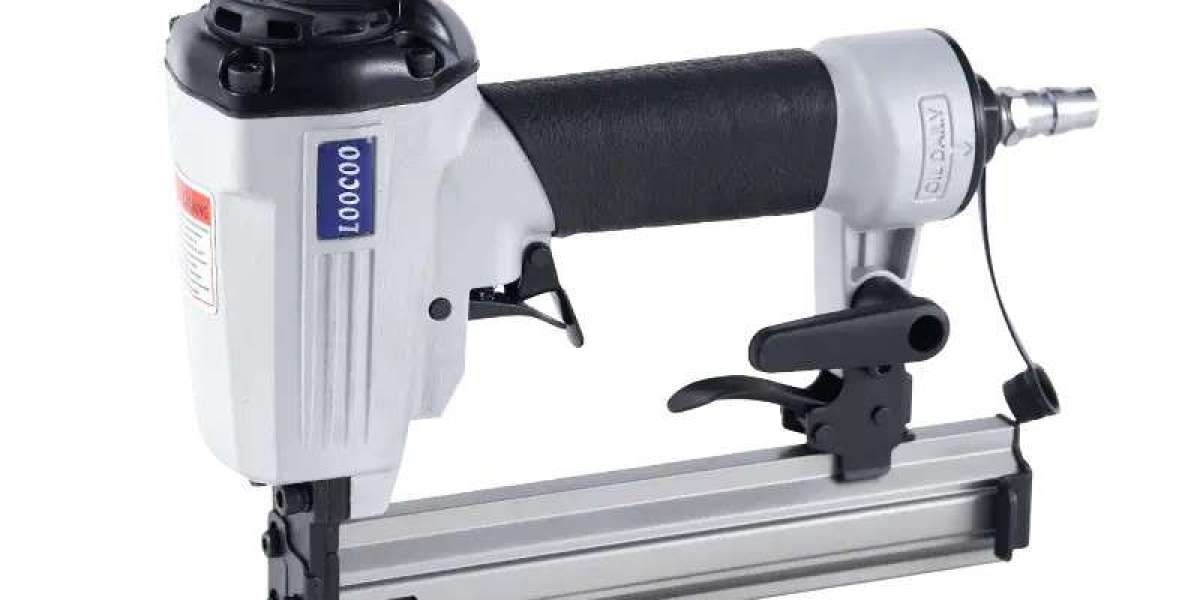

Selecting a Straight Nail Gun requires more than checking its appearance. Workshop users should consider the materials being fastened, nail dimensions, production frequency, power source, operating environment, and maintenance requirements before choosing a tool.
Nail compatibility is an important starting point. Straight nail guns are designed for specific fastener dimensions. Nail length, diameter, head design, and magazine arrangement can vary between models. Using compatible fasteners helps the driving mechanism operate according to its intended design.
The power system is another consideration. A Pneumatic Straight Nail Gun uses compressed air and can be suitable for workshops with existing compressor equipment. Buyers should review air consumption, operating pressure, hose connection, and compressor requirements before integrating the tool into a production line.
An Electric Straight Nail Gun can provide a different operating arrangement. Corded versions require access to electrical power, while battery models can offer greater mobility. Battery capacity, charging time, replacement battery availability, and operating duration should be evaluated for regular workshop use.
Tool weight can affect user comfort. A heavy nail gun may become tiring during repeated overhead or vertical fastening, while a compact design can be easier to handle in restricted areas. Grip shape and trigger position should also be reviewed during product evaluation.
Magazine capacity influences the number of nails that can be loaded at one time. A larger capacity can reduce interruptions during high-volume work, whereas a compact magazine may help reduce overall tool dimensions. The appropriate choice depends on the project and working conditions.
Safety mechanisms should also be considered. Trigger controls, contact elements, safety locks, and other protective features can help reduce unintended firing when used according to the operating instructions.
For workshop managers, maintenance and spare parts are practical purchasing factors. Components such as seals, driver blades, magazines, triggers, batteries, and electrical parts may eventually require inspection or replacement. Clear service documentation can make routine maintenance easier.
The material being fastened should also influence tool selection. Softwood, hardwood, plywood, MDF, and other engineered boards may respond differently to nail penetration. Testing the selected nail and tool setting on sample material can help identify suitable operating conditions.
Before purchasing a Straight Nail Gun, buyers can create a specification checklist covering nail range, power source, air consumption, operating pressure, magazine capacity, weight, dimensions, safety functions, service requirements, and accessory compatibility.
A structured evaluation helps match the tool with actual workshop requirements. Instead of focusing on a single specification, buyers can assess how the Straight Nail Gun fits the complete fastening process, from nail loading and operation to maintenance and storage.
https://www.cnnailer.com/product/straight-nail-gun/