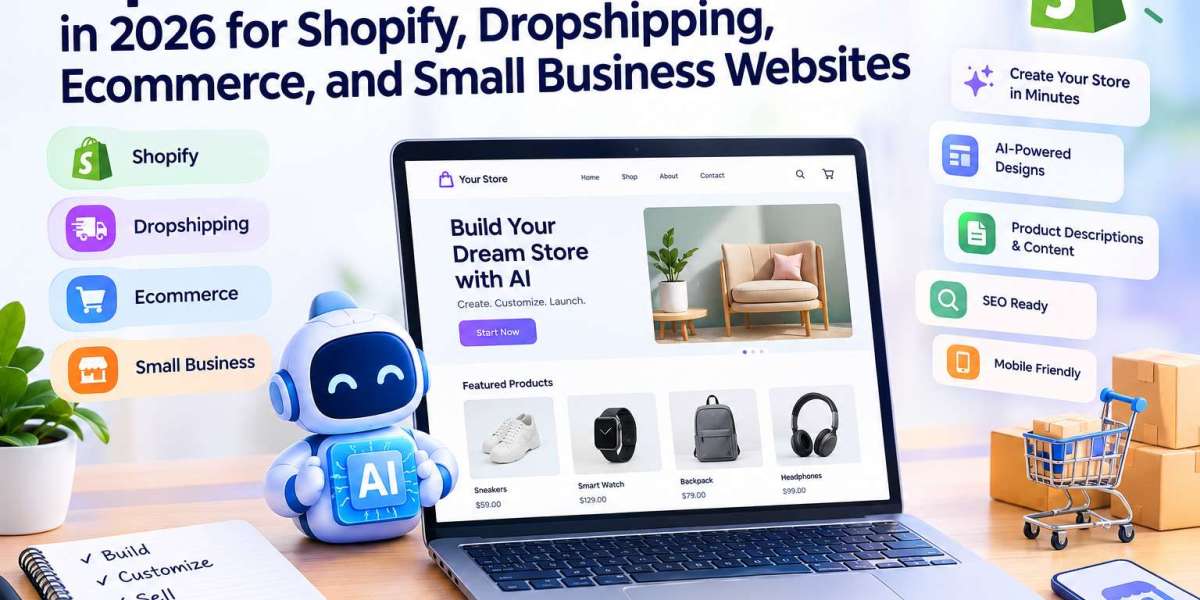

Building an online store used to require a lot of time, design knowledge, and technical skills. In 2026, AI has changed the process. New tools can help business owners create layouts, write product descriptions, organize pages, generate images, and improve the overall shopping experience.
For beginners, this can make starting an online business much easier. You do not always need to hire a developer or spend weeks learning complicated website systems. With the right AI-powered platform, you can start with a simple idea and turn it into a working ecommerce website.
An Ai Storebuilder can be useful for Shopify sellers, dropshipping businesses, startups, freelancers, and small companies that want to build a professional website without doing everything manually.
This guide explains some of the useful AI store-building options available in 2026, what they can do, and what you should consider before choosing one.
What Is an AI Store Builder?
An AI store builder is a website creation tool that uses artificial intelligence to help generate parts of an online store. Instead of starting with an empty page, you can describe your business, products, audience, or preferred design.
The system can then suggest or create elements such as:
- Homepage layouts
- Product pages
- Collection pages
- Navigation menus
- Product descriptions
- Headlines and marketing text
- Images and visual content
- Calls to action
- Basic branding ideas
Shopify itself provides an AI-powered store builder that can create store designs from a short description of a business. Shopify says its tool can generate personalized store designs and offers multiple AI-generated ecommerce design options.
The main benefit is speed. A person who has never designed a website can get a starting point without building every section from scratch.
Why AI Store Building Is Growing in 2026
AI is becoming a normal part of ecommerce. Shopify reports that merchants are using AI for content creation, store management, customer service, marketing, product discovery, and other business tasks.
This does not mean that AI completely replaces human work. Instead, it can handle repetitive tasks while the business owner focuses on products, customers, branding, and sales.
Shopify also explains that AI-generated content can contain errors, so store owners should review AI-created content before publishing it.
This is especially important for product information, prices, shipping details, return policies, and other information customers depend on.
1. Shopify AI Store Builder
Shopify's own AI store-building system is an obvious option for people who want to build directly within the Shopify ecosystem.
You can describe your business in a few words and receive personalized storefront design ideas. The tool is designed to make the first stage of store creation easier, especially for people without professional design skills.
Shopify also provides other AI features through Shopify Magic and Sidekick. Shopify Magic can help with tasks such as writing product descriptions and other marketing content, while Sidekick works as an AI assistant inside the Shopify admin.
This combination can be useful because store creation and store management can happen within the same ecommerce platform.
2. Shopify Sidekick
Shopify Sidekick is more than a design tool. It is an AI assistant built into Shopify that can help merchants work with their stores.
According to Shopify, Sidekick can generate content, provide guidance, analyze store information, help with workflows, build custom apps, and complete certain tasks using everyday language.
For example, instead of searching through different settings, a store owner can describe what they want to do and receive assistance.
Sidekick can be especially useful after a store has already been created. Building a website is only the beginning. Product updates, content creation, reports, marketing tasks, and daily store management continue after launch.
3. Shopify Magic
Shopify Magic is another useful option for Shopify merchants. It includes AI-powered features that can assist with everyday ecommerce work.
Shopify describes Magic as a collection of free AI-powered features integrated into Shopify products and workflows. Features can support store building, marketing, customer support, and back-office tasks.
For a small business owner, saving time on product descriptions or marketing copy can be valuable. Instead of writing every description from zero, you can use AI to create a first draft and then edit it to match your brand.
This makes the tool useful for stores with many products.
4. Foxify AI Store Builder
Foxify is an AI-focused Shopify page and store-building application. The Shopify App Store currently lists Foxify AI Store Builder with features for creating landing pages, product pages, and page sections. It also has a free plan available according to its current listing.
Tools like this can be useful when the standard theme does not give you enough control.
You can use an AI page builder to create specific sections rather than rebuilding the entire website. This can help when you want a customized homepage, product landing page, promotional section, or campaign page.
For marketers and small businesses, flexible page creation can be helpful when testing different layouts.
5. EComposer
EComposer is another Shopify page-building option with AI generation features. Its Shopify App Store listing shows support for creating different types of pages, including homepages, product pages, and blog pages. A free plan is also listed.
One advantage of a page builder is that you can work visually. You can create sections and arrange content without needing to write large amounts of code.
For small businesses, this approach can reduce the technical barrier to creating a customized Shopify website.
However, users should still pay attention to page speed, mobile design, and unnecessary sections. A website should look attractive without becoming difficult to use.
6. PagePilot
PagePilot is another type of AI-powered Shopify page-building tool. AI page builders can be useful for quickly creating product-focused pages and testing ecommerce ideas.
The Shopify App Store currently lists PagePilot among page-builder apps with AI generation features.
This type of tool can be particularly interesting for dropshipping sellers. When testing a new product, a seller may want to create a focused product page instead of spending a large amount of time designing everything manually.
The important thing is to review the generated page before publishing it. Product claims, images, shipping information, and pricing should always be checked.
7. Atlas AI Store Builder
Atlas is another Shopify-focused tool listed in the Shopify App Store. Its current listing describes AI-built pages, smart bundles, and cart upsells, with a free-to-install option.
This type of platform can help merchants work on both design and conversion-related sections.
For example, a store may need more than an attractive homepage. Product recommendations, bundles, offers, and cart sections can also affect how customers move through a website.
When using these features, simplicity is important. Too many pop-ups, offers, or recommendations can make a store confusing.
8. Forge AI Store Builder
Forge is another AI-powered Shopify page-building option listed in the Shopify App Store. Its listing focuses on creating stores and product pages using AI.
This can be useful for entrepreneurs who want to experiment with different storefront ideas.
An Ai Store Generator can provide a starting structure quickly, but the final website should still reflect the business. AI-generated designs may look good, but customers also need clear information about products, prices, shipping, returns, and payment options.
A good store combines automation with human editing.
9. AI Tools for Dropshipping Stores
Dropshipping sellers can benefit from AI because they often need to test products quickly.
A Ai Store Maker can help create a basic store structure, product pages, and marketing content. This can reduce the amount of manual work involved in testing a new business idea.
However, the store builder is only one part of dropshipping. Sellers also need to research suppliers, delivery times, product quality, customer support, pricing, and return policies.
AI can speed up website creation, but it cannot remove the need for proper business research.
A Free Ai Online Store Builder may be a practical starting point for someone who wants to learn ecommerce before spending heavily on development.
The key is to understand what is included in the free option. Some tools may provide free design features while charging for hosting, premium templates, advanced functions, or ecommerce services.
10. AI Store Tools for Small Business Websites
AI store tools are not only for large ecommerce brands. Small businesses can also use them for simple websites.
A local business may need a homepage, service pages, contact information, product listings, booking information, or an online shop. AI can help create the first version of these pages.
For small companies with limited budgets, an Ai Storebuilder can reduce the time required to create a basic website.
The business owner can then improve the website over time. They can add better photos, customer reviews, stronger product descriptions, FAQs, and new pages as the business grows.
This gradual approach can be easier than trying to build a perfect website on the first day.
What Features Should You Look For?
Choosing an AI store tool should not be based only on how quickly it creates a homepage. Look at the complete experience.
Easy Store Creation
The platform should make it easy to create pages without complicated technical steps.
Shopify Compatibility
If you are building a Shopify business, check whether the tool works directly with Shopify and whether it supports your current theme and apps.
Mobile Design
Many customers shop using mobile devices. Always check how AI-generated pages look on phones and tablets.
Product Content
Good tools can help create product descriptions and marketing copy, but you should always review the information before publishing.
Customization
AI should give you a starting point rather than locking you into one design.
Speed and Performance
A beautiful website is not useful if it loads slowly. Avoid adding unnecessary apps, animations, or heavy sections.
SEO Features
Look for control over titles, descriptions, headings, URLs, image text, and other basic SEO elements.
AI Store Generator vs Traditional Website Development
Traditional web development gives you more direct control over the website. A developer can create custom functions, layouts, integrations, and business logic.
AI tools focus more on speed and accessibility.
For a beginner, an Ai Store Generator can make the first stage much easier. For a company with complex requirements, professional development may still be necessary.
The two approaches can also work together. A business can use AI for the initial design and then use a developer to improve specific features.
How to Build a Store With AI
The process can be simple.
Step 1: Define your business
Decide what you sell, who you want to reach, and what makes your business different.
Step 2: Choose a platform
Select Shopify or another ecommerce platform based on your needs.
Step 3: Describe your store
Give the AI tool useful information about your products, audience, style, and business goals.
Step 4: Generate the design
Allow the tool to create an initial structure.
Step 5: Add products
Upload accurate product information, prices, images, variants, and inventory details.
Step 6: Edit the content
Do not publish AI text without checking it. Make the language natural and make sure all claims are correct.
Step 7: Test the website
Check the website on desktop and mobile. Test navigation, product pages, cart functions, forms, and checkout.
Step 8: Launch and improve
After launch, monitor customer behavior and improve pages based on real results.
Benefits of Using AI for Ecommerce
AI store-building tools can provide several benefits:
- Faster website creation
- Less manual design work
- Easier content creation
- Helpful ideas for page layouts
- Lower technical barriers
- Faster product testing
- Easier customization
- Support for small business owners
The biggest benefit is usually time. Instead of spending hours creating the basic structure, you can start with an AI-generated foundation and spend more time improving the customer experience.
Things to Remember Before Using AI
AI is helpful, but it should not be trusted without review.
Always check product information, prices, shipping details, policies, images, and marketing claims.
You should also review the permissions of third-party AI tools connected to your Shopify account. Shopify explains that merchants can control what connected AI tools can access and do within their stores.
Security and privacy should be part of your decision when choosing any third-party service.
Also remember that a store builder cannot guarantee sales. A successful ecommerce business still depends on product quality, pricing, customer service, marketing, trust, and a good overall shopping experience.
Frequently Asked Questions
Can AI create a Shopify store?
Yes. Shopify provides an AI store builder that can generate storefront designs from a business description. Other AI tools can also connect with Shopify or help create Shopify storefronts.
Is AI useful for dropshipping?
Yes. AI can help with store layouts, product descriptions, marketing content, and other repetitive tasks. However, dropshipping still requires supplier research, product testing, customer service, and business planning.
Can beginners use AI store-building tools?
Yes. Many AI tools are designed for people without advanced coding or design skills. You can start with an AI-generated design and customize it later.
Are free AI store tools enough for a new business?
They can be enough for testing an idea or creating an initial website. However, free plans may have limits, so check features, integrations, hosting, and ecommerce functionality before choosing a platform.
Does AI replace web developers?
Not completely. AI can handle many repetitive tasks, but developers are still useful for custom features, advanced integrations, performance improvements, security, and complex websites.
Should I edit AI-generated content?
Yes. AI-generated content should be reviewed before publication. Shopify also advises merchants to review AI outputs because they can contain errors.
Final Thoughts
AI is making ecommerce website development faster and more accessible in 2026. Shopify's own AI tools, third-party page builders, and independent ecommerce solutions give beginners and small businesses more ways to create websites without starting everything from zero. The best approach is to use AI for speed while keeping human control over branding, product information, design decisions, and customer experience. For businesses looking for a simple starting point in Shopify store building and web development, Ai Store Creator tools can provide a useful foundation that can later be customized as the business grows.