
You have a thesis idea. You have read a few articles, and there is probably a title in your notes that looks rather impressive. Then your supervisor asks, "So, what exactly are you going to investigate?" and suddenly the whole thing feels shaky. If that sounds familiar, you are in good company, and it is fixable.
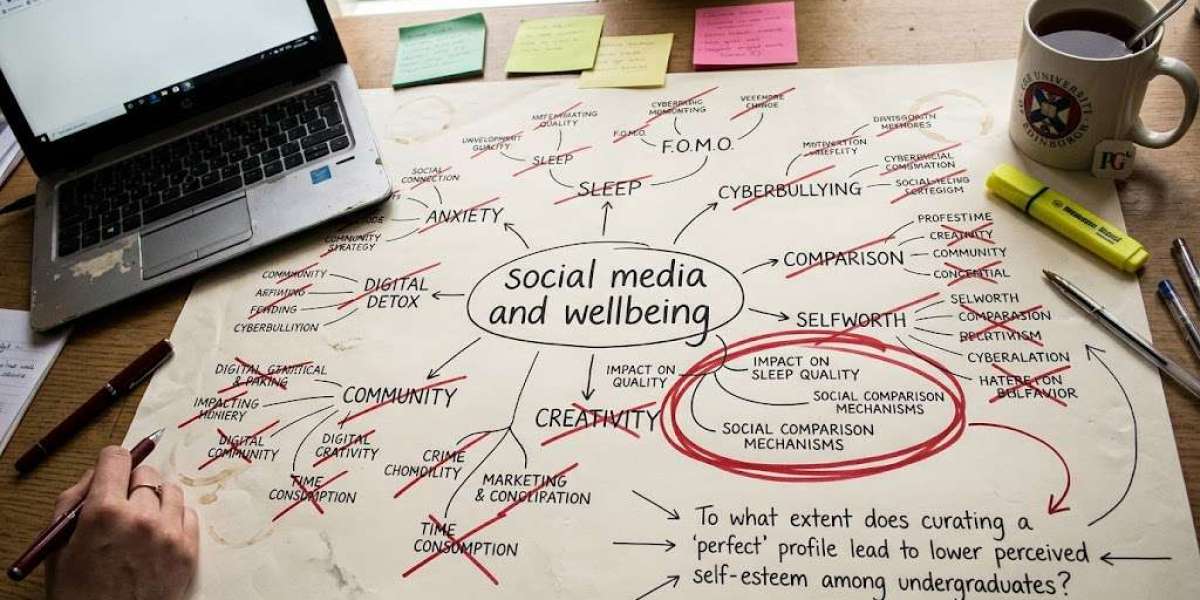
Take "social media and student wellbeing". It sounds relevant, but which students? Which platforms? Sleep, anxiety, self-esteem or grades? Before long, the idea has grown into a project far bigger than your word count or deadline can hold. The fix is rarely a cleverer title. It is deciding what you want to understand, what evidence could help, and what you will deliberately leave outside the study.
1. Start With the Topic, Then Move Past It
A broad subject is where a thesis begins, not where it should end. Many students lose days collecting sources because they are researching a subject rather than investigating a problem inside it. Imagine someone starting with remote working and employee wellbeing. A quick search throws up stress, loneliness, productivity, working hours, management styles and work-life balance, and every article seems to open another door.
The natural reaction is to include more. A better one is to ask, "Which of these issues do I actually want my research to explain?" Perhaps the answer is work-life balance among hybrid workers in the UK. Suddenly the reading has direction, the population is clearer and the methods are easier to weigh up. Narrowing is not about being less ambitious. It gives your ambition somewhere specific to go.
Expectations shift with your level. A final-year project needs room for critical analysis rather than description. MSc work needs tighter justification between problem, literature, methodology and findings. Doctoral work adds originality, though standards vary, so your handbook and supervisor always have the final word.
2. Why an Interesting Topic Is Not Yet a Research Problem
"Artificial intelligence in healthcare" is fascinating, but it does not tell you what is uncertain or what evidence might change anyone's mind. Turning it into "What is the impact of AI on healthcare?" mostly changes the punctuation. Healthcare could mean diagnosis, staffing, costs or patient communication, and AI covers an enormous range of tools. The question still has no clear centre, and a supervisor will spot that quickly.
A subtler trap is deciding the answer before doing the research. Consider "How does excessive social media use damage students' mental health?" The wording has already decided that the use is excessive and the effect is harmful. What if the evidence is mixed, or another factor explains part of the pattern? An open question lets the evidence speak, even when it says something you did not expect.
This is usually the point where students start wondering whether outside help might make things easier, and that curiosity is perfectly reasonable. Before you start looking into a thesis writing online service, though, it helps to understand what that kind of support can and cannot do. Used sensibly, it can show you how a strong question is structured and how an argument holds together. It cannot decide what you find genuinely puzzling or which evidence convinces you, and that thinking stays with you.
3. Four Ideas That Hold a Research Question Together
A useful way to think about it is through four connected ideas: topic, problem, boundaries and evidence. The topic is your starting territory. The problem is the particular uncertainty inside it. Boundaries decide where you will look, and evidence decides whether the question can actually be answered. Picture a chain: topic, problem, boundaries, evidence, answer. If one link is missing, the question needs more work.
Here is a real-life example. A student interested in cybersecurity and small businesses notices that employee behaviour keeps appearing in the literature and settles on awareness training as the problem. Which employees? Which sector? One region of the UK, or nationwide? Are they measuring knowledge, reported habits or actual incidents? Every answer changes the study, which is why these choices matter so early.
Method follows from this. A quantitative study might ask whether training is associated with changes in reported security practices, which means defining "training" and "practices" carefully. A qualitative study might explore how employees understand risk after training, focusing on experiences and recurring themes. Neither is better. The question, the evidence and the method simply need to fit together.
4. Practical Steps You Can Try This Week
Do not try to write the perfect question straight away. Start with the messy one in your head, then pull it apart. Suppose it is "How does social media affect university students?" Ask what "affect" means. Perhaps wellbeing, and specifically sleep quality. Now ask which students: first-years, postgraduates, or those on one particular course?
Then test the evidence. Could existing studies answer part of it? Would a questionnaire tell you what you need, or might interviews reveal something a questionnaire would miss? Try a provisional question: "What relationship exists between social media use and perceived sleep quality among undergraduate students?" It does not claim social media causes poor sleep. It gives you something defensible to investigate, and you can sharpen it as your reading develops.
Watch the words that sound precise but are not: impact, success, wellbeing, effective, significant, awareness. Each needs defining for your particular study. A good test is whether you could explain exactly what every important word means to another researcher without improvising. If you cannot, the wording may be hiding an unresolved decision rather than solving it.
5. Mistakes That Quietly Weaken a Thesis
One mistake is assuming a more complicated question is more academic. A question with several variables, populations and outcomes can look sophisticated while being almost impossible to handle properly. Complexity should come from your reasoning, not from five research problems squeezed into one sentence. The opposite error matters too: narrowing so far that only a handful of sources remain, leaving too little material for a substantial argument.
Be careful with relationships between variables. If students who use social media more report poorer sleep, that alone does not show one caused the other. Perhaps students under academic pressure do both, or the relationship runs in both directions. Words like "causes" and "impact" are tempting because they sound strong, but strong writing means the claim matches what the evidence can support.
Do not choose the method first, either. A questionnaire is not automatically right because it is easy to send out, and interviews are not automatically better because they give rich answers. If your question shifts after weeks of reading, the work is not wasted; you have learned your first assumption was too simple.
6. Bringing It All Together
A broad idea gives you possibilities; a research question forces decisions. Decide which problem matters, who or what sits inside the study, and what evidence could answer it. Then accept that some interesting ideas will stay outside. Leaving things out is not failure. It is how a research project becomes a research project. A thesis cannot investigate an entire field; it needs one carefully chosen part, examined properly.