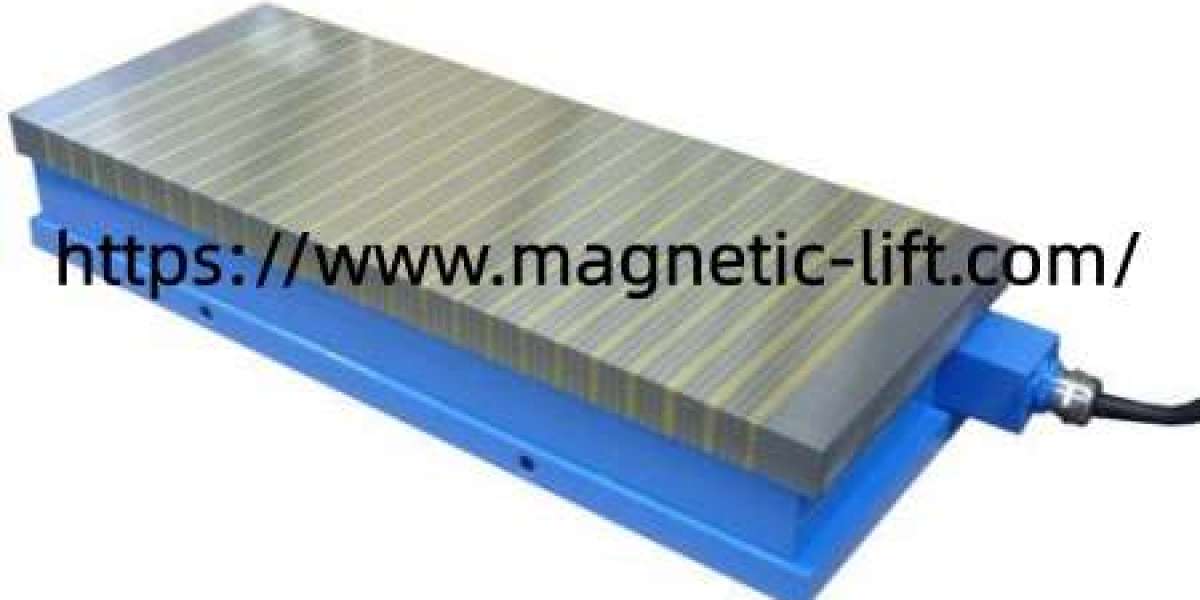

Electro Permanent Magnetic Chuck secures ferrous workpieces on CNC tables by combining fixed force generators with a brief electrical impulse that aligns the internal fields. Once the impulse ends the holding force remains active without further power input so the part stays fixed during milling or grinding passes. A second impulse reverses the alignment and the force drops so the workpiece can be removed. Kaixin builds the housing and generator arrangement to support repeated cycles under typical shop conditions while keeping the control interface simple for machine operators.
The activation sequence begins with the unit resting on a clean machine table. The workpiece is placed on the contact face and a short current pulse is sent through the coils. This pulse shifts the orientation of the fixed generators so their fields reinforce each other and create a strong downward attraction. After the pulse the coils are no longer energized yet the reinforced field continues to grip the part. Cutting forces from the spindle are therefore resisted by the continuous attraction rather than by clamps or vises.
Release follows the same electrical path in reverse. Another brief pulse reorients the generators so their fields oppose one another. The net attraction falls to a negligible level and the workpiece lifts free. Because residual force is minimized the operator can change parts quickly without prying or waiting for gradual demagnetization. This on off behavior suits production runs where multiple identical plates or blocks move through the same program.
Reliability during continuous CNC use stems from the absence of ongoing electrical load. Heat generation stays low once the pulse ends and there are no brushes or rotating contacts that wear under vibration. The solid housing shields the generators from coolant splash and metal chips while the flat contact face maintains even pressure across the workpiece underside. Regular wiping of that face removes particles that could otherwise reduce grip uniformity.
In milling operations the unit is often left active for an entire tool path sequence. Side forces from end mills or face cutters are countered by the distributed attraction across the contact area. For thinner plates a full size unit covering most of the underside prevents flexing that might otherwise occur with localized clamps. Grinding applications benefit from the same even support because the continuous force reduces the chance of the part lifting under wheel pressure.
Daily workflow gains appear in reduced setup steps. Instead of positioning multiple mechanical fixtures the operator seats the workpiece once activates the unit and starts the cycle. After machining a second pulse frees the part and the next blank can be loaded. Over a shift these shorter changeovers accumulate into measurable time savings while power consumption remains limited to the brief pulses only.
Safety considerations focus on confirming the active state before spindle rotation begins. Visual indicators on the control pendant show whether the force is engaged. Load ratings marked on the housing guide selection so the attraction matches the weight and surface area of typical parts. Staying within those ratings keeps the workpiece stable even when cutting parameters increase.
Long term service life depends on protecting the contact face and the pulse circuitry. Avoiding impact on the surface and keeping coolant channels clear prevent early wear. The generators themselves experience little mechanical stress because they remain stationary after each pulse. Facilities that include a quick face inspection in their shift routines usually maintain consistent performance across months of regular use.
Kaixin pays attention to the balance between pulse energy and residual field strength so that activation is decisive yet release remains clean. Handle placement and cable routing are arranged to stay clear of tool paths and chip conveyors. These practical details help the unit integrate into existing CNC cells without requiring extensive table modifications.
Selecting the correct footprint ensures the attraction covers the critical area of the workpiece. A unit that matches the smallest common plate size still provides adequate grip for larger blanks when they are centered properly. Once matched the same device can handle a range of thicknesses as long as the material remains ferrous and the underside is reasonably flat.
Operators new to the system learn the pulse sequence in a short familiarization period. The control is usually a simple pendant button that delivers the timed current. After a few practice cycles the sequence becomes automatic and fits naturally into the loading unloading rhythm of the machine. Consistent use of clean surfaces and centered placement preserves both accuracy and the mechanical integrity of the unit.
Workshops that process successive batches of steel plates or blocks find the power free holding phase particularly useful during long programs. The machine can run unattended for extended periods while the attraction remains constant. When the program ends the release pulse returns control to the operator for the next load. This pattern supports steady throughput without the complexity of hydraulic or pneumatic alternatives. Facilities evaluating options that align with their CNC table sizes and typical part geometries can review available configurations at https://www.magnetic-lift.com/ and identify the model that matches their daily workholding requirements.