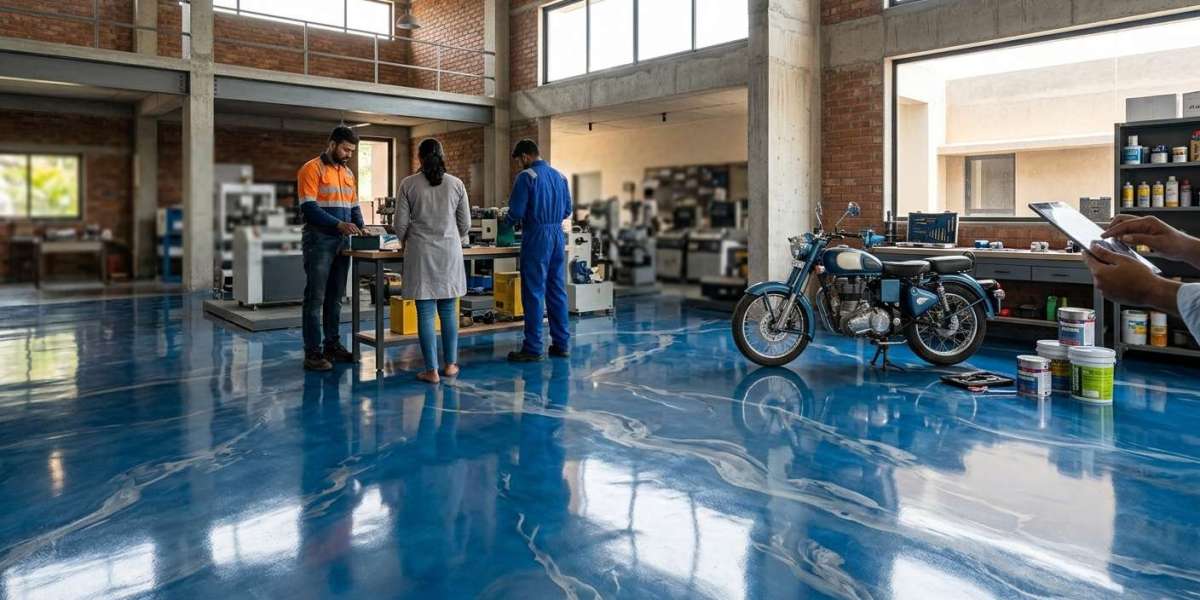

Epoxy flooring is noted for providing a long-lasting, smooth, and easy-to-clean surface in industrial, commercial, and residential settings. However, like with any flooring system, difficulties might arise when the surface is not properly prepared, the wrong product is chosen, or the installation conditions are not appropriate.
Peeling, bubbling, cracking, discoloration, and slick surfaces can all have an impact on look and performance. Understanding the common reasons allows property owners and facility managers to take preventive measures before problems become costly fixes.
1. Peeling And Delamination
Peeling is one of the most obvious epoxy flooring issues. It happens when the coating loses its adhesion to the concrete substrate and begins to lift or separate from the surface.
Why Does This Happen?
Poor surface preparation is one of the most typical culprits. Dust, oil, grease, previous coatings, and other impurities can all hinder epoxy from bonding correctly. Excess moisture in concrete can also lead to adhesion failure.
Similar issues can arise when the coating is not properly mixed or applied to an unsuitable substrate.
How To Prevent It
Prior to application, the concrete should be completely cleaned and mechanically prepared. Wetness levels should also be examined, especially if the slab will be subjected to increased wetness or humidity.
Using the proper primer and following the manufacturer's mixing and application instructions can help to increase adhesion even further.
2. Bubbles And Blistering
Small bubbles, blisters, or pinholes may form on an epoxy surface during or after installation. Aside from influencing look, widespread bubbling could signal a problem with moisture or air movement beneath the coating.
Why Does This Happen?
Moisture or air trapped beneath the coating may travel to the surface when the epoxy cures. Applying epoxy to moist concrete or painting under inadequate temperature conditions can raise the risk.
Outgassing from concrete can also result in pinholes and bubbles.
How To Prevent It
Before installation, inspect the substrate for dampness. The surface should be clean and adequately prepared before application, which should take place within the prescribed temperature and humidity range.
Using proper application techniques, such as adequate rollers and careful material handling, can also assist prevent trapped air and surface flaws.
3. Cracks And Chipping
Although epoxy produces a hard and durable covering, it cannot compensate for movement or significant flaws in the underlying concrete. Cracks, chips, and damaged areas can emerge when the substrate moves or the floor is heavily impacted.
Forklifts, machines, pallets, and other equipment can exert repeated stress on the surface, making industrial environments especially demanding.
How To Prevent It
Existing cracks and damaged areas should be evaluated and corrected before the epoxy system is put. The flooring specification should also reflect the anticipated traffic, impact, and load circumstances.
Where movement is foreseen, proper joint planning and repair methods are required. Simply sealing an active fracture with epoxy may not result in a long-term solution.
4. Yellowing And Discoloration
Discoloration can alter the appearance of an epoxy floor, especially in places exposed to direct sunshine. Long-term UV exposure can cause some epoxy compositions to discolor or change color.
Chemical spills, extreme temperatures, and aging can all have an impact on how particular systems seem.
How To Prevent It
The flooring system should be chosen based on the surroundings. Areas that receive a lot of sunlight may benefit from a UV-stable protective topcoat or another technique designed to retain color.
Chemical spills should also be cleaned immediately using the cleaning methods specified for the flooring system.
5. Slippery Surfaces When Wet
When water, oil, grease, or other liquids come into contact with a smooth epoxy surface, it can slip. This can be a major issue in warehouses, workshops, commercial kitchens, entrances, and other areas where spills can occur.
How To Prevent It
Anti-slip additives or textured aggregates can be added to appropriate epoxy systems to improve traction. The appropriate level of roughness should be chosen based on the context, as an overly rough surface may become more difficult to clean.
Drainage and regular cleaning are also necessary. Quickly removing water, oil, and other impurities can help to keep walking conditions safe.
Importance Of Professional Installation
Many epoxy flooring issues can be traced back to preparation and installation rather than the fundamental concept of epoxy. Correct substrate preparation, moisture testing, precise mixing, right thickness, suitable climatic conditions, and proper curing all have an impact on the final outcome.
Before beginning a project, it is helpful to evaluate:
The state of the existing concrete
Moisture content in the substrate
Expected pedestrian and vehicle traffic
Chemical Exposure
Temperature and humidity.
Sunlight and UV exposure.
Cleaning requirements:
Slip resistance standards.
This assessment ensures that the chosen system is suitable for the actual environment.
How Regular Maintenance Helps
Even professionally built epoxy floors benefit from frequent maintenance. To decrease surface abrasion, remove dust and loose debris on a regular basis. Spills should be cleaned up very once, and high-traffic areas should be monitored on a regular basis.
Facility managers should also examine for early symptoms of peeling, cracking, bubbling, scratches, or surface damage. Addressing minor flaws early on can help save them from becoming major issues.
Conclusion
Epoxy flooring can provide a strong, attractive, and functional surface for a variety of applications; however, its performance is strongly dependent on correct preparation, product selection, installation, and maintenance.
Common concerns with epoxy floors include peeling, bubbling, cracking, discoloration, and slippery surfaces. Understanding their origins and implementing preventive steps before and during installation will help protect your investment and keep the floor looking and working properly for longer.