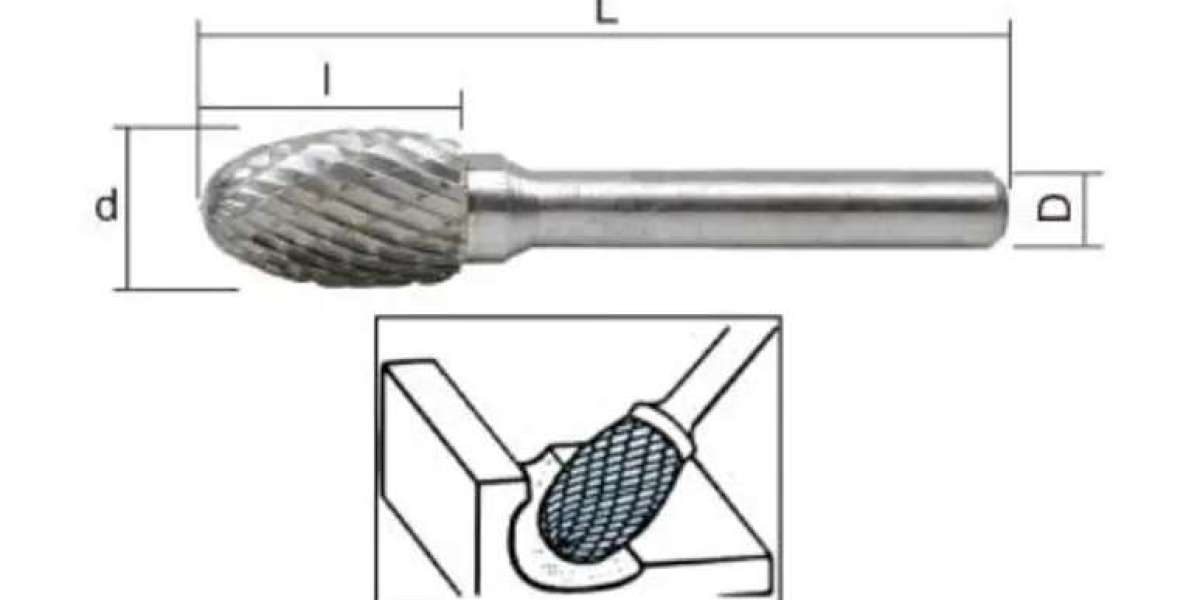

Industrial tool distributors need product information that helps customers select suitable cutting tools for their working conditions. Carbide Burr products come in different shapes, dimensions, and tooth configurations, so a clear understanding of these differences can simplify product matching. Customers may use the same rotary equipment for deburring, contouring, mold maintenance, and localized material removal, but each task can require a different cutting head.
Head geometry is one of the first specifications to review. Cylindrical burrs are commonly selected for flat areas and straight edges. Ball-shaped profiles can work on curved surfaces and rounded cavities, while pointed designs help access narrow spaces. Flame-shaped heads are useful for selected grooves and irregular contours. A distributor offering several profiles can support workshops with varied metalworking requirements.
Dimensions should be stated clearly in product listings. Shank diameter determines compatibility with the rotary tool's collet, while head diameter and cutting length influence access and material removal. Overall length is also relevant when operators need to reach recessed areas. These measurements help customers compare products without relying solely on photographs or general descriptions.
Tooth configuration is another factor. Single-cut burrs are commonly used for shaping and cutting tasks where chip formation needs to remain manageable. Double-cut designs feature intersecting flutes and may provide a different cutting feel and surface result. The appropriate configuration depends on the material, the machine, and the intended finish. Product descriptions should avoid implying that one tooth pattern suits every application.
Material compatibility should be explained in practical terms. Steel, stainless steel, aluminum, and cast iron differ in hardness and cutting behavior. Customers should confirm the manufacturer's recommended applications before choosing a tool. Operating speed, pressure, and workpiece stability also influence the outcome, even when the burr itself is suitable for the material.
For wholesale customers, stable specifications and reliable packaging are useful for inventory planning. Clear product codes, consistent dimensions, and organized assortments make it easier to manage different head profiles. Buyers may also need individual packaging, bulk packaging, or private-label options, depending on their distribution model. These arrangements should be confirmed according to actual production capabilities.
Inspection and storage instructions can add value to the product information. Cutting heads should be checked for damage before use, and tools should be stored to prevent contact with objects that may chip the teeth. Correct machine fitting and suitable protective equipment remain essential during operation.
A well-organized Carbide Burr product range helps distributors serve customers in fabrication, automotive repair, mold processing, and general industrial maintenance. By presenting accurate dimensions, tooth designs, and application guidance, suppliers can make product selection clearer and help users match each tool to its intended task.
https://www.zycementedcarbides.com/product/carbide-burrs-series/





