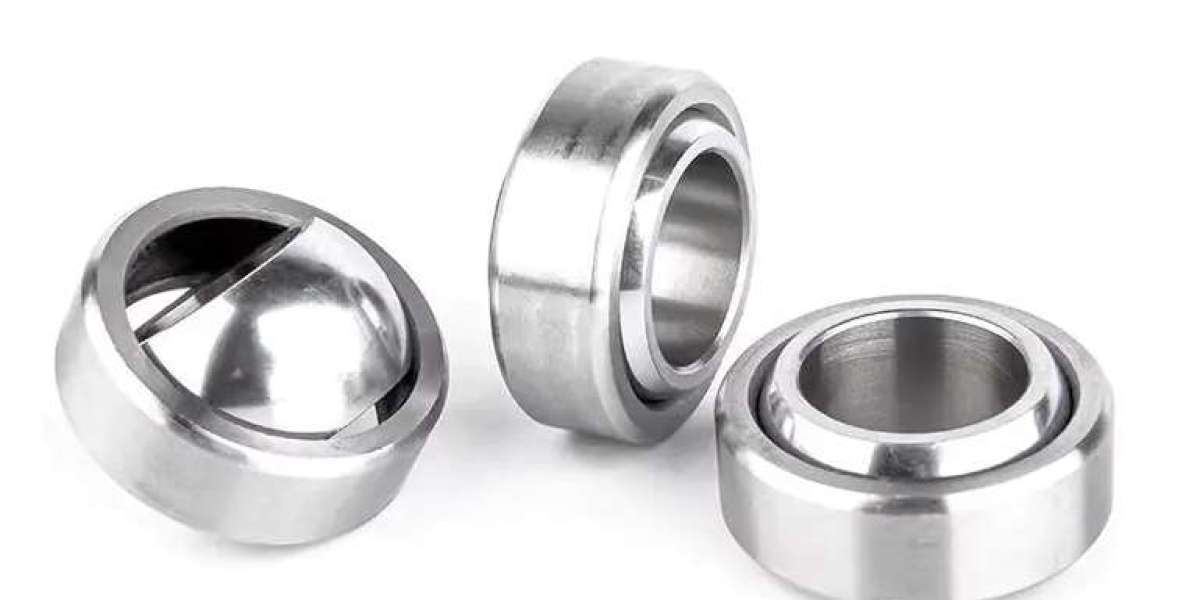

Selecting mechanical components requires more than checking whether their dimensions match an assembly. A Ball joint rod end bearing must also suit the forces, movement patterns, and environmental conditions involved in the application. Engineers use these joints in industrial machinery, test equipment, control linkages, and automated production systems where angular adjustment is necessary.
One of the main functions of a rod end bearing is to connect a rod to another component while permitting limited angular movement. The spherical bearing surface allows the connected parts to change their relative angle without requiring a rigid connection. This arrangement can help accommodate small alignment variations during machine operation.
The housing design influences how the bearing is installed. Threaded rod ends are commonly integrated into adjustable linkages, while other mounting configurations may be used where a specific connection arrangement is required. Right-hand and left-hand threads can support adjustment in assemblies that need their effective length changed by rotating the connecting rod. Thread compatibility should always be confirmed before installation.
Load capacity is a key selection factor. Radial loads, axial loads, vibration, and impact forces can affect the joint differently. The bearing's rated capacity should be evaluated alongside the direction and frequency of applied forces. Designers should also consider whether the component will experience continuous oscillation, repeated articulation, or occasional repositioning because these conditions influence contact wear.
A Ball joint rod end bearing may use hardened steel contact surfaces, corrosion-resistant materials, or a self-lubricating liner, depending on the intended service conditions. Each option involves different maintenance and operating considerations. A self-lubricating design can reduce routine servicing, but its liner material must remain suitable for the working temperature and load. Lubricated designs require compatible grease and an appropriate maintenance schedule.
Installation dimensions should be documented during equipment design. Relevant measurements include bore diameter, thread dimensions, housing width, overall length, and available articulation. Engineers should also allow enough clearance for the joint to move without contacting nearby structures. Poor clearance can restrict articulation and place additional stress on the assembly.
For maintenance teams, inspection should focus on excessive looseness, unusual noise, corrosion, damaged threads, and visible wear. If a joint becomes difficult to move or develops abnormal play, the cause should be investigated before continued operation. Mounting hardware and adjacent linkage parts should also be checked because their condition affects the bearing's working environment.
Choosing a Ball joint rod end bearing according to load, material, movement, and installation requirements helps create a suitable mechanical connection. A well-matched component supports consistent motion and helps reduce avoidable maintenance problems throughout the equipment's service life.
https://www.linearbearingfactory.com/product/spherical-plain-bearing-rod/
You can contact us for more information at:
Whatsapp:+86 17398543323
E-mail: viola@jldbearing.com