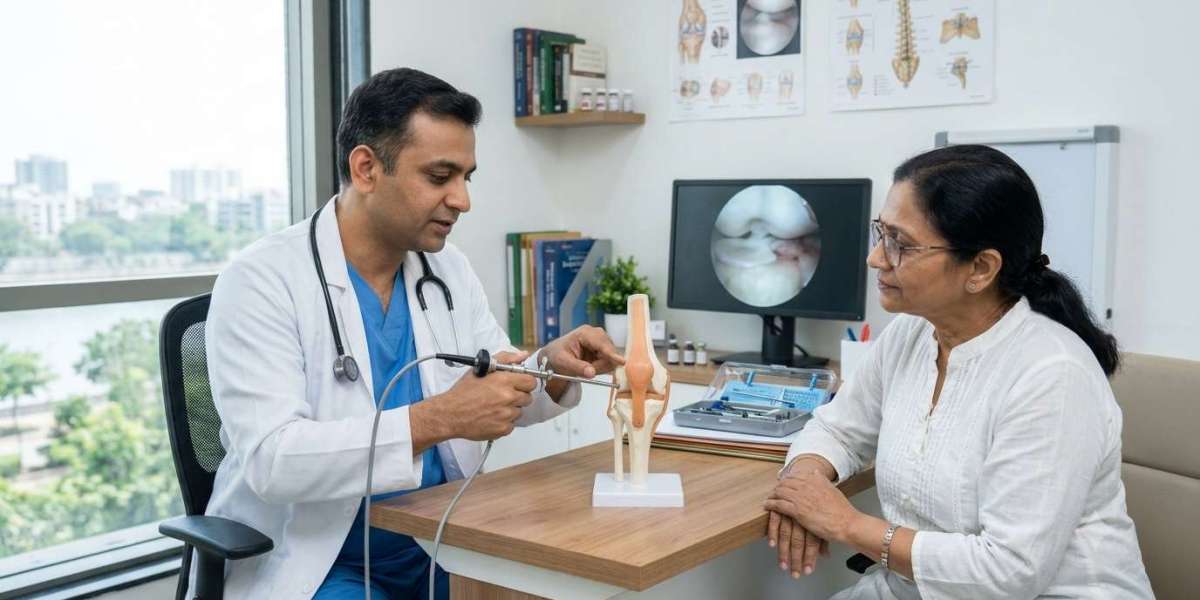

Joint pain and sports-related injuries can affect mobility, work, exercise, and everyday activities. When discomfort continues or a joint becomes unstable, an orthopedic assessment can help identify the underlying problem. Arthroscopy is one of the techniques used by orthopedic surgeons to examine and treat certain joint conditions through small incisions.
Understanding how arthroscopy works, which conditions it may address, and what recovery involves can help patients prepare for a consultation.
What Is Arthroscopy?
Arthroscopy is a minimally invasive surgical technique that allows a surgeon to examine the inside of a joint using a small camera called an arthroscope. The camera displays images on a monitor, helping the surgeon assess structures such as cartilage, ligaments, and other tissues.
Specialized instruments may be inserted through additional small incisions when treatment is required. The exact technique depends on the affected joint and the condition being treated.
Arthroscopy is commonly associated with knee and shoulder procedures, although it may also be used for selected problems involving other joints. It is not suitable for every orthopedic condition, so a detailed assessment is essential.
Conditions That May Require Arthroscopy
Arthroscopy may be considered for certain sports injuries, ligament tears, meniscus injuries, loose bodies within a joint, and selected cartilage problems. In the shoulder, it can help address some rotator cuff injuries, instability, and other conditions.
Symptoms vary according to the affected structure. Patients may experience pain, swelling, clicking, stiffness, restricted movement, or a feeling that the joint is unstable. These symptoms do not automatically mean surgery is necessary.
Depending on the diagnosis, treatment may begin with rest, physiotherapy, activity modification, medication, or other conservative measures. Arthroscopy may be discussed when these approaches are insufficient or when the injury requires surgical treatment.
Why Consider Arthroscopy Treatment In Ahmedabad?
Patients seeking orthopedic care should understand their diagnosis and compare appropriate treatment options with a qualified specialist. When researching Arthroscopy Treatment In Ahmedabad, it is helpful to consider the surgeon's experience, the facilities available, diagnostic evaluation, and postoperative rehabilitation support.
Dr. Rohit Damor provides orthopedic services focused on arthroscopy, sports injuries, and joint care. His practice includes evaluating joint problems and discussing suitable treatment approaches based on the patient's symptoms, examination findings, and diagnostic investigations.
The purpose of a consultation is to establish whether arthroscopy is appropriate and explain the expected benefits, limitations, risks, and recovery requirements.
How Patients Are Evaluated Before Arthroscopy
The process usually begins with a discussion of symptoms, previous injuries, activity levels, and medical history. The surgeon examines the affected joint and may recommend imaging, such as X-rays or MRI, depending on the suspected condition.
These investigations help identify structural damage and guide treatment planning. The surgeon also considers whether physiotherapy or other non-surgical treatments may provide sufficient improvement.
Before an operation, patients should discuss anesthesia, preparation, medications, postoperative restrictions, and possible complications. They should also ask how soon they can return to work, driving, exercise, or sports, since these timelines vary considerably.
Understanding the Arthroscopy Procedure
Arthroscopy is generally performed using anesthesia appropriate to the procedure and the patient's medical circumstances. The surgeon inserts the arthroscope through a small incision and examines the joint. If treatment is indicated, specialized instruments may be used to address the identified problem.
The duration of the procedure depends on the joint involved and the complexity of the condition. Some patients can return home on the same day, while others may require observation or a longer hospital stay.
Although arthroscopy uses small incisions, it remains surgery and carries potential risks, including infection, bleeding, blood clots, stiffness, or incomplete symptom relief. The surgeon should explain the risks relevant to the individual case.
Recovery and Rehabilitation
Recovery depends on the procedure performed, the tissues involved, and the patient's overall health. Some people resume light activities relatively quickly, while ligament reconstruction or more complex procedures may require a longer rehabilitation period.
Physiotherapy can help restore movement, improve strength, and rebuild joint stability. Patients should follow the recommended exercise schedule and avoid returning to demanding activities before receiving medical clearance.
Athletes may require sport-specific rehabilitation and functional assessments before returning to training or competition. Following professional guidance helps support recovery and reduces the risk of premature strain on healing tissues.
Making an Informed Treatment Decision
Arthroscopy can be valuable for selected joint conditions, but it is not automatically the best solution for every patient. A clear diagnosis, realistic expectations, and an individualized treatment plan are essential.
Patients can learn more about orthopedic care by visiting Dr. Rohit Damor. A consultation can help clarify the available options, whether treatment should be surgical or non-surgical, and what the recovery process may involve.
Conclusion
Joint pain and sports injuries deserve careful evaluation, particularly when symptoms persist or limit everyday activities. Arthroscopy offers a minimally invasive option for treating selected joint problems, with outcomes depending on the diagnosis and procedure. Choosing appropriate specialist care and following a structured rehabilitation plan can help patients work towards improved mobility and a safe return to daily activities.