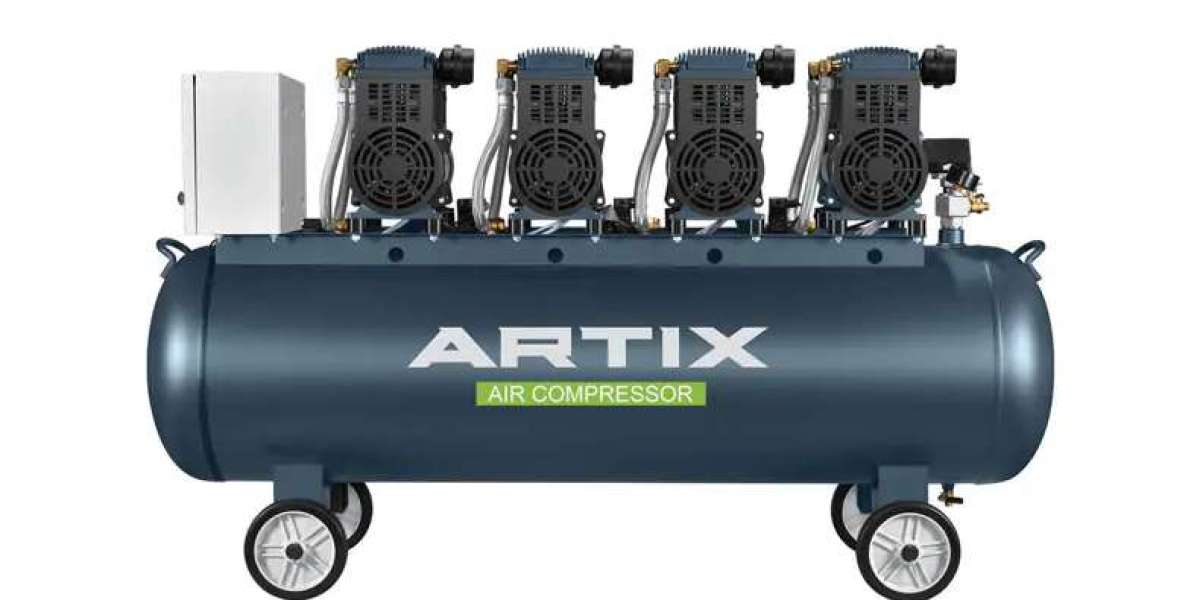

When evaluating air compressors for industrial or workshop use, one key comparison is between a Belt Driven Compressor and a Direct Drive Compressor in terms of maintenance and lifespan.
A Belt Driven Compressor has more moving components: belts, pulleys, tensioners. These parts wear over time. Belts can stretch, slip, fray, or break; pulleys may misalign; tensioners may require adjustment. All these contribute to periodic maintenance actions — inspecting belt alignment, replacing belts, adjusting tension, lubricating bearings, etc.
On the other hand, a Direct Drive Compressor omits those intermediate transmission components. With the motor connected directly to the air pump, there are fewer failure points. That often means fewer scheduled parts replacements, and often lower downtime for repairs. For users who are less able to perform frequent maintenance, this simplicity can be valuable.
Another aspect is that Belt Driven Compressors sometimes run cooler (because belts can absorb vibration, damping some shocks) and can reduce stress on the motor under certain conditions. But the requirement for periodic inspection can offset that if neglected. Also, in harsh environments (dust, moisture, heat), belts and pulleys may deteriorate faster. A Direct Drive Compressor tends to handle such conditions more robustly since it has fewer external moving parts exposed to contaminants.
Regarding lifespan: for continuous heavy duty operation, Direct Drive may show better longevity, provided it is well built. Belt Driven models may serve well in intermittent or lighter duty, assuming maintenance is kept up. The trade-off is between upfront cost, ease of service, and how often maintenance is feasible.