
Depth-Dependent Behavior of Deep Water Jet Aerator Systems
The performance of a Deep Water Jet Aerator in transferring oxygen is strongly influenced by the depth at which it operates. Water depth affects hydrostatic pressure, mixing behavior, bubble movement, and circulation strength, all of which determine how effectively oxygen can be dissolved. In shallow water, the jet encounters lower pressure and forms larger bubbles, which rise quickly, reducing contact time. In deeper environments, increased pressure compresses bubbles, enabling more efficient dissolution but also demanding higher jet velocity to counter resistance.
Shallow Water Conditions and Limited Mixing Capacity
When operating in shallow water, the jet stream has limited vertical space to travel before reaching the surface. This shorter path typically results in a reduced entrainment volume because the jet cannot fully develop a long air core. The bubbles produced are relatively coarse, and their quick ascent leaves insufficient residence time for oxygen to diffuse into the surrounding water. As a result, oxygen transfer efficiency tends to drop, and the aerated zone becomes more localized. While shallow installations may still provide adequate mixing for small ponds or canals, they rarely achieve the deep circulation needed for large or stratified water bodies.
Enhanced Oxygen Transfer in Medium to Deep Water Layers
At moderate to significant depths, the aerator benefits from the greater distance available for jet expansion and bubble interaction. Increased hydrostatic pressure compresses air bubbles, enlarging the interfacial area relative to their volume and promoting faster oxygen transfer. The downward jet can entrain more water, generating a stronger circulation loop that brings low-oxygen deep water to the surface. This mechanism helps disrupt stratification and enriches the entire water column. However, achieving optimal efficiency requires sufficient jet momentum to overcome resistance and maintain a stable submerged plume.
Challenges and Opportunities in Very Deep Water
In very deep environments, although the potential for oxygen transfer increases, the aeration system faces operational limitations. High pressure may overly compress bubbles, causing them to dissolve quickly but restricting the upward transport of oxygen-rich water. Excessive depth also requires greater pumping power to maintain the desired jet velocity, which may reduce overall energy efficiency. The design of nozzles, pump capacity, and installation depth must therefore be carefully balanced to avoid diminishing returns. When calibrated correctly, deep-water operation can provide broad and uniform oxygen enhancement.
Optimizing Aeration Strategies Across Multiple Depth Scenarios
To maximize aeration efficiency at different depths, operators typically adjust jet velocity, nozzle diameter, and installation angle. Deeper systems demand stronger jet forces, while shallow ones benefit from finer bubble formation techniques. Routine monitoring of dissolved oxygen profiles guides these adjustments and ensures that the aerator meets ecological and operational goals. By understanding how depth modifies aeration behavior, engineers can deploy systems that achieve lasting improvements in water quality across varied aquatic environments.
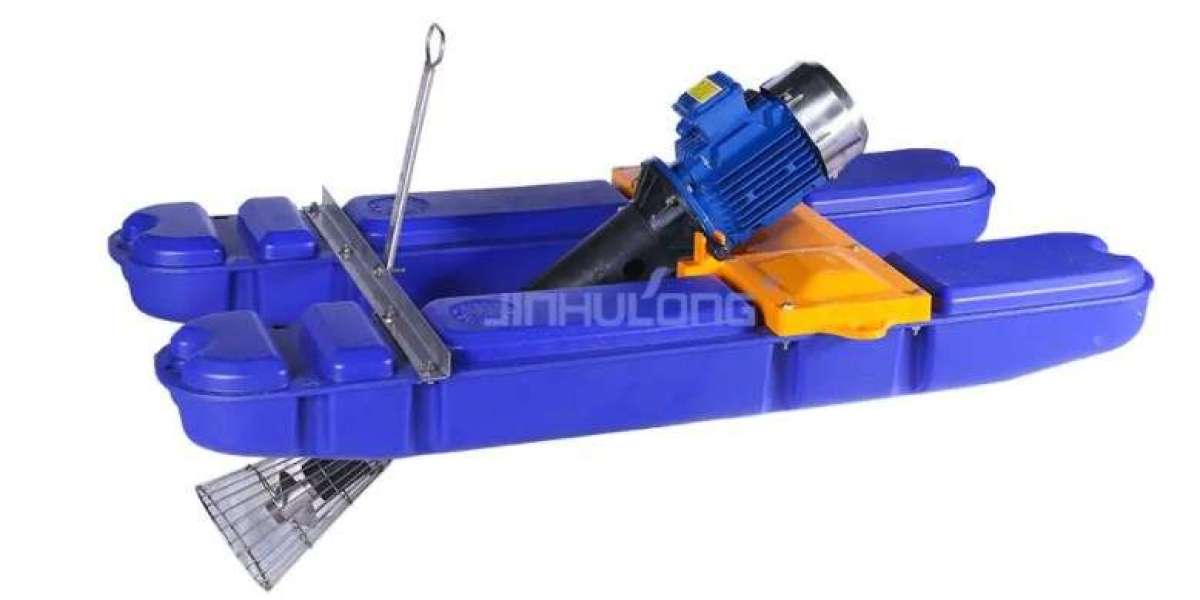
Phase: Three-phase
Power:1.5kW
Poles: 2poles
Impeller amount:1
Dimensions: 1280L X 740W X900H
Stowage Volume: 0.40m3
QTY per 40ctnr :180 units
Ability to increase oxygen: 0.99kg/h
Dynamic efficiency: 0.82kg/kW.h
Insulated resistance: 200MΩ