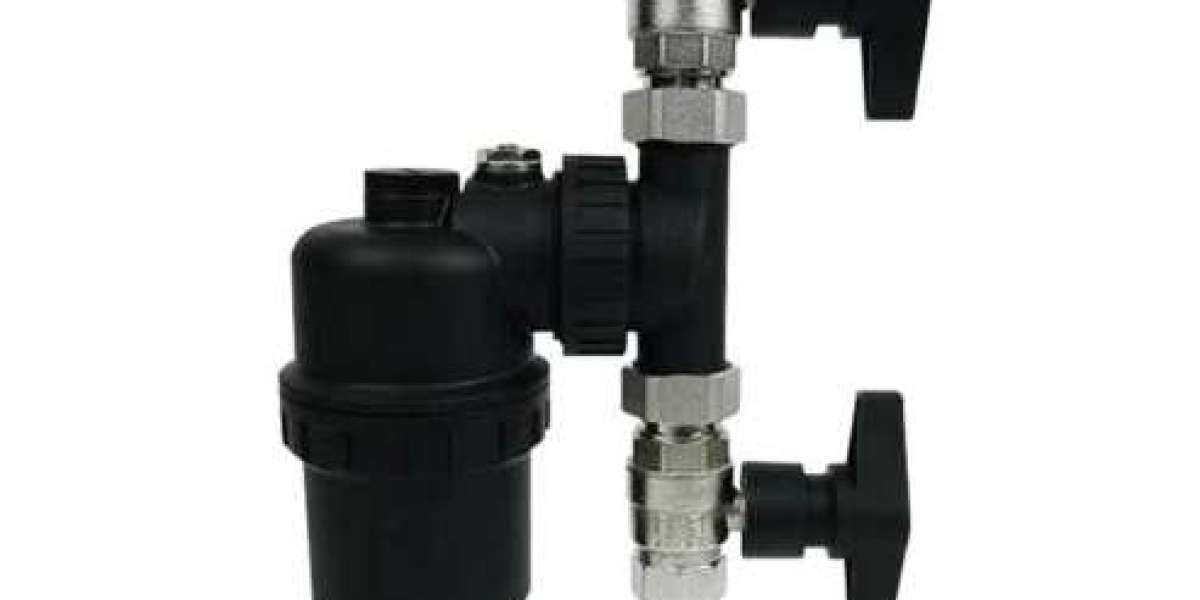

The Magnetic Filter and Underfloor Heating Intelligent Controller are often discussed separately, yet both are closely connected through daily system operation, water circulation behavior, and long-term heating performance in residential and light commercial environments. Their relationship becomes clearer when examining how flow stability underpins effective thermal regulation.
Underfloor heating distributes warmth gradually across large surface areas. This process depends on steady circulation rather than rapid bursts of heat. Intelligent controllers are designed to manage this slow response by anticipating thermal inertia. However, their calculations assume that flow rates remain within a defined range. Accumulated metallic debris disrupts this assumption by introducing unpredictable resistance.
Magnetic filters remove iron-based particles before they circulate repeatedly through the system. This action preserves internal diameters and valve movement, helping maintain consistent flow characteristics. For controllers that rely on learning algorithms or adaptive timing, this consistency is essential. When system behavior changes unexpectedly, learning processes can become less accurate.
Another important aspect is energy modulation. Controllers often adjust output based on return water temperature trends. Debris accumulation can affect heat exchange efficiency at the floor level, altering return temperatures in subtle ways. Filtration helps ensure that observed temperature changes reflect actual room conditions rather than hidden inefficiencies.
The interaction between pumps and controllers also benefits from clean circulation. Modern pumps adjust speed dynamically based on system demand. Partial blockages force pumps to work harder, which may alter pressure feedback signals. The controller, receiving these signals indirectly, may misinterpret demand levels. Magnetic filtration reduces these distortions.
In multi-zone systems, clean flow paths help preserve design balance. Zones with longer loops are especially sensitive to small changes in resistance. Filtration minimizes differential buildup, allowing intelligent controllers to manage zones using their programmed parameters rather than compensating for uneven wear.
User comfort is shaped by predictability rather than raw output. Floors that warm consistently at expected times reinforce confidence in automated schedules. This predictability emerges when both control logic and mechanical conditions remain aligned. Magnetic filtration supports this alignment quietly in the background.
Service technicians also benefit from this integration. When diagnosing performance issues, having a clean system simplifies analysis. Controllers can be evaluated based on software behavior rather than masked by mechanical constraints. Filter inspection offers immediate insight into internal system conditions.
As underfloor heating becomes more common in diverse building types, scalable reliability becomes important. Combining intelligent control with filtration supports long-term consistency across varying usage patterns, floor constructions, and occupancy schedules.