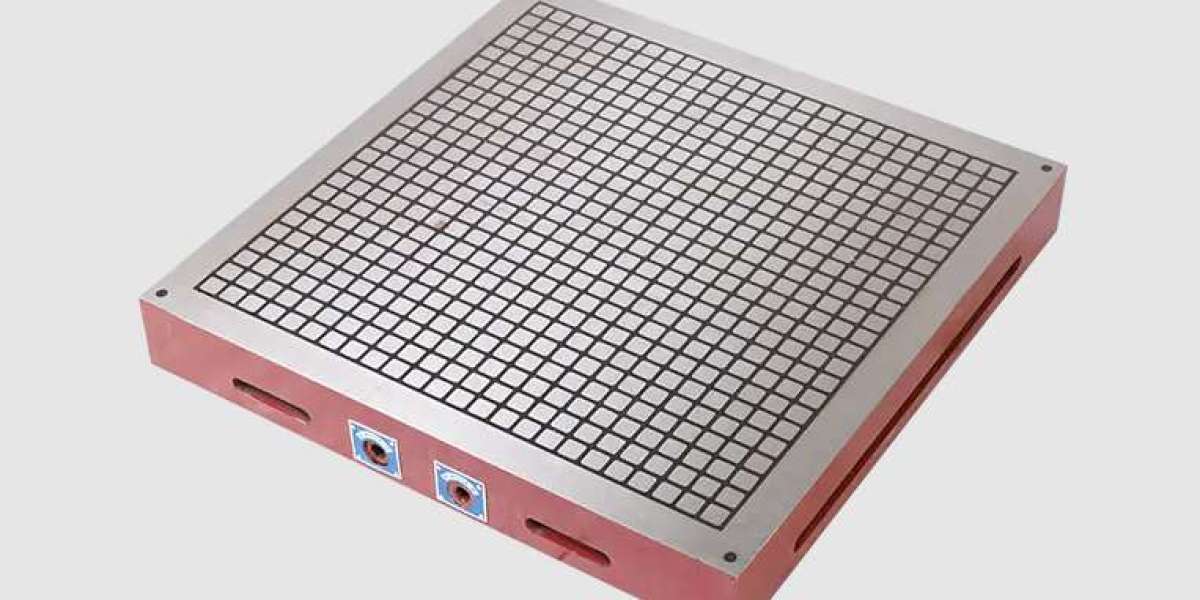

Introduction to Electro Permanent Magnetic Chucks
An Electro Permanent Magnetic Chuck is an advanced tool used in metalworking, particularly for holding ferromagnetic materials during machining processes like grinding, milling, and turning. Unlike traditional mechanical clamps, the electro permanent magnetic chuck combines the power of permanent magnets with the flexibility of electro-magnetic activation, offering a powerful and versatile solution for material clamping. This article will explore how an Electro Permanent Magnetic Chuck compares to traditional mechanical fixtures, highlighting its key advantages in terms of efficiency, safety, and versatility.
Stronger and More Efficient Holding Power
One of the key advantages of an Electro Permanent Magnetic Chuck over mechanical clamps is its superior holding power. Electro permanent magnetic chucks use permanent magnets activated by electricity, which creates a powerful and reliable magnetic field. When activated, the chuck can hold heavy and large workpieces securely without the need for physical contact or excessive force.
In comparison, mechanical clamps rely on physical force to secure the material, which can lead to uneven pressure distribution or even damage to delicate workpieces. The magnetic force provided by the electro permanent chuck is uniform across the surface of the material, ensuring a consistent and firm grip. This not only reduces the risk of material deformation but also enhances machining accuracy.
Quick Setup and Increased Productivity
Another significant advantage of using an Electro Permanent Magnetic Chuck is the speed and convenience of setup. Unlike mechanical clamps, which often require time-consuming adjustments and manual tightening, the electro permanent magnetic chuck can quickly clamp the workpiece with just the flip of a switch. Once the chuck is activated, the material is held securely in place, reducing downtime and allowing operators to focus on the machining process.
With mechanical clamps, the process can be more labor-intensive, requiring constant readjustment to ensure the proper clamping force is applied. This slower setup time can reduce overall productivity, especially when working with multiple parts or complex operations. The faster setup provided by electro permanent magnetic chucks helps improve workflow efficiency, ultimately increasing productivity and reducing operational costs.
Enhanced Safety and Reduced Risk of Damage
Safety is a critical consideration in any manufacturing environment, and an Electro Permanent Magnetic Chuck offers enhanced safety compared to mechanical clamps. One of the main risks associated with mechanical clamps is that they can become loose or fail during the machining process, causing the workpiece to shift, potentially resulting in accidents or damaging the material.
Electro permanent magnetic chucks, on the other hand, are designed to securely hold the material with minimal risk of failure. The magnetic force remains consistent during the operation, and the chuck's deactivation is controlled to ensure a safe release of the material. This reduces the likelihood of sudden shifts or drops, which could lead to injuries or costly damage to both the workpiece and the machinery.
Additionally, many electro permanent magnetic chucks are designed with fail-safe mechanisms that ensure the magnetic field remains intact even in the event of power failure, providing an additional layer of security compared to mechanical clamps that rely entirely on physical force.
Versatility and Flexibility for Various Applications
An Electro Permanent Magnetic Chuck offers greater versatility compared to mechanical clamps. These chucks can hold a wide range of shapes and sizes of workpieces, including thin or irregularly shaped materials that may be challenging to secure using mechanical clamps. The magnetic chuck can hold the workpiece securely without deforming it, making it ideal for delicate or complex operations where precision is crucial.
Mechanical clamps, while useful for many applications, may not offer the same level of flexibility. They often require specific configurations to hold materials of different shapes, and the clamping force may not be evenly distributed across the workpiece. In contrast, the magnetic chuck is adjustable and can accommodate a wide variety of workpieces, offering greater flexibility for different machining tasks.