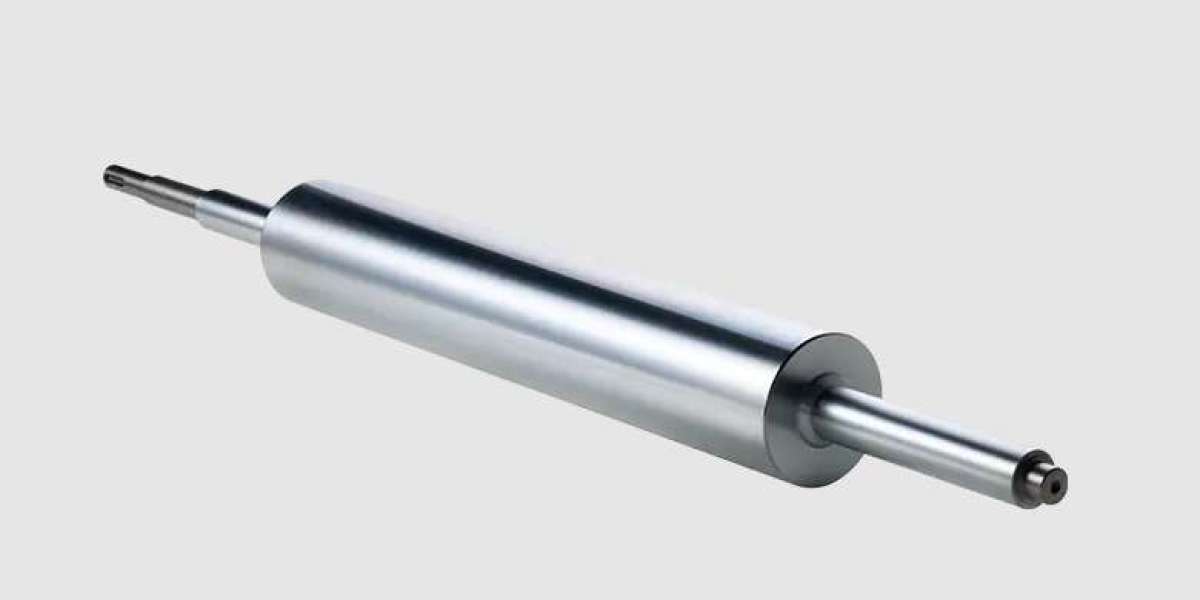

Choosing the Right Roller for Longevity
When it comes to selecting rollers for industrial applications, two of the most commonly used materials are steel and aluminum. Both materials offer unique advantages, but which one is better suited for long-term use? This question often arises when engineers and manufacturers have to make a decision about which roller material to choose. The steel roller and the aluminum guide roller each have distinct properties that affect their durability, load-bearing capacity, and overall performance.
Steel Rollers: Strength and Durability
Steel rollers are known for their exceptional strength and load-bearing capabilities. Steel, being a heavy-duty material, is ideal for heavy industrial environments where high mechanical loads and intense friction are common. The strength of steel makes it an excellent choice for applications that demand durability, especially in environments where the rollers are subjected to harsh conditions, such as high temperatures, corrosive substances, or heavy wear.
Steel rollers are also more resistant to deformation under pressure compared to aluminum. When used in high-load environments, steel rollers can maintain their structural integrity over time. This makes them suitable for systems that require long-lasting, high-performance rollers. However, steel rollers are also heavier than aluminum, which can sometimes be a disadvantage in applications that require lighter components for efficiency and speed.
Aluminum Guide Rollers: Lightweight and Corrosion-Resistant
In contrast to steel, aluminum guide rollers offer advantages in terms of weight and corrosion resistance. Aluminum is much lighter than steel, which makes it ideal for applications where weight reduction is important, such as in conveyor systems or machinery that requires high-speed motion. The reduced weight of aluminum rollers can result in faster operation and less energy consumption, contributing to the overall efficiency of the system.
Aluminum is also highly resistant to corrosion, especially in environments where moisture, chemicals, or other corrosive substances are present. This makes aluminum guide rollers ideal for use in environments where rust and corrosion can be a concern. However, while aluminum is resistant to corrosion, it is generally not as strong as steel. In high-load applications, aluminum rollers may experience wear and deformation more quickly than their steel counterparts.
Which Is Better for Long-Term Use?
When comparing the two materials, the choice between a steel roller and an aluminum guide roller ultimately depends on the specific needs of the application. For heavy-duty, high-load environments, steel rollers are generally more suitable due to their strength and ability to withstand heavy wear and tear. Steel is also more appropriate for high-temperature applications where durability and strength are critical.
On the other hand, if weight reduction and corrosion resistance are more important, aluminum guide rollers may be the better choice. In applications where the rollers are exposed to moisture or chemicals, aluminum can offer better long-term performance due to its resistance to rust and corrosion.
Steel vs. Aluminum for Longevity
Both steel rollers and aluminum guide rollers have their merits, and the decision should be based on the specific needs of the application. Steel rollers are generally more suited for long-term use in heavy-duty environments where strength and load-bearing capacity are paramount. Aluminum guide rollers, while not as strong, offer the advantages of lighter weight and resistance to corrosion, making them ideal for less demanding applications where these factors are critical. By understanding the strengths and limitations of each material, manufacturers can make an informed decision about which roller is best for their long-term needs.