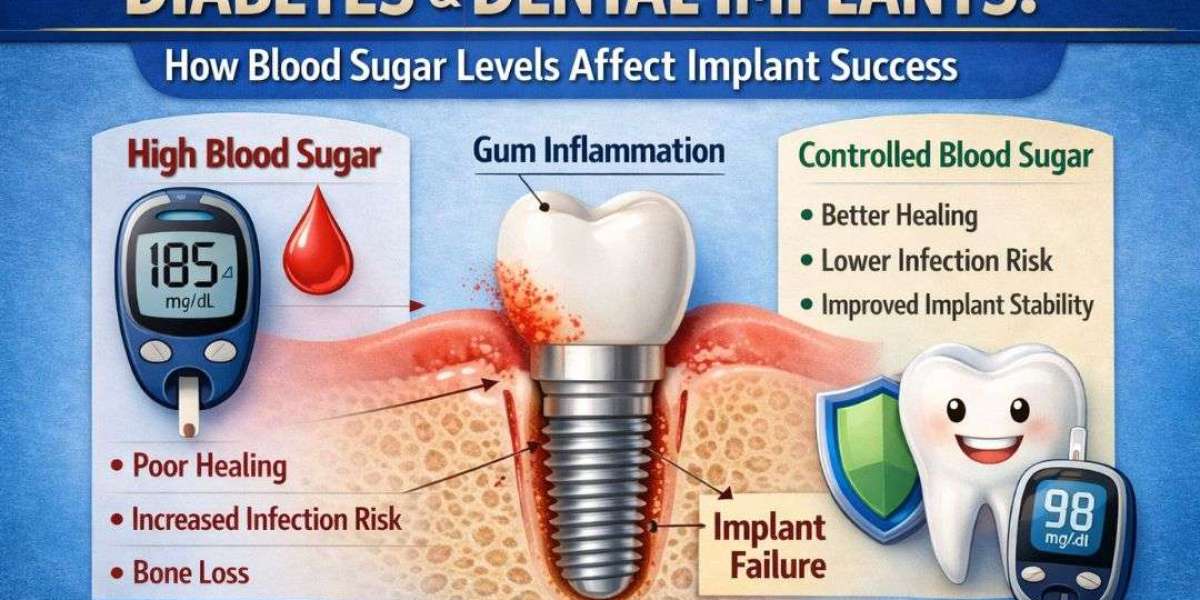

Diabetes and Dental Implants: How Blood Sugar Levels Affect Implant Success
Dental implants are considered the most reliable and long-term solution for missing teeth. However, for people living with diabetes, a common question arises: Are dental implants safe for diabetics?
Understanding Diabetes and Oral Health
Diabetes is a chronic condition that affects how the body processes glucose. Poorly controlled blood sugar can lead to:
- Delayed wound healing
- Increased risk of infection
- Gum disease (periodontitis)
- Bone loss in the jaw
How Blood Sugar Levels Impact Dental Implant Success
- Healing and Osseointegration
Dental implants rely on a process called osseointegration, where the implant fuses with the jawbone. High blood sugar levels can slow this process, increasing the risk of implant failure.
- Infection Risk
Uncontrolled diabetes weakens the immune system, making patients more prone to post-surgical infections around the implant site.
- Bone Quality
Chronic high glucose levels can reduce bone density, which may affect implant stability if not managed properly.
Are Dental Implants Safe for Diabetic Patients?
✅ Yes, dental implants are safe for diabetics when:
- HbA1c levels are well-controlled (ideally below 7%)
- Proper oral hygiene is maintained
- Treatment is planned by an experienced dental implant specialist
Expert Guidelines for Diabetics Considering Dental Implants
- Maintain Controlled Blood Sugar
Work closely with your physician to stabilize glucose levels before and after implant surgery.
- Choose an Experienced Implantologist
An expert dentist understands diabetic-specific risks and plans treatment accordingly—this directly improves outcomes.
- Follow a Strict Oral Hygiene Routine
Daily brushing, flossing, and professional cleanings help prevent infections.
- Regular Follow-Ups
Post-implant monitoring ensures early detection of complications and long-term implant stability.
When Dental Implants May Be Delayed
Dental implants may be postponed if:
- Diabetes is uncontrolled
- Severe gum disease is present
- Active infections exist
Long-Term Success Tips for Diabetic Implant Patients
✔ Keep HbA1c levels stable
✔ Avoid smoking and tobacco
✔ Follow post-surgery care instructions strictly
✔ Attend regular dental check-ups
Conclusion: Diabetes Is Not a Barrier to Dental Implants
Diabetes does not automatically disqualify you from getting dental implants. With proper blood sugar control, expert care, and disciplined oral hygiene, diabetic patients can enjoy safe, successful, and long-lasting dental implants.