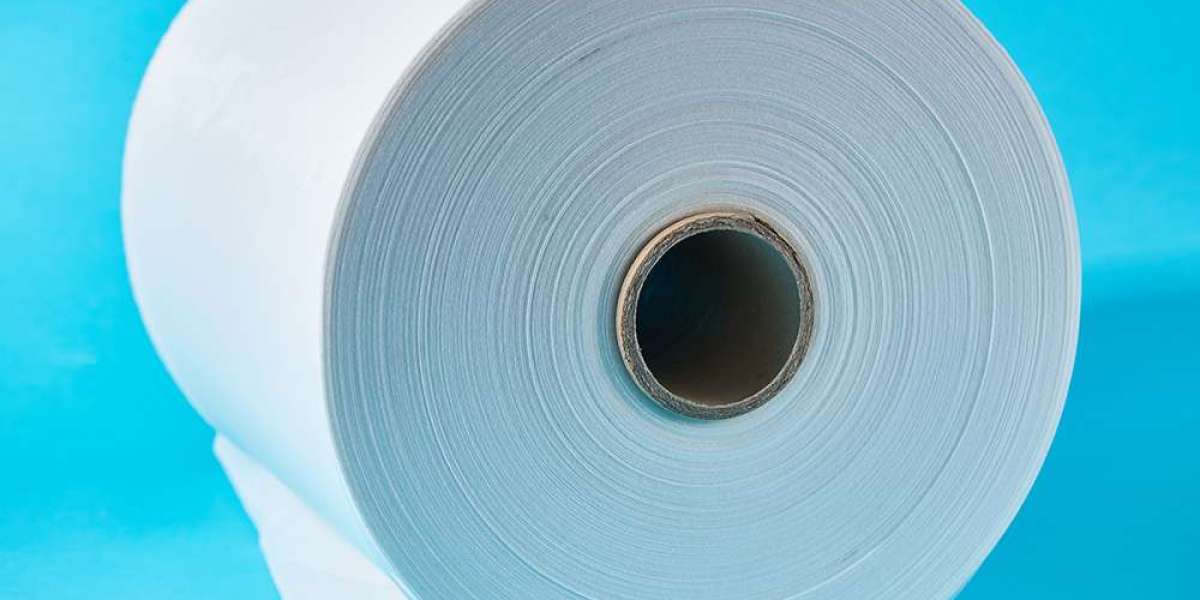

A Nylon (PA) Mesh Filter Screen begins with the preparation of polyamide monofilaments or multifilament yarns precisely calibrated for diameter consistency. Monofilament production involves extrusion through precision-ground spinneret orifices, with filament diameter controlled within tolerances of ±2 to 3 percent. Online laser gauging systems continuously monitor diameter, providing feedback for extrusion parameter adjustment. The solidified monofilaments are drawn under controlled tension and temperature to achieve target tenacity and elongation properties. Multifilament yarns consist of numerous finer filaments twisted or air-entangled, providing different filtration characteristics and mechanical behavior. Both monofilament and multifilament variants are wound onto beams or cones under precisely controlled tension, preparing uniform warp sheets essential for consistent Nylon (PA) Mesh Filter Screen quality.
The weaving process for Nylon (PA) Mesh Filter Screen employs rapier, projectile, or air-jet looms equipped with specialized tension control systems accommodating nylon's elastic properties. Plain weave, the most common configuration, interlaces warp and weft yarns in alternating over-under sequence, producing symmetrical mesh openings with balanced strength in both axes. Twill weaves introduce diagonal rib patterns, providing higher thread density and improved stability for finer filtration grades. Dutch weaves utilize heavier warp threads and lighter weft threads, creating wedge-shaped apertures particularly effective for depth filtration applications. Reed spacing, heddle lifting sequences, and weft insertion timing are precisely programmed to achieve target mesh counts, typically expressed as threads per inch or threads per centimeter. The dimensional stability of Nylon (PA) Mesh Filter Screen during weaving requires careful humidity and temperature control, as polyamide's moisture affinity affects yarn flexibility and friction characteristics.
Quality verification of Nylon (PA) Mesh Filter Screen geometry employs multiple measurement methodologies. Optical microscopy with automated image analysis measures opening dimensions across multiple locations, generating statistical distributions of pore size. Airflow porometry determines the most constricted pore diameter through capillary flow techniques. Bubble point testing, specified in ASTM F316, identifies maximum pore size by measuring pressure required to displace wetting fluid from the largest aperture. Thread count verification uses projection microscopy or automated fabric inspection systems. Thickness measurement under specified compression loads confirms consistent caliper. Tensile testing in both warp and weft directions verifies strength retention through weaving and finishing processes. These rigorous quality protocols ensure that Nylon (PA) Mesh Filter Screen delivers consistent particle retention characteristics, whether specified for nominal filtration ratings where a percentage of specified-size particles are retained, or absolute filtration ratings where all particles above a defined size are captured. The precision achieved through advanced weaving technology and comprehensive quality verification establishes Nylon (PA) Mesh Filter Screen as a reliable, predictable filtration medium across particle size ranges from coarse 2,000 micron screening to fine 5 micron filtration.