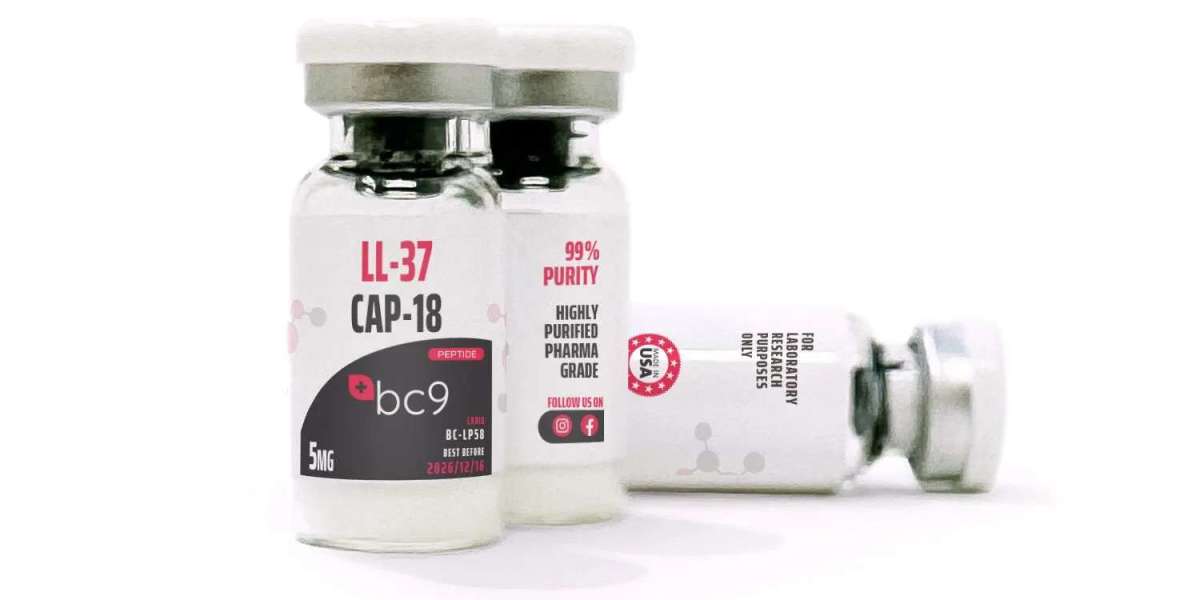

LL-37 has emerged as one of the most intensively studied human antimicrobial peptides due to its multifaceted activity in innate immunity. As the only member of the human cathelicidin family, LL-37 demonstrates potent antiviral, antibacterial, antifungal, and immunomodulatory properties. Its ability to neutralize enveloped and non-enveloped viruses, modulate host immune responses, and influence tissue repair positions it at the center of advanced research in viral defense strategies.
This in-depth analysis explores LL-37’s molecular structure, antiviral mechanisms, immunological signaling pathways, and translational research directions shaping the future of peptide-based antiviral interventions.
What Is LL-37? Structural and Biochemical Profile
LL-37 is a cationic, amphipathic peptide derived from the precursor protein hCAP-18 (human cationic antimicrobial protein-18). It consists of 37 amino acids beginning with two leucine residues (hence “LL”). Produced by neutrophils, epithelial cells, macrophages, and keratinocytes, LL-37 is rapidly released at infection sites.
Key Structural Features
- Length: 37 amino acids
- Charge: Net positive
- Structure: α-helical conformation in membrane-mimetic environments
- Amphipathic nature: Enables membrane insertion and disruption
The peptide’s positive charge allows electrostatic interaction with negatively charged viral membranes and microbial surfaces. Its amphipathic α-helix enables insertion into lipid bilayers, destabilizing structural integrity.
LL-37 and Viral Defense: Direct Antiviral Mechanisms
1. Viral Envelope Disruption
LL-37 binds to phospholipid membranes of enveloped viruses. Upon interaction, it integrates into the viral envelope, causing membrane destabilization and loss of infectivity.
Viruses shown to be susceptible include:
- Influenza A virus
- Respiratory syncytial virus (RSV)
- Herpes simplex virus (HSV)
- Human immunodeficiency virus (HIV)
- Coronaviruses
Membrane destabilization reduces viral fusion capacity, preventing entry into host cells.
2. Viral Entry Inhibition
LL-37 interferes with virus–host receptor interactions. By binding either to viral glycoproteins or host cell surface receptors, it prevents viral docking and fusion. This mechanism is particularly significant in respiratory epithelium, where early viral attachment determines infection severity.
3. Intracellular Replication Suppression
Evidence suggests LL-37 modulates intracellular signaling pathways, including interferon-mediated antiviral cascades. It enhances expression of antiviral genes, thereby limiting viral replication within infected cells.
Immunomodulatory Functions in Antiviral Defense
LL-37 is not merely a membrane-disrupting peptide. It orchestrates a coordinated immune response.
Modulation of Innate Immunity
- Activates dendritic cells
- Promotes chemotaxis of neutrophils and monocytes
- Enhances macrophage phagocytic activity
- Regulates Toll-like receptor (TLR) signaling
LL-37 balances inflammation by promoting antiviral cytokine production while preventing excessive tissue-damaging inflammation.
Interferon Pathway Enhancement
Type I interferons (IFN-α/β) are central to antiviral immunity. LL-37 amplifies interferon responses by:
- Facilitating recognition of viral nucleic acids
- Stabilizing nucleic acid complexes
- Enhancing TLR3, TLR7, and TLR9 signaling
This dual action direct viral disruption plus immune amplification creates a powerful antiviral environment.
LL-37 and Respiratory Viral Infections
Respiratory epithelial cells naturally produce LL-37 in response to infection. Its presence in airway surface fluid contributes to frontline defense against inhaled pathogens.
Research indicates:
- Reduced LL-37 levels correlate with increased susceptibility to viral respiratory infections
- Vitamin D upregulates LL-37 expression via the CAMP gene
- Local LL-37 concentration influences viral clearance rates
These findings underscore the peptide’s protective role in pulmonary immunity.
LL-37 and Enveloped vs. Non-Enveloped Viruses
Feature | Enveloped Viruses | Non-Enveloped Viruses |
Membrane Target | Direct lipid disruption | Limited membrane effect |
Entry Inhibition | Strong | Moderate |
Immune Activation | Strong | Strong |
While LL-37 demonstrates greater potency against enveloped viruses due to lipid targeting, its immune-enhancing effects extend protection to non-enveloped viruses as well.
LL-37 in Emerging Viral Research
Advanced studies are investigating LL-37 in:
- Nanoparticle delivery systems
- Synthetic peptide analog development
- Combination antiviral therapies
- Topical antiviral formulations
- Pulmonary peptide aerosols
Structural optimization strategies aim to improve peptide stability, reduce proteolytic degradation, and enhance therapeutic half-life.
Stability, Bioavailability, and Research Considerations
Despite its strong antiviral properties, LL-37 faces challenges:
- Rapid protease degradation
- Short systemic half-life
- Potential cytotoxicity at high concentrations
Research focuses on:
- PEGylation
- Liposomal encapsulation
- Peptide engineering
- Controlled-release platforms
These approaches significantly improve stability and bioavailability for experimental applications.
LL-37 and Immune Homeostasis
Beyond antiviral activity, LL-37 contributes to:
- Wound healing
- Angiogenesis
- Regulation of inflammatory balance
- Maintenance of epithelial barrier integrity
Its ability to bridge innate and adaptive immunity distinguishes it from conventional antiviral agents.
Buy LL-37 for Research Applications
Researchers seeking high-purity peptide material often search for reliable sources to buy LL-37 for laboratory investigations. Critical quality parameters include:
- ≥98% purity (HPLC verified)
- Mass spectrometry confirmation
- Endotoxin testing
- Proper lyophilized storage conditions
For research applications, sourcing from reputable peptide laboratories ensures consistency, analytical validation, and compliance with research-use standards.
Future Outlook: LL-37 as a Broad-Spectrum Antiviral Platform
The growing global focus on antiviral preparedness has intensified interest in host-defense peptides. LL-37 represents a unique molecular template capable of:
- Rapid viral neutralization
- Immune pathway enhancement
- Tissue-protective modulation
- Multi-pathogen coverage
Its broad-spectrum antiviral properties, combined with immune regulatory capabilities, position LL-37 as a promising scaffold for next-generation antiviral peptide development.