
Crypto trading has evolved fast. What started as simple “buy and hold” investing has now transformed into a dynamic ecosystem of strategies, leverage models, and risk management tools.
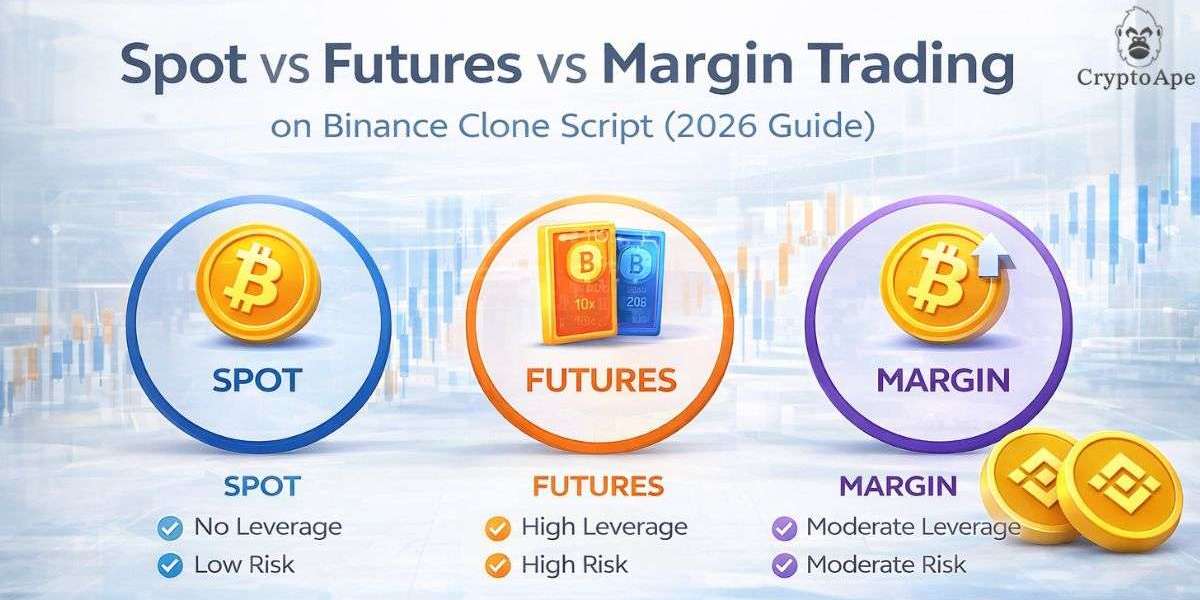
Today, most modern exchanges built using a Binance Clone Script offer three primary trading options:
Spot Trading
Futures Trading
Margin Trading
But here’s the truth: many traders jump into advanced trading modes without fully understanding how they work. The result? Unnecessary losses, liquidations, and frustration.
If you're a trader or planning to launch your own crypto exchange — understanding these three trading types is essential. Let’s break them down in a way that’s clear, practical, and actually useful.
Why Multiple Trading Options Matter
Every trader is different.
Some prefer steady, long-term growth.
Some enjoy short-term price swings.
Others chase high-risk, high-reward opportunities.
A well-built Binance Clone Script supports all these trading styles. But each mode carries different levels of risk and complexity. Choosing the right one can make a significant difference in performance and experience.
1. Spot Trading – The Starting Point for Most Traders
Spot trading is the simplest and most straightforward form of crypto trading.
When you buy a cryptocurrency in the spot market, you are purchasing the actual asset. If you buy Bitcoin, you own Bitcoin. It’s that simple.
Key Features of Spot Trading:
No leverage involved
No borrowing
No liquidation risk
Direct ownership of crypto
This makes spot trading ideal for beginners and long-term investors.
Who Should Choose Spot Trading?
Spot trading works best for:
New crypto users
Investors building long-term portfolios
Traders who prefer lower risk
Users who want full control of their assets
Because there’s no leverage, the risk is limited to the amount invested. You won’t lose more than what you put in.
For exchanges using a Binance Clone Script, spot trading provides stability and consistent user engagement. It also builds trust, especially among new users entering the crypto market for the first time.
2. Futures Trading – For High-Intensity Traders
Futures trading is a different experience entirely.
Instead of buying the actual asset, traders buy contracts that represent the price movement of that asset. This allows them to trade with leverage and even profit when the market goes down.
What Makes Futures Trading Popular?
Ability to use leverage (e.g., 10x, 20x, or more)
Opportunity to short the market
Higher profit potential
Increased market flexibility
For example, with 10x leverage, a trader can control a $10,000 position with just $1,000.
Sounds powerful? It is. But leverage magnifies both profits and losses.
If the market moves against your position significantly, your trade can be liquidated — meaning you lose your margin amount.
Who Should Use Futures Trading?
Futures trading is better suited for:
Experienced traders
Technical analysts
Short-term scalpers
Users comfortable with high risk
It requires strong discipline and risk management.
From an exchange perspective, futures trading generates substantial trading volume. Many major exchanges see higher daily volume in derivatives markets compared to spot markets.
However, proper risk engines and liquidation systems must be in place to ensure platform stability.
3. Margin Trading – The Middle Ground
Margin trading sits between spot and futures.
It allows traders to borrow funds to increase their trading position, but unlike futures, they still trade real assets rather than contracts.
How Margin Trading Works:
You deposit collateral
You borrow additional funds
You trade using the combined amount
Interest is charged on borrowed funds
If the market moves too far against your position, liquidation can occur.
Why Traders Choose Margin Trading
Margin trading appeals to:
Intermediate traders
Swing traders
Arbitrage participants
Users who want moderate leverage
It offers more flexibility than spot trading but is generally less complex than futures trading.
For exchanges built with a Binance Clone Script, margin trading introduces an additional revenue stream through interest fees on borrowed funds.
Spot vs Futures vs Margin: Quick Comparison
Let’s simplify it.
Spot Trading
Low risk
No leverage
Ideal for beginners
Direct asset ownership
Margin Trading
Moderate risk
Borrowed funds
Interest costs
Suitable for intermediate traders
Futures Trading
High risk
High leverage
No asset ownership (contract-based)
Suitable for experienced traders
Each has a purpose. None is “better” universally — it depends on the trader’s strategy and risk tolerance.
Common Mistakes Traders Make
Understanding the differences helps avoid these frequent errors:
Jumping into futures without understanding leverage
Using maximum leverage too early
Confusing margin trading with futures trading
Ignoring stop-loss strategies
Trading emotionally instead of strategically
Education is just as important as access to features.
Choosing the Right Trading Mode
If you’re new to crypto:
Start with spot trading. Learn market behavior first.
If you’re gaining confidence:
Experiment with small margin positions.
If you fully understand leverage and volatility:
Then explore futures trading cautiously.
Gradual progression reduces unnecessary losses and improves long-term trading success.
Why This Matters for Binance Clone Script Platforms
For entrepreneurs launching a crypto exchange using a Binance Clone Script, offering all three trading modes creates a complete ecosystem.
Spot attracts beginners.
Margin engages growing traders.
Futures capture high-volume professionals.
The key is not just providing features — but structuring them clearly, educating users, and implementing proper risk management tools.
Exchanges that prioritize transparency and usability tend to retain users longer and build stronger reputations in competitive markets.
Final Thoughts
Spot, Futures, and Margin trading are not competing options, they represent different stages of a trader’s journey.
Spot builds confidence.
Margin builds strategy.
Futures builds momentum.
Understanding how each works empowers traders to make informed decisions rather than emotional ones.
Whether you're trading on an exchange powered by a Binance Clone Script or planning to launch your own, clarity around these trading modes can make all the difference.
Smart trading starts with smart choices.